Noncytotoxic dye SiR-DNA can be used for advanced automated tracking of cells
What is SiR-DNA?
It is a far-red DNA stain, known as SiR-Hoechst, and can be used for live-cell imaging. Most current DNA dyes are toxic or affect the cell’s motion or proliferation.
https://www.nature.com/articles/ncomms9497
It does not affect the migration of human dermal fibroblast cells (hdFb).
The motility parameters (speed and displacement) for a 24 hour migration were calculated by manually tracking the cells and inputting the coordinates into a Matlab code. The results from the cells with the SiR-DNA dye were compared to the cells without it and no significant difference was found.
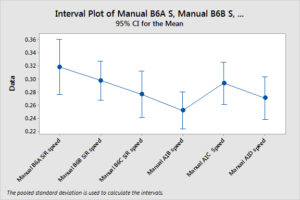
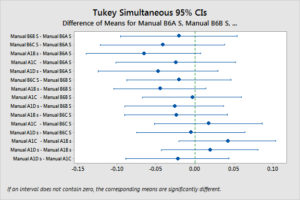

Error bars are the standard deviations and n=3 (experimental repeats). Each sample contains at least 25 cells
Manual B6A SiR speed is speed of manual tracked SiR-DNA sample A, Manual B6B SiR speed is speed of manual tracked SiR-DNA sample B, Manual B6C SiR speed is speed of manual tracked SiR-DNA sample C.
Manual A1B speed is manual tracking of SiR-DNA sample D, Manual A1C speed is manual tracking of SiR-DNA sample E, Manual A1D speed is manual tracking of SiR-DNA sample F.
Once we confirmed that it did not affect the migration we tested out our Matlab automated tracking.

As well as outputting a the coordinates of each cell, the program outputs an image with the cell motion traced and the different motility parameters. To test our code we compared the average speed and displacement of the cells stained with SiR-DNA to the speed and displacement of the manual tracking of the same cells.
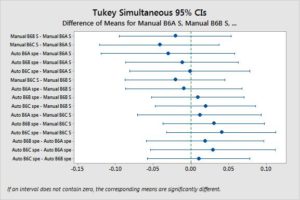
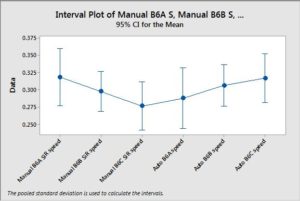
Error bars are the standard deviations and n=3 (experimental repeats). Each sample contains at least 25 cells
Manual B6A SiR speed is speed of manual tracked SiR-DNA sample A, Manual B6B SiR speed is speed of manual tracked SiR-DNA sample B, Manual B6C SiR speed is speed of manual tracked SiR-DNA sample C.
Auto B6A SiR speed is speed of the automated tracking of SiR-DNA sample A, Auto B6B SiR speed is speed of automated tracking of SiR-DNA sample B, Auto B6C SiR speed is speed of automated tracking of SiR-DNA sample C.
The above figures show that there is no significant difference between the automated tracking and the manually tracked cells with SiR-DNA dye in terms of cell speed.
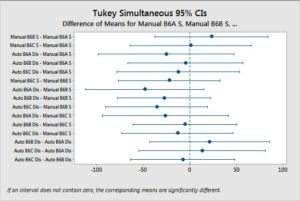
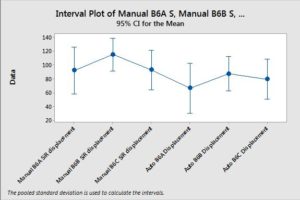
Error bars are the standard deviations and n=3 (experimental repeats). Each sample contains at least 25 cells
Manual B6A SiR displacement is displacement of manual tracked SiR-DNA sample A, Manual B6B SiR displacement is displacement of manual tracked SiR-DNA sample B, Manual B6C SiR displacement is displacement of manual tracked SiR-DNA sample C.
Auto B6A SiR displacement is displacement of the automated tracking of SiR-DNA sample A, Auto B6B SiR displacement is displacement of automated tracking of SiR-DNA sample B, Auto B6C SiR displacement is displacement of automated tracking of SiR-DNA sample C.
The above figures show that there is no significant difference between the automated tracking and the manually tracked cells with SiR-DNA in terms of cell displacement.
From the information above we can conclude that the SiR-DNA dye does not have an effect on the migration of human dermal fibroblast cells. It helped us create an automated tracking system that completely eliminates the time needed for manual tracking. Our hopes are to continue this research and develop a reliable process for both cell migration and scratch wound assays, as we think the possibility of tracking individual cells during wound healing is very interesting. We would also like to explore the possibility of using SiR-DNA in other cell types.
Side note: The cells move at different speeds depending on where they are located in the plate. Cells in wells on the outside have significantly different motility parameters than cells in inner wells.
Can you replace the images with higher res versions please?