
PEG-NPN for Reduced Protein Binding
Hopefully in the next week we will be submitting the following manuscript …
X. Li, D. Johnson, W. Ma, H. Chung, J. Getpreecharsawas, J.L. McGrath, A.A. Shestopalov, Modification of Nanoporous Silicon Nitride with Stable and Functional Organic Monolayers, ACS Chemistry of Materials (2016) submitted.
Here are the highlights …
Traditional silanization of silicon materials uses silane chemistries that are known to be unstable, particularly around nanostructures like pores:

So Alex developed a method based on carbenylation that produces stable grafted PEGs:

The manuscript contains XPS data confirming each step of this reaction process.
The stability of the surface is also shown by XPS:
 Next is some really cool data from Jirachai demonstrating that the pores stay open, permeability stays high and that the cut-off shift is EXACTLY what one would expect from the size of the PEG construct:
 Here is the molecular structure …
 Finally is the protein reduction, again found from XPS …
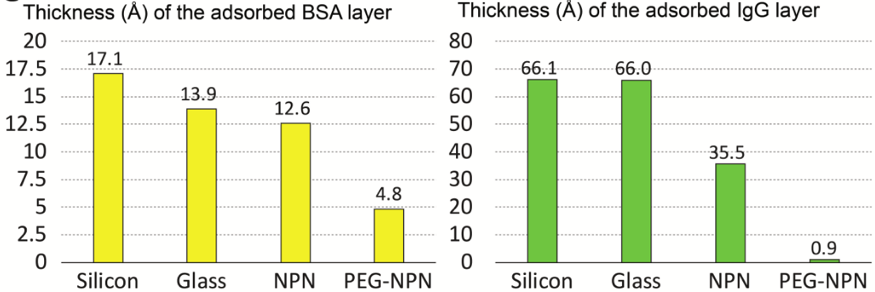
We will discuss what these figures mean in the meeting.