
Gold Ladder
I obtained gold in 5nm, 20nm, 40nm, and 60nm through Mort/Oberdorster Lab. Separations were performed with fully crystallized samples from SC 073. Here are sizing and absorbance data:
In Water
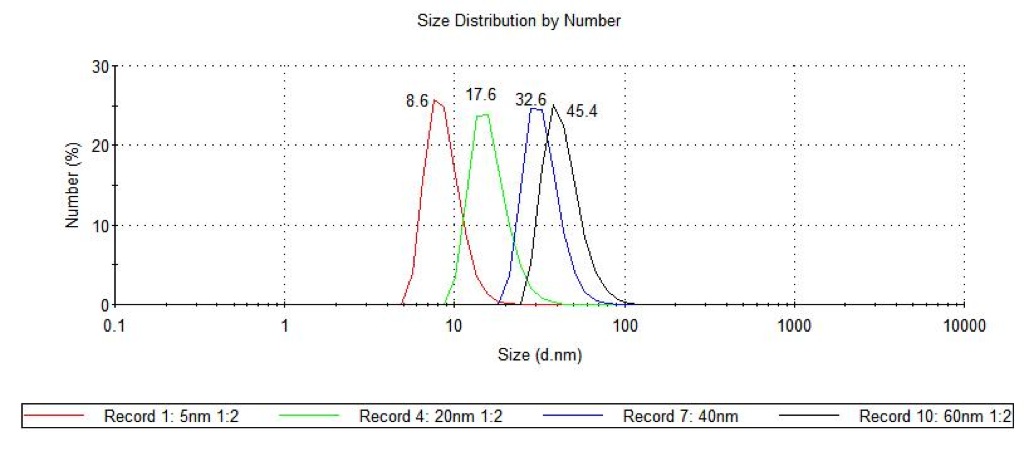
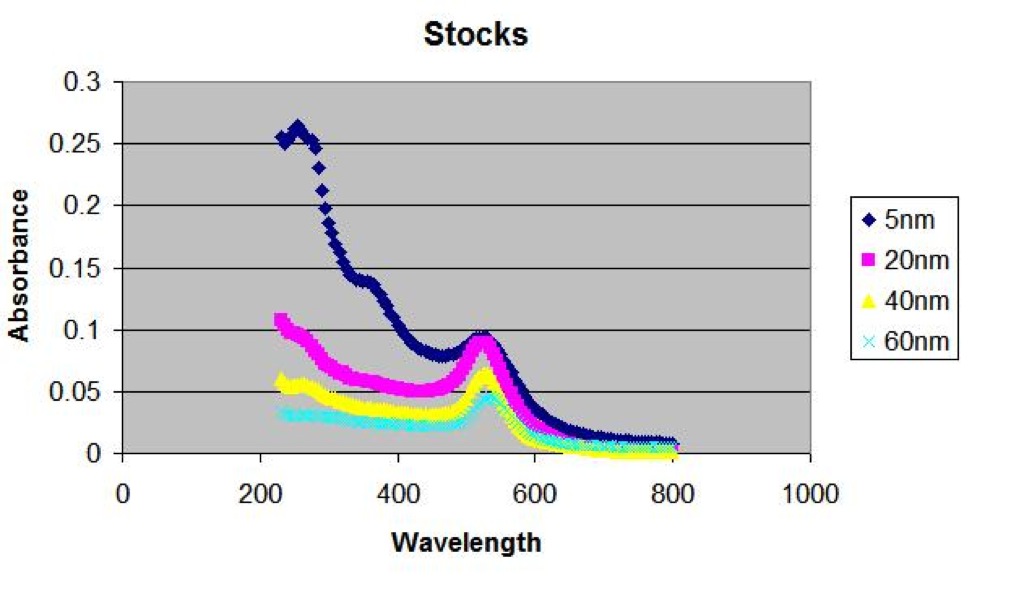
I have tried 24 hour separations in diH2O (SC 073) with these particles. Here are the results:
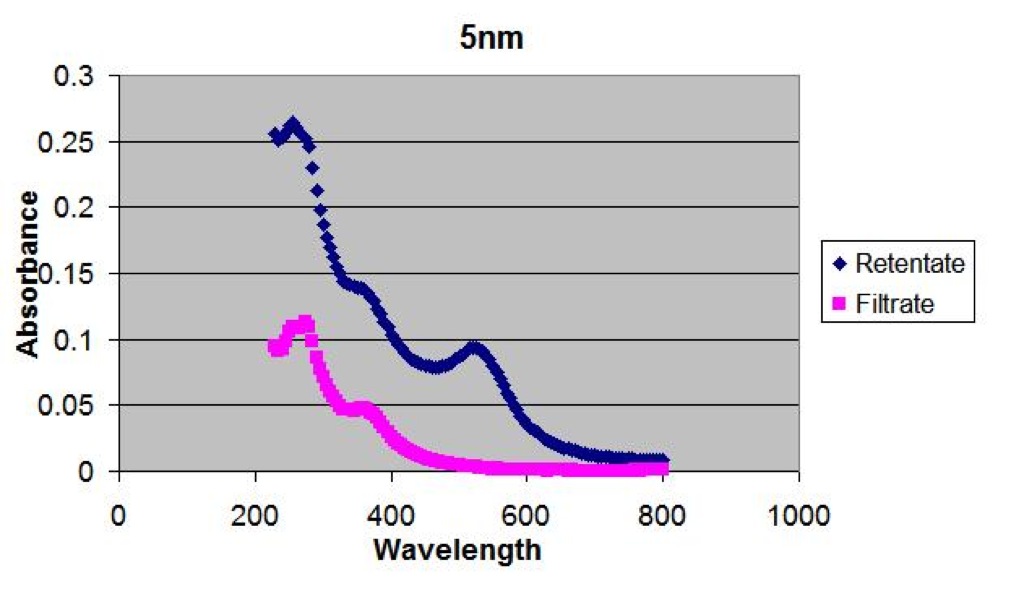
No 525nm peak in filtrate for 5nm sample. Lower wavelength peak may be contamination.
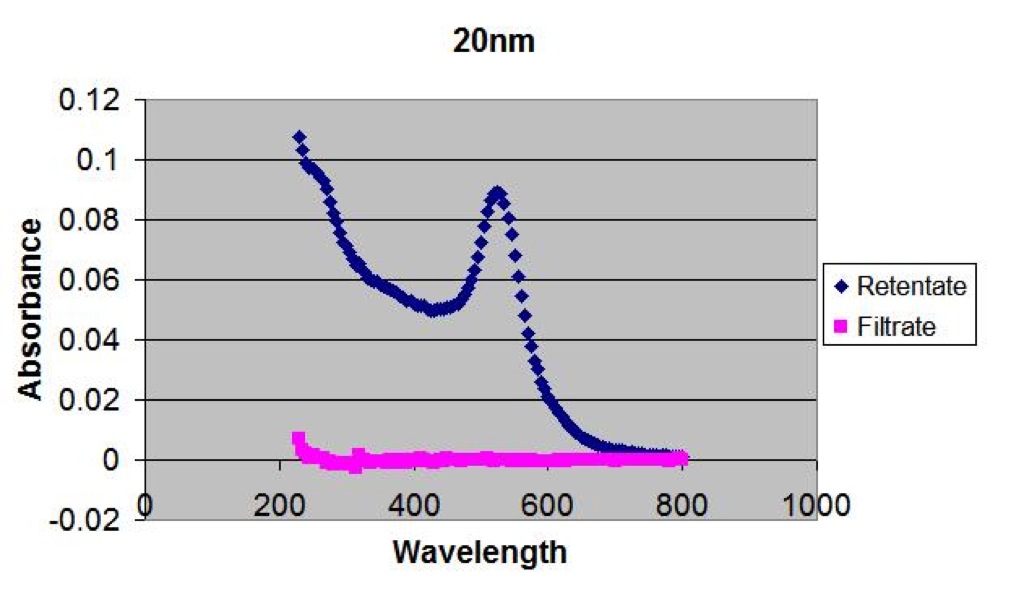
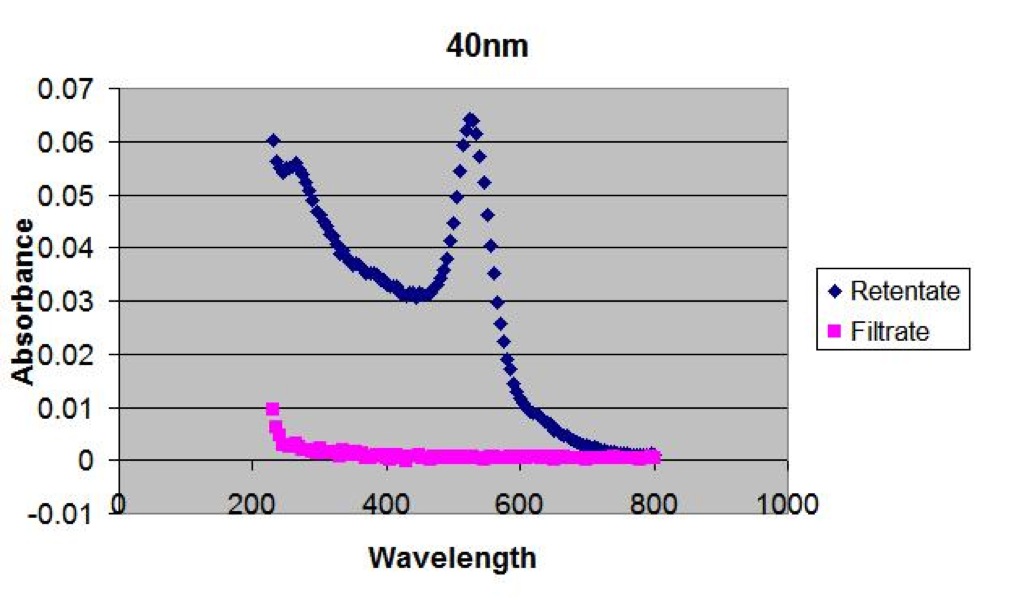
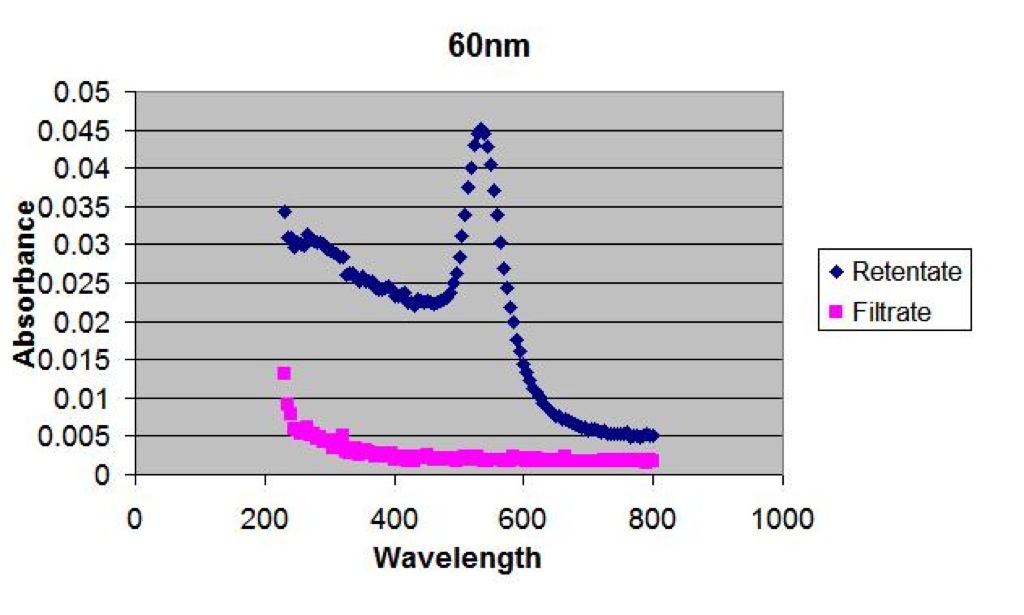
Slight absorbance signal below 300nm for 20nm, 40nm, 60nm particles. I wouldn’t expect 40nm or 60nm to make it through this membrane. This may also be citrate/contaminants in the gold solutions that are small enough to pass through the membrane.
I ran Malvern Zetasizer test on all the filtrates, and none of them had detectable signal for nm range particles. Either solutions are way too dilute, there’s larger particles messing with the signal, or nothing went through.
In 10mM KCl
I went back and reused the same membranes as the previous in water tests for separations in 10mM KCl. Here are the results:
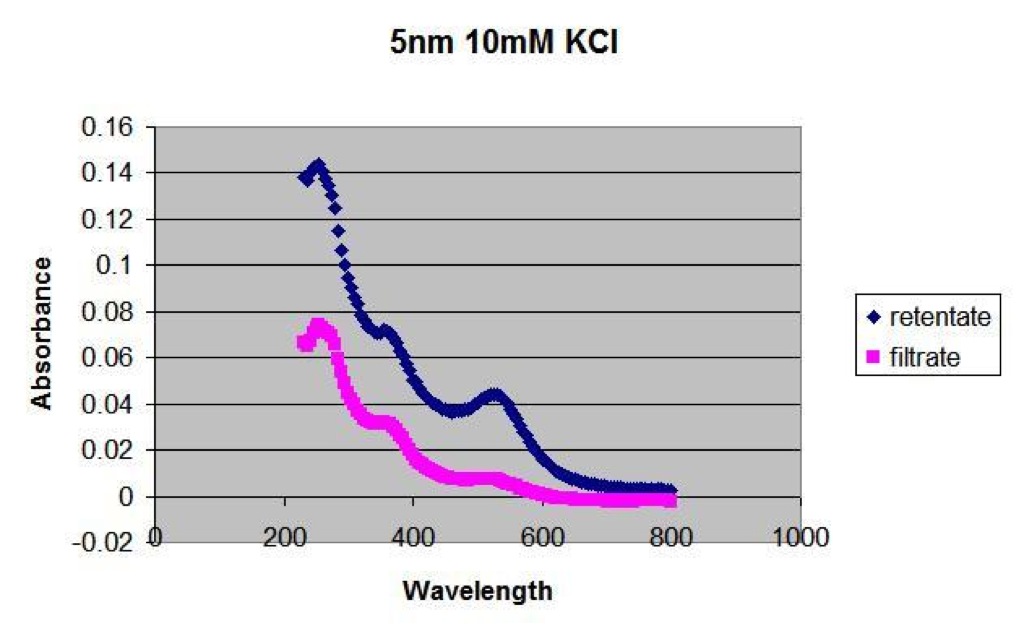
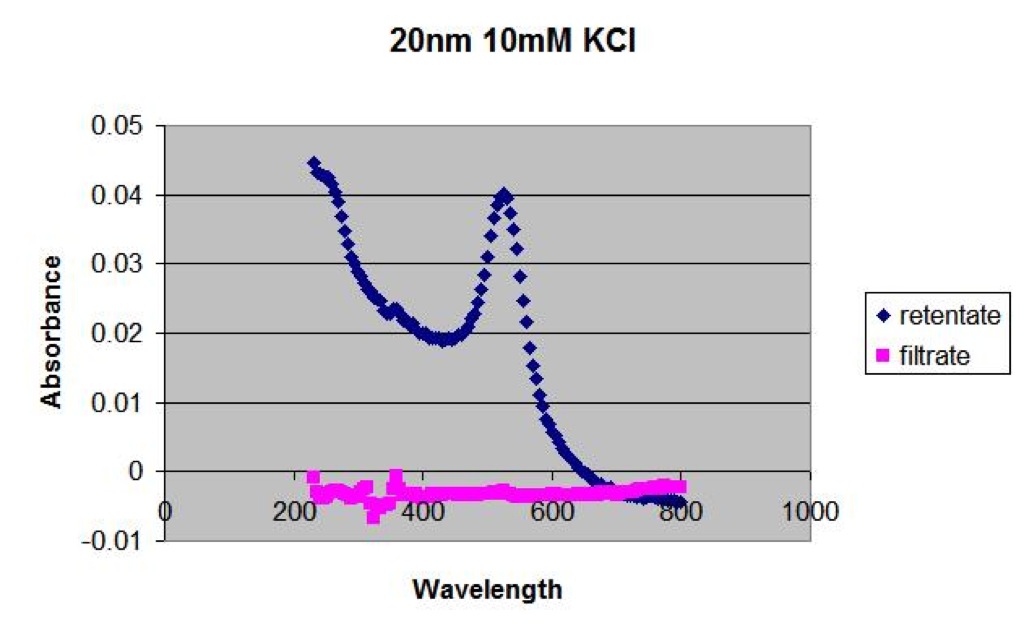
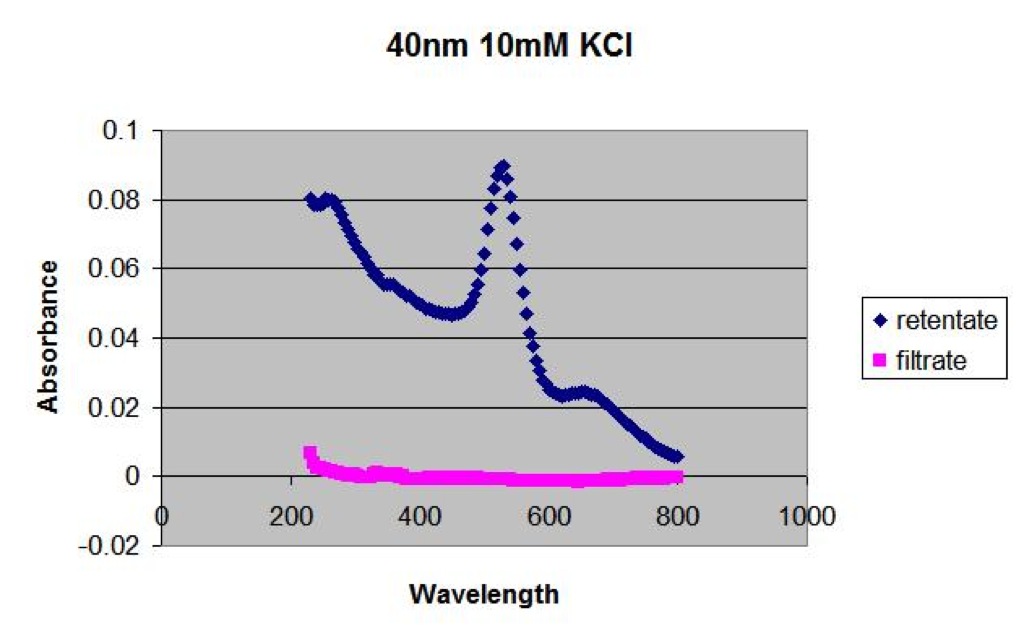
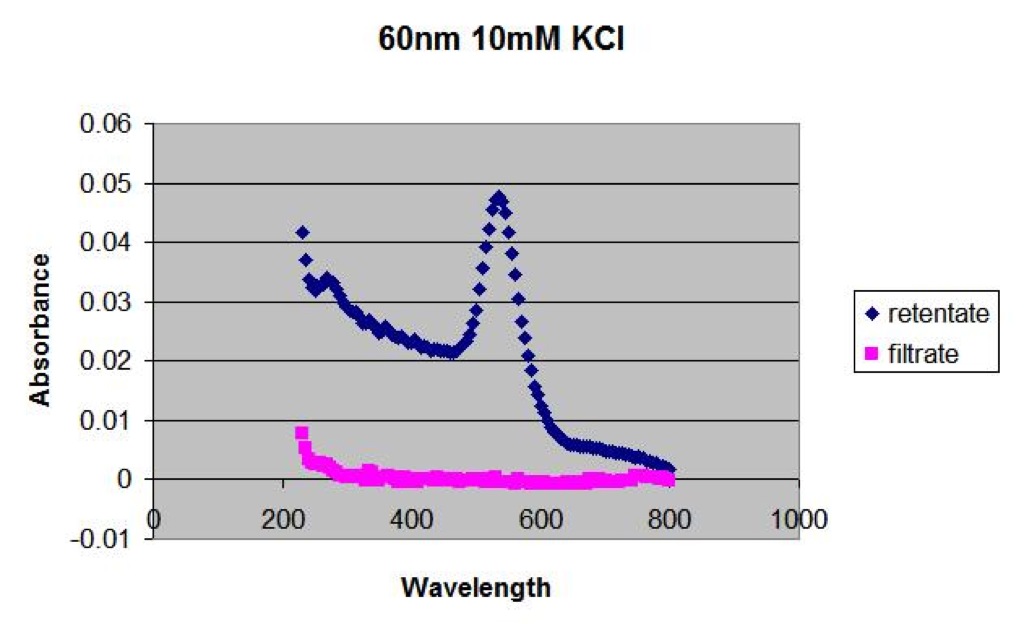
Notice the small blip around 525nm in the 5nm/10mM KCl filtrate. The solution looked pinkish by eye also. None of the other samples appeared pinkish or show any peaks around 525nm.
Sizing data:
5nm/10mM KCl was the only one that had detectable signal by the Malvern:
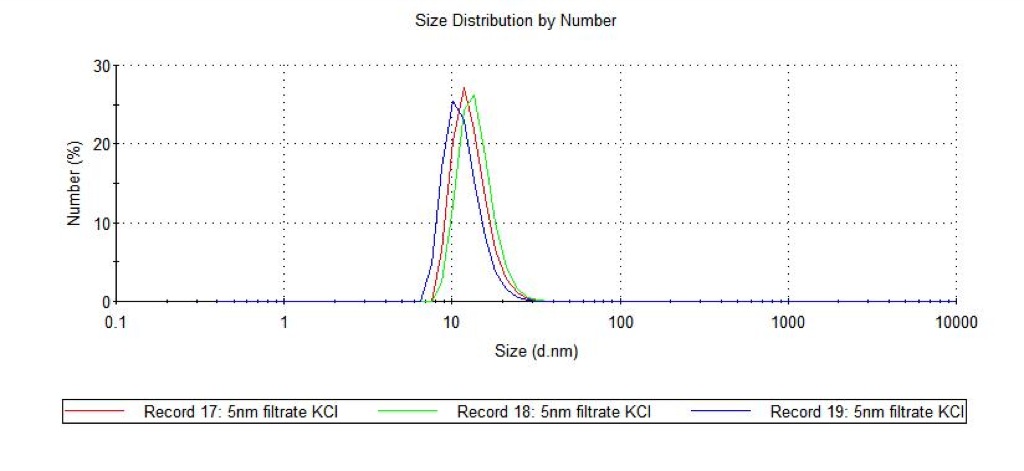
The particles are coming out around 11nm. Remember they first registered as 8.6nm.
My Final Thoughts
I think were only seeing an actual separation with the 5nm in 10mM KCl sample. I believe the only accurate peak in the absorbance spectrum linked to the gold is the 525nm one; the rest may be citrate/other species left over from gold production. The Malvern Zetasizer is only detecting particles in the 10mM KCl sample, however there is a size shift in the results. This may not be completely indicative of the actual size because of dilution/contaminating particles. It is a consistant shift though.
Here are the SC 073 pore distributions. You can see there are some larger pores that go up to about 40nm, but not over. The average pore size is ~15nm. In fully deionized water we’d expect an infinite debye length, and indeed it seems like nothing goes through the membrane. In KCl the debye length is ~3nm. That means at 3nm out from the pore there’s a 1/e dropoff of the surface potential. That would reduce all the pore diameters by 6nm if a 1/e drop off is enough to allow the gold to pass. If it requires multiple debye lengths, then the pores shrink even more. Thus it might not be too unbelievable to suggest that 20nm might not fit through pores that are as big as 40nm but might “appear” to the gold to be 34nm or less.
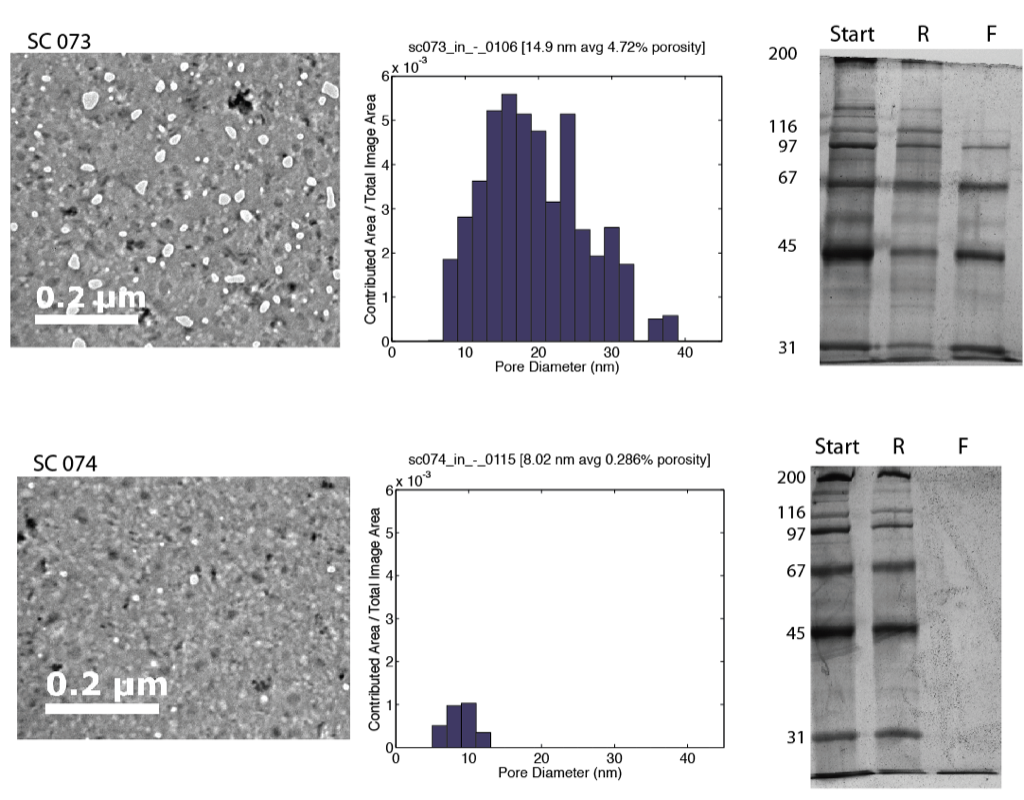
Wow! Its been a good week for separations. I’m worried about the lack of a peak at 525 in the 5 nm filtrate. How are we going to measure the filtrate concentration? We might want to see the spectra for pure citrate. I hope there isn’t just more citrate in the 5 nm sample.