
BSA-Au results
w312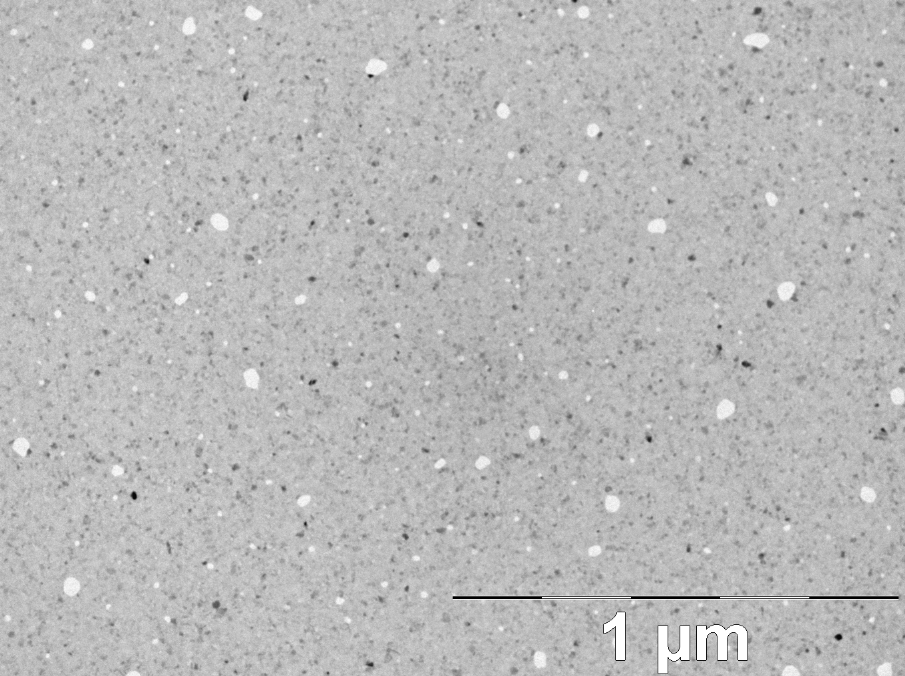
Number of Pores Histogram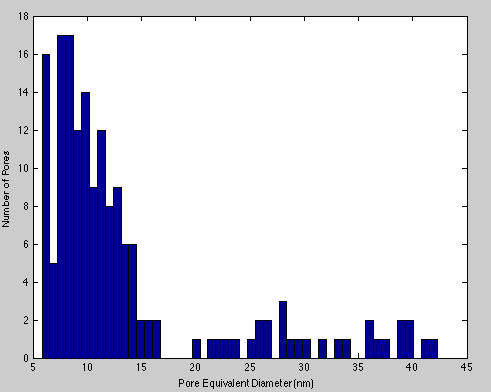
Contributed Area Histogram
5nm BSA-Au is detected in the filtrate after 24 hours. 10nm BSA-Au is not. The 5nm registers around 10nm after conjugation and the 10nm is closer to 15nm.
This selected membrane is not very porous, although it does have pores (as high as 42nm) that would appear to allow the 10nm BSA-Au through.
Can you also post the Malvern data for these particles in PBS?
Jess,
Were these done with ozone treated membranes, or just plain old out of the box ones? Are air bubbles still a concern? Shigeru usually does a plasma treatment + IPA. What format is this being done in? (Sorry I can’t keep track of them all!)
Dave,
This is the same benchtop diffusion format that use for the protein. I didn’t try Shigaru’s method for this first test because I want to be able to compare the results with my previous protein separations.
Perhaps these histograms are deceiving us. The argument that porosity doesn’t matter in diffusion must have its limits. For example by increasing pore size but decreasing number one could maintain the same porosity while lowering the pore density tremendously. Eventually the waiting game to wander along the surface and find the big pores will begin to matter, but at what values? In this case there are ~14 pores sufficient to pass a 20 nm particle in what ever size image gave you the histogram. Please calculate the porosity and pore density for pores above and below 20 nm. In other words what is the distance between large pores. We need to see if the time to find these pores vs. finding 5nm(= 10 nm) finding their pores might be significantly different and make a difference for this non-equilibrium experiment.