
Hemo-Dialysis Channel Flow Characterization
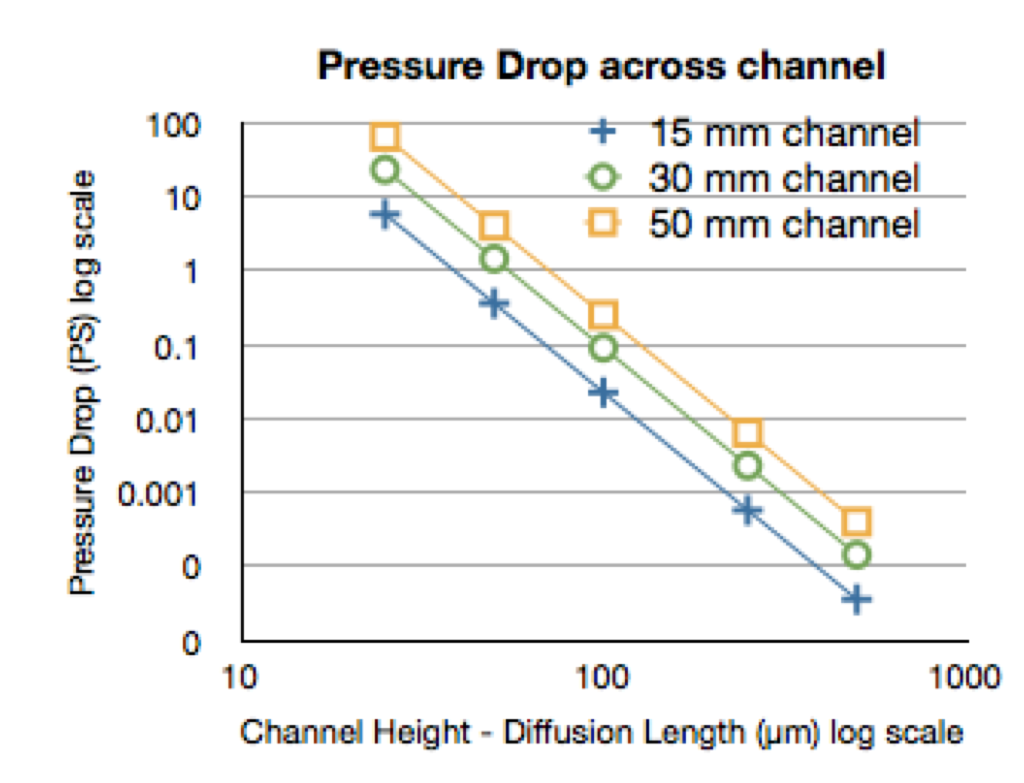
Dialysis Rate: 10 mL/min, Péclet Number: 1, Membrane Width: 700 µm, Channels per chip: 17
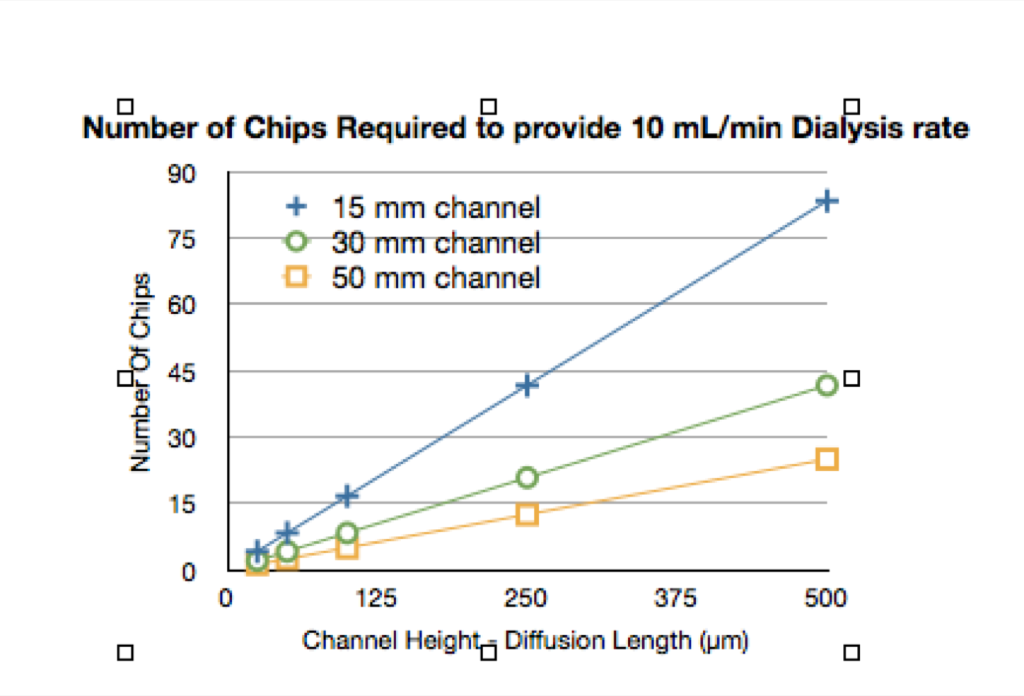

Péclet number
Pe ∝ H
Pe ∝ 1/L
Pressure Drop, P
P ∝ 1/H3
P ∝ L
Dialysis Rate: 10 mL/min, Péclet Number: 1, Membrane Width: 700 µm, Channels per chip: 17
Péclet number
Pe ∝ H
Pe ∝ 1/L
Pressure Drop, P
P ∝ 1/H3
P ∝ L
I set up diffusion experiments using the wafers that Tom was able to pass gold through in DI H2O using pressure. 5nm particles do not pass in 24 or 48 hours. If we have extra samples I will be testing 5nm particles in 10mM KCl.
Design and Manufacturing Plans from Aline: 2019-09-23 Rochester Assembly Step by Step Prototype Runs @ ALine Post-fabrication assembly (cutting with lower power to eliminate bubbles) …
In previous experiments attempting to culture ADSC on non-porous and porous (0.5 µm, 3.0 µm) SiO2 membranes, we were having difficulty getting the ADSC to attach to the membranes. A majority of the ADSC did not appear well-spread. While in culture or staining, ADSC would detach from the membrane with little to no agitation. Changes…
Just some quick thoughts about the attached excel on my previous post… The 100K nanosep does not have a hydraulic permeability value at 194.65psi because it passed all 500uL of water through in 1minute which is the smallest interval of time a test can be run at with the new centrifuge. When I get a…
Two weeks ago (as of the time of writing this post), I wrote a post on a dead end filtration experiment that I ran in order to demonstrate particle capture in pores, modeling a simple, purified exosome capture system that we could use for imaging or analysis. However, when I ran that experiment, I done…
Yesterday Henry and I went over to RIT to perform anodic bonding and parylene deposition using the new membrane configuration of W619 (with the etched trenches for our capillary tubing). I just wanted to post a summary of the process that was done yesterday, as we encountered numerous problems, in the hopes that we can…