
Surface-Specific Thermoresponsive Coatings of Membranes
Cody Soule (MS student) developed/applied a protocol to functionalize the surface of a silicon oxide membrane. The process selectively attaches PNIPAM to the surface of the membrane, maintaining the pore characteristics unchanged. PNIPAM undergoes a configuration transition when going from 37C to RT, from collapsed to extended. It has been previously used to lift-off confluent cell monolayers and also for anti-fouling/self-cleaning membranes.
We prepared a manuscript where we highlight the ability to functionalize the surface of the membrane but not the pore walls. It is geared towards improving recovery for capture/release filtration approaches.
Here are some of the figures:
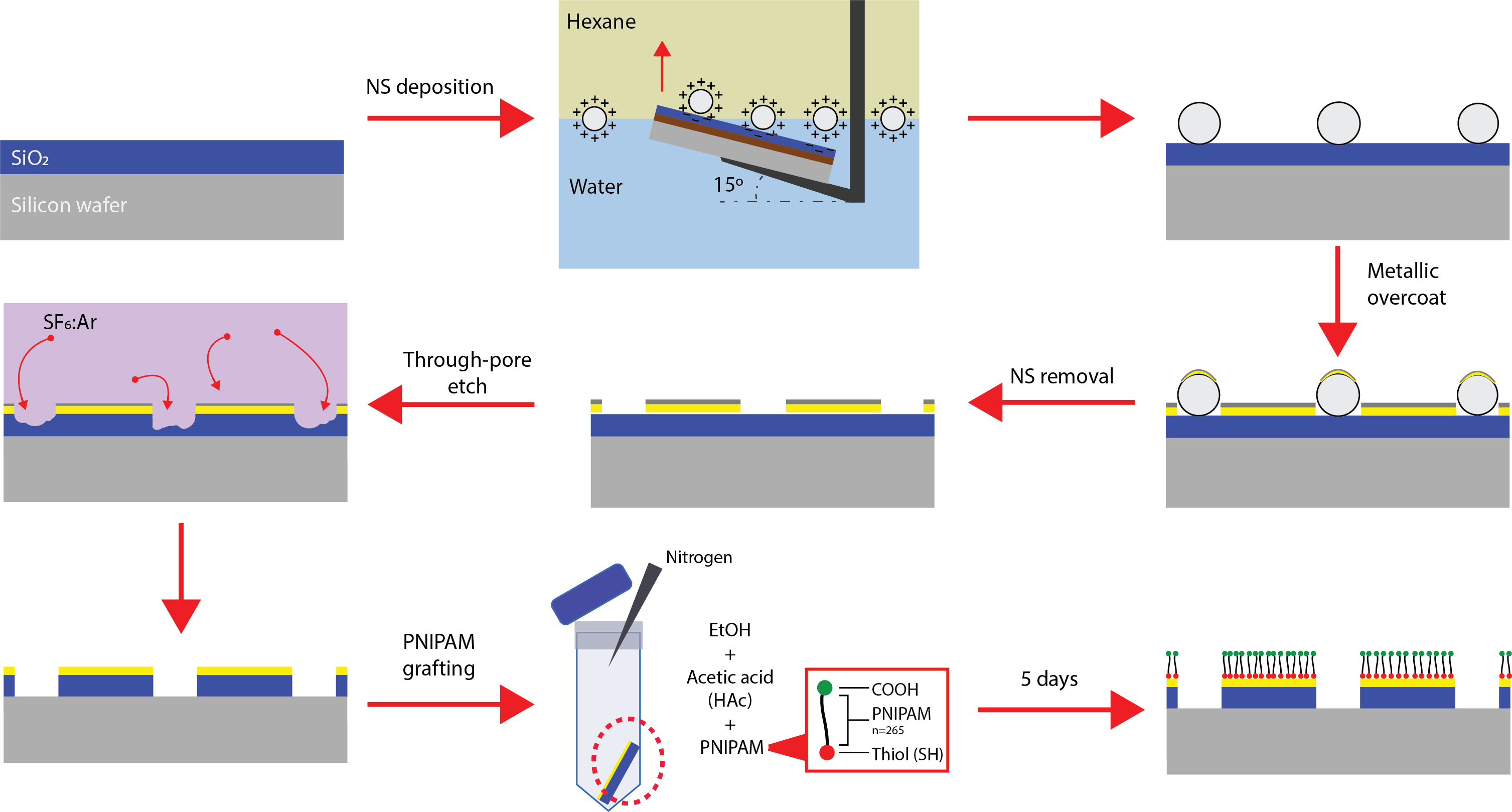
PNIPAM grafting. This figure shows the overall nanosphere lithography process followed to generate porous layer with a surface-specific metallic coating onto which the PNIPAM can adhere. The PNIPAM has a thiol group on one end which selectively attaches to metallic surfaces. In this case we deposited a Au:Cu overcoat on the nanospheres followed by an Al thin film and then removed the nanospheres. The Al serves as the etching mask and its consumed during the etch, exposing the Au:Cu for PNIPAM grafting.
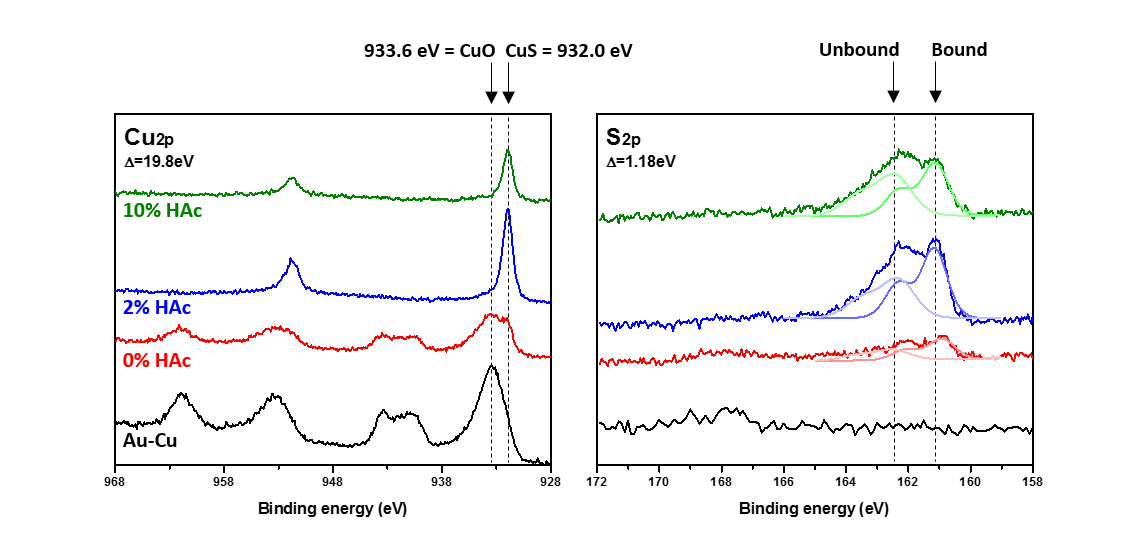
Chemical compound identification. The grafting is carried out in ethanol with 0, 2 or 10% acetic acid (HAc) which has been shown to promote monolayer coverage (increasing the “bound” sulfur species, decreasing the “unbound” sulfur species). Through XPS we saw that it also reduces the Cu back to its metallic state where it can readily attach to PNIPAM.
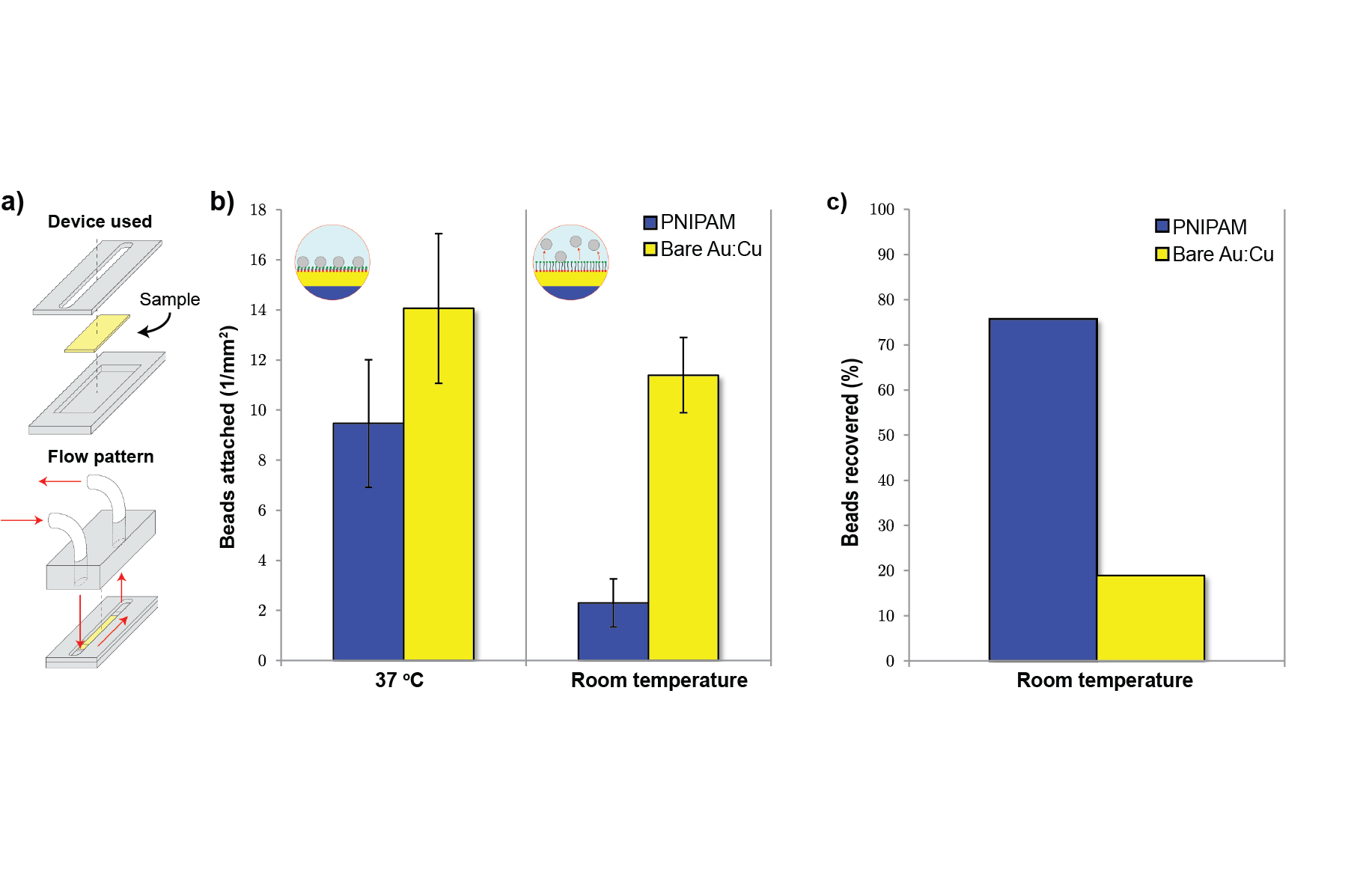
Recovery of latex beads upon PNIPAM thermal transition. This was a simple experiment where fluorescent nanospheres were allowed to interact with a non-porous PNIPAM functionalized sample at 37C which was then rinsed with fresh DIW and cooled to RT. The number of beads attached to the surface was recorded and we saw increased recovery on the PNIPAM sample, meaning, fewer beads remained attached after rinsing at RT.
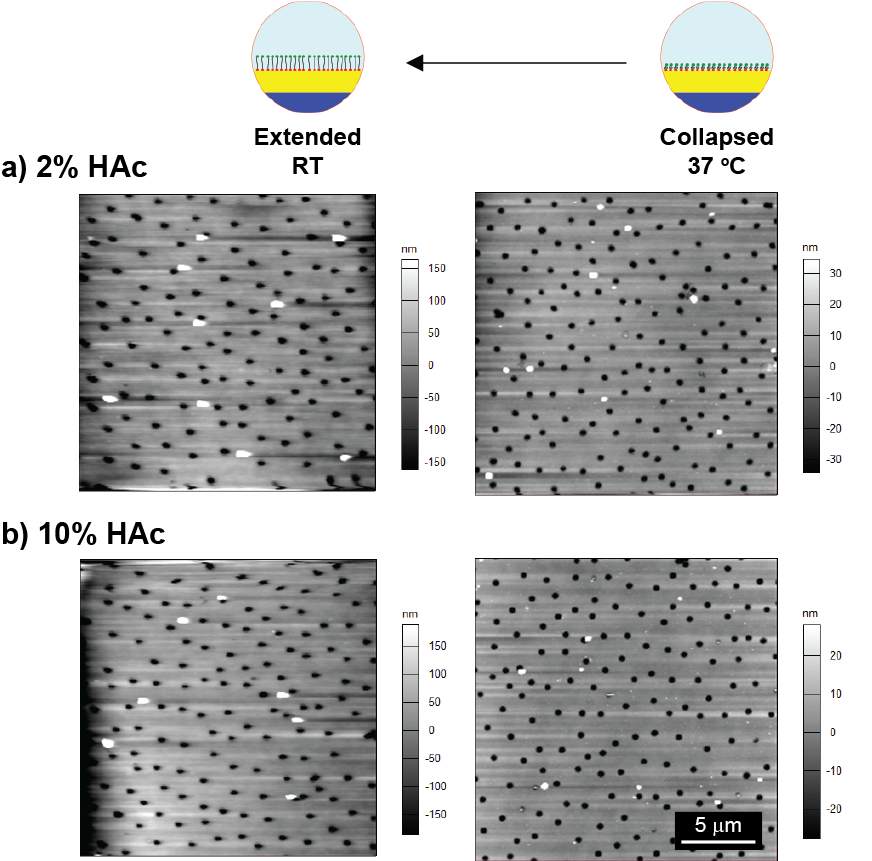
Environmental AFM scans in DI water. The surface scans shown below were taken at 37C and RT from samples grafted with 2 and 10% HAc. At RT when the polymer is expanded the surface is “sticky” and the morphology appears smudged. The effect is absent at 37C when the polymer is collapsed and the scan appears sharper. This shows the PNIPAM response to temperature and demonstrates its functionality.
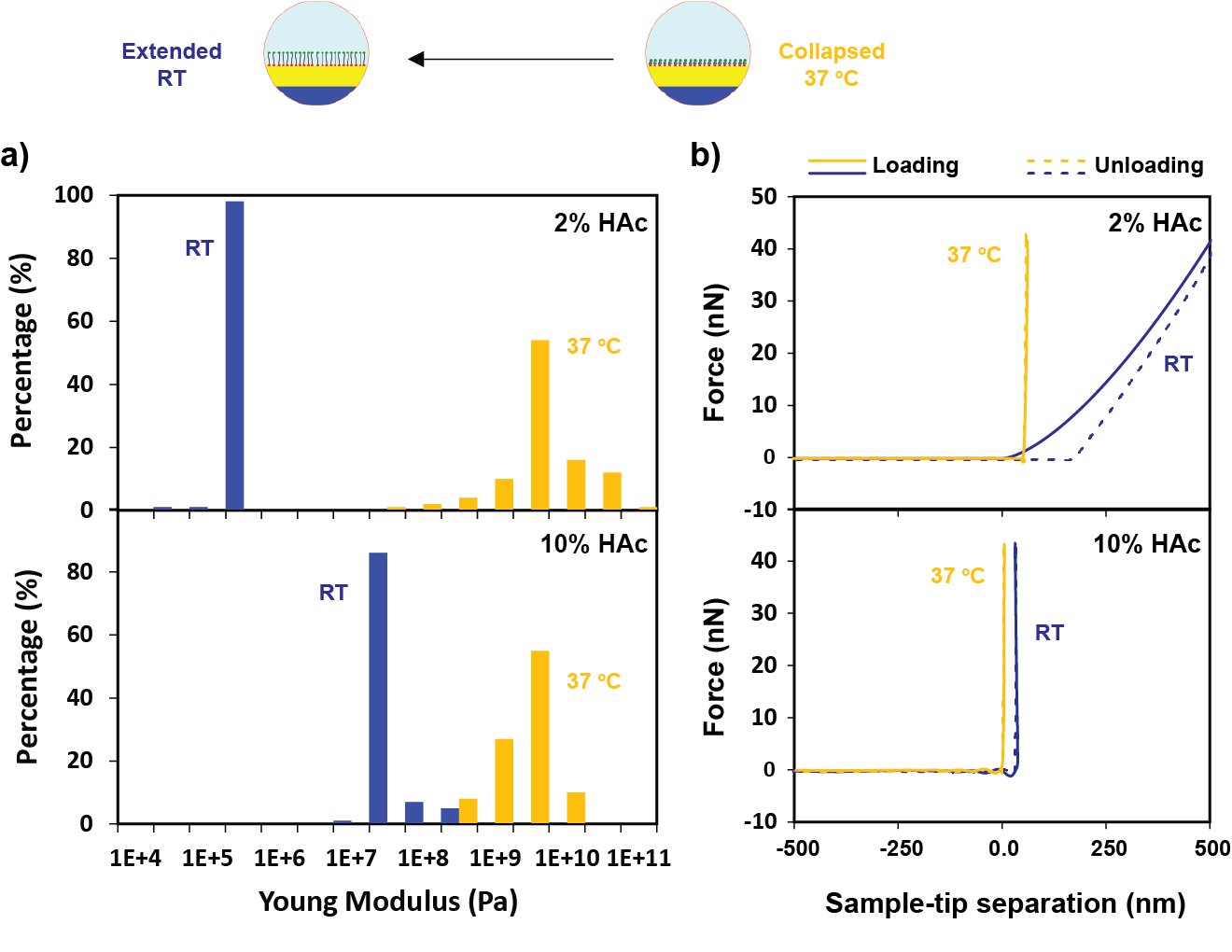
Young modulus change with temperature. From AFM we also obtained force maps on areas between pores. We saw a decrease in the Young modulus when cooling down the samples (from 37C to RT) which agrees with the polymer extending and the surface appearing softer. We also saw a larger decrease for the 2% HAc sample supporting our conclusion that a denser PNIPAM layer forms under this condition. The indentation curves also show this sample to be the most plastic or deformable, once again indicating 2% HAc as the best concentration to form a dense, uniform layer.
Overall, we have a process to specifically attach a thermoresponsive polymer (PNIPAM) onto the surface of a membrane only and not the pore walls. We submited this manuscript to Advanced Materials Interfaces where is currently under review. Luis Delgadillo from Dr. Waugh’s lab is a co-author in this paper, he contributed with the environmental AFM work.