First experiments with monoliths
I have three monolith experiments to report, one of which was successful. In all three cases, I was able to make a pore, though it took about 5 times longer than it would have for the NPN-tented chips. This is likely a consequence of the reduced exposed membrane area in the monolith case, which is known to slow down pore formation by CBD.
The first and third experiments were failures after pore fabrication, however. The first one was unstable and quickly (in minutes) grew to an unusable size. The third one was more stable and looked usable, but I did not see DNA translocations after adding the sample, and the pore was prone to clogging.
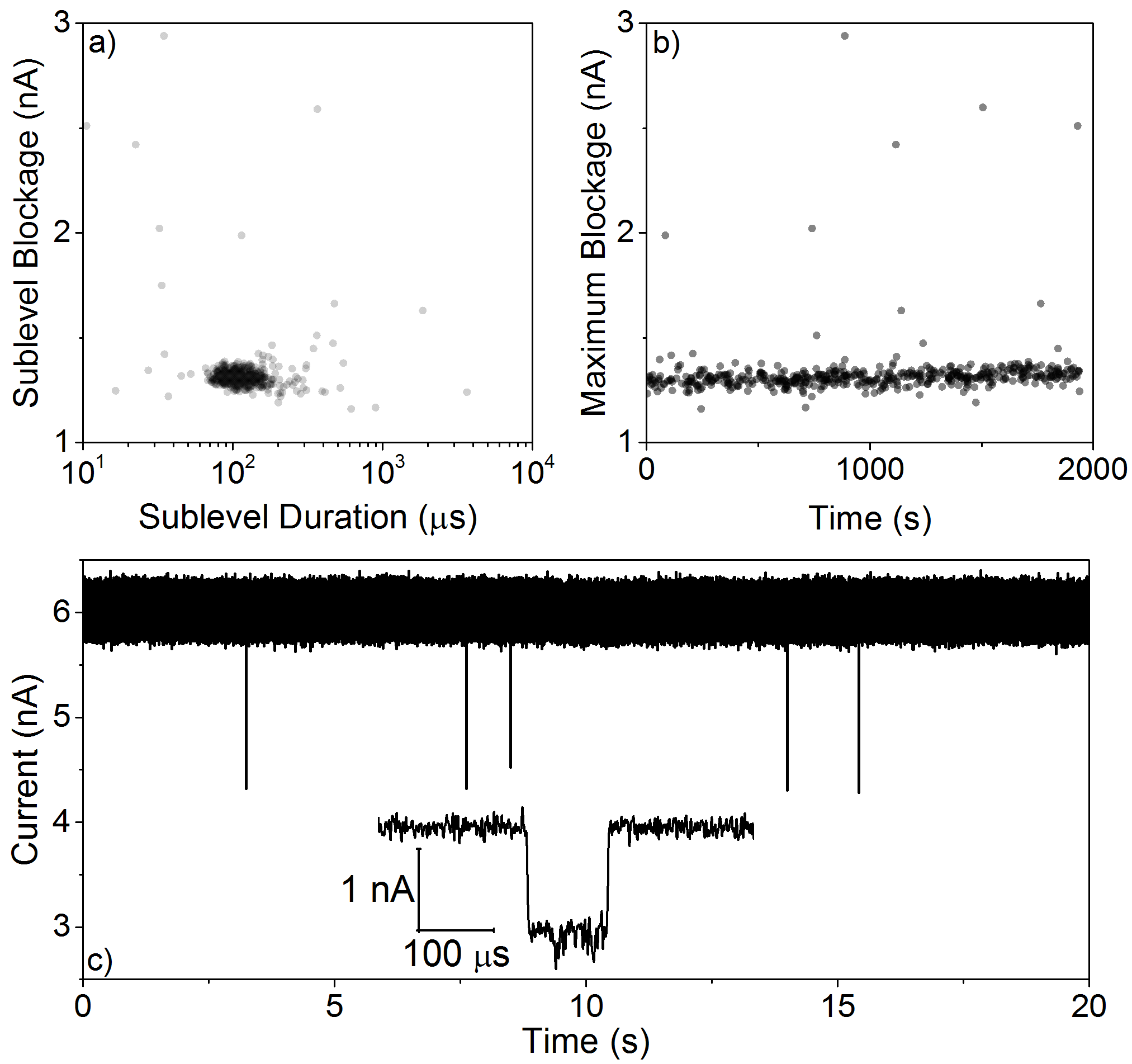
The second experiment was a gold mine. Not only did it pass DNA, but it also suppressed folding! The top image shows the deepest blockage state as a function of time, showing that the experiment suppressed folding all the way through (the blockage depth here is consistent with a 10 nm effective membrane thickness, which is consistent with what I found using the previous batch of NPN chips).
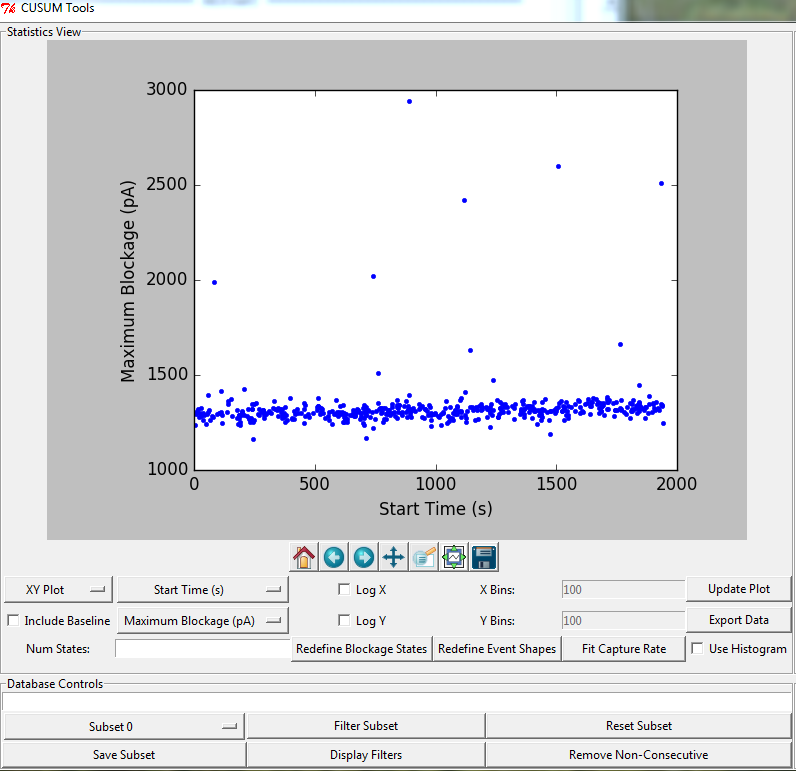
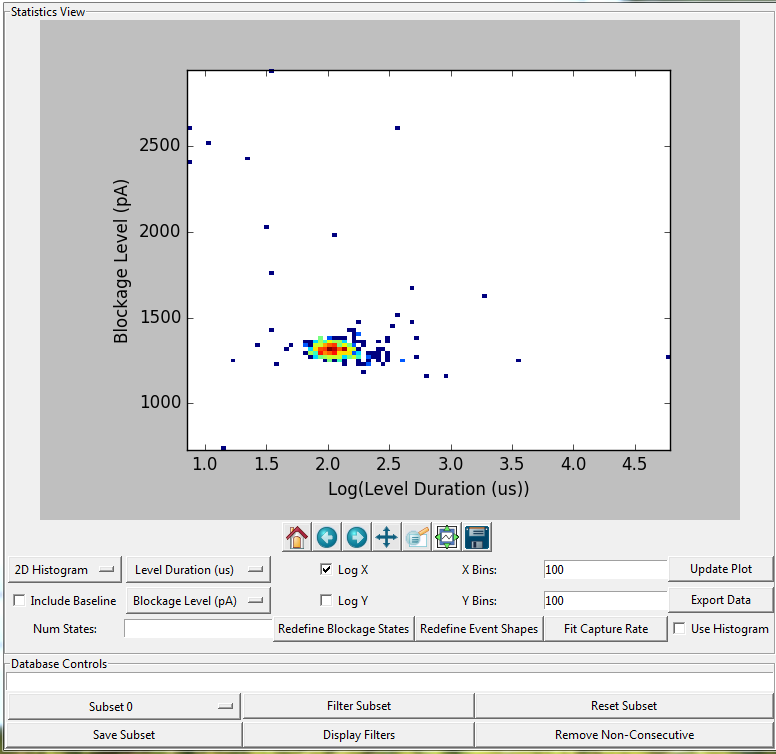
The passage time distribution is a bit wider than in the NPN chips, which is not ideal, and like the other experiment that suppressed folding, the event rate was fairly low (0.02 Hz/nM).
In summary, I can make pores in the monoliths and see DNA, though it takes a while and so far I am 1 for 3 with DNA. the first DNA experiment I did suppressed folding, which raises some interesting possibilities, but I will refrain from speculating until I have replicated these results a few times.
Feel free to share this with Simpore – I am posting it here so that you can decide how to disseminate the information. If I can get DNA through 2 or 3 more devices I think that’s another paper. Jamie and I talked about doing a short letter-style paper presenting the monolith with some proof of concept DNA results, and as long as I can replicate this experiment, I think this will give us everything we need to get that out quickly.
Addressing why the passage time distributions are not as tight as in the NPN case will be interesting, but I am hoping this one is an outlier in that respect. Stay tuned …
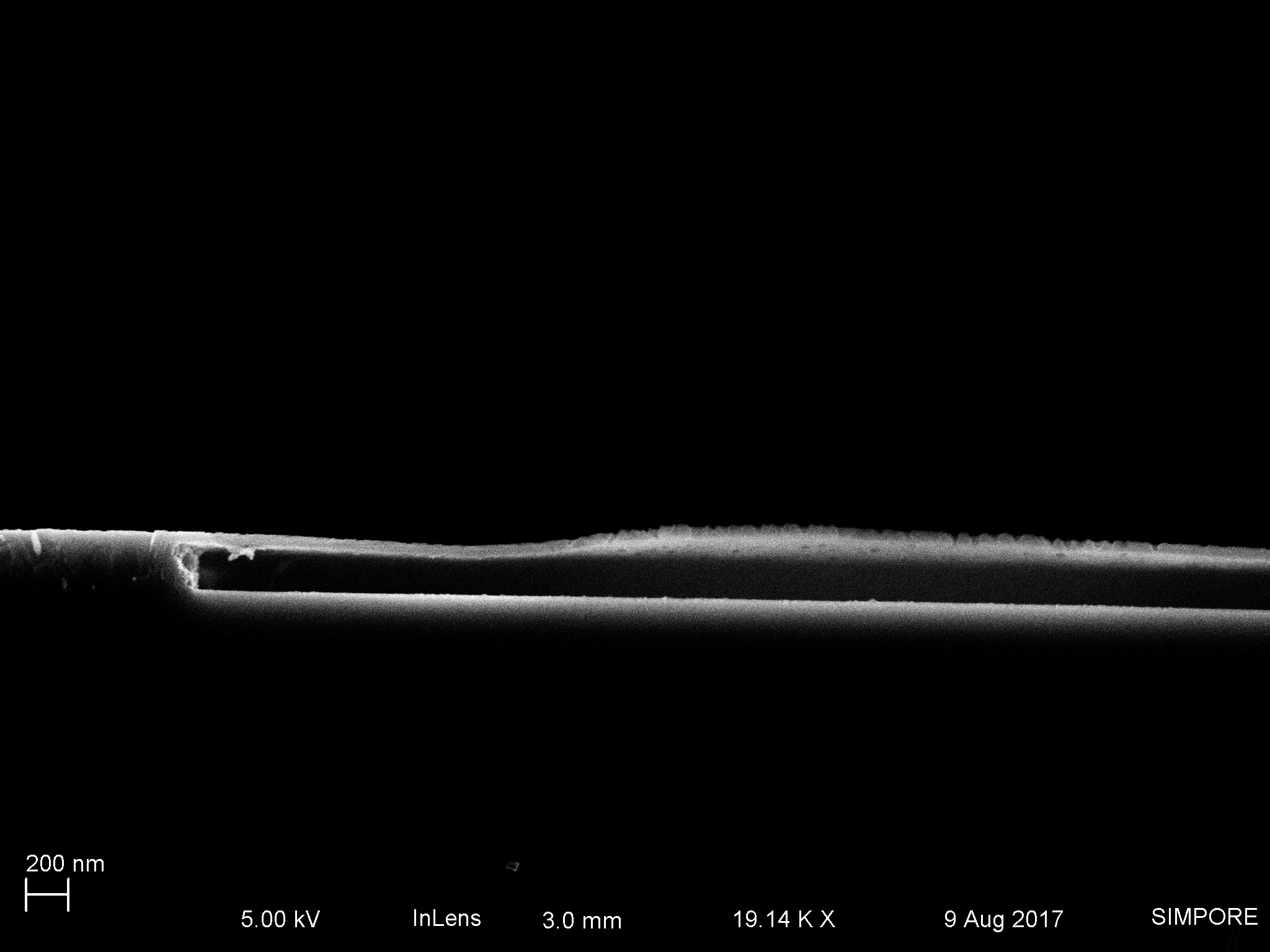

Pats on the back to the team at SiMPore here for making a successful monolith on only their second shot. We need to get a good cross sectional image of this thing for that paper.
BTW … they (SiMPore) all have access to this data blog and seem to keep up with it.
Oh good, that makes things simpler
Post any images of the monolith to this please for discussion at a meeting this afternoon.
Congrats!