
Paper Summary – Surface Engineered Porous Silicon for Stable, High Performance Electrochemical Super Capacitors
Tejas sent me an interesting article about Silicon-based supercapacitors. I have made a previous post on potential uses for our membranes as separators in EDLC (electrical double layer capacitors), and one of the problems I posited was that the electrolyte chemistry seemed particularly inimical to silicon (KOH, Na2SO4). The authors in this paper have tried something new to attempt to mitigate this problem: coat graphene on the surface of the silicon. The benefit is potentially two-fold, insulating the silicon from degradation in the electrolyte and increasing the amount of electrical activation of the electrode surface. Graphene is an excellent conductor, and given the substrate that the authors use (heavily or degenerately doped boron wafers), electrical activation can be seriously lacking (implies boron distribution is uneven, remember that orders of magnitude difference in electrical resistivity can be achieved by adding very little dopant).
Methods
They etched heavily doped wafers (0.01 Ω-cm) using a mixture of HF and ethanol producing “porous silicon”. Etching is slower in regions where boron is incorporated, producing a fine, feathered structure. They then used a tube furnace process to deposit graphene on the surface (~5 nm graphene deposited, 650-850 C temperature range). Dicing up the wafer into cm-sized pieces, they flooded the chips with an ionic liquid (EMIBF4), heating the chips to allow gas to escape while the electrolyte penetrated the structure. They then formed capacitors by flipping the chips on top of each other, separated by a PTFE separator (25 microns thick, Gurley number 900-300 seconds, see my previous post for implications).
Figures


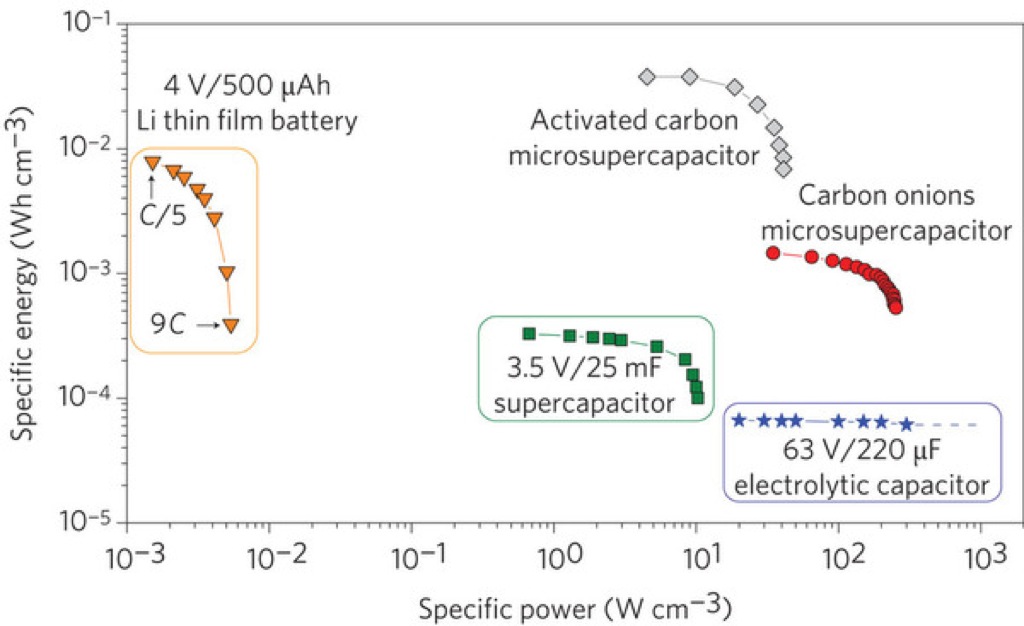
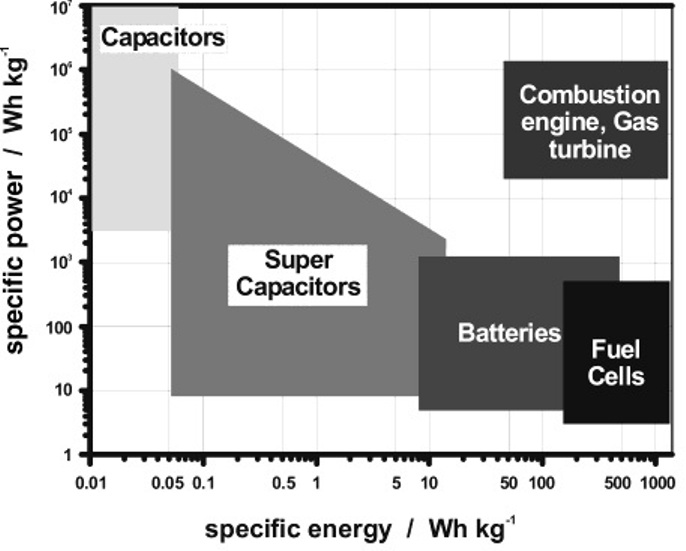
Speculations
- Could we improve upon this system with our separator using a similar method? Could we coat the pnc-Si with an insulating agent and preserve our very high permeance? Here we would not use graphene because we don’t want to form an additional electrode in the capacitor (forms a
 relationship, reducing overall capacitance)