
Viability and growth of HUVECs on nanonitride membranes – Part 2
This is in continuation to the studies that I published here. I used two types of membrane surfaces: nano nitride trenches (the back side of membranes) with pure nitride on the surface, and zero-second-etch nano nitride with a completely intact pncSi cap on the top. These two surfaces basically act as materials with two extreme properties: pure silicon versus pure nitride. The nitride material is not a flat surface due to the limited surface area on the back side, while the optical transparency of zero-etch nitride is somewhat lesser than what we are used to see, mainly due to two stacks of materials in the path of imaging.
Cells are HUVECS, in P13 stage, with MCDB131 media bough from VecTec company.
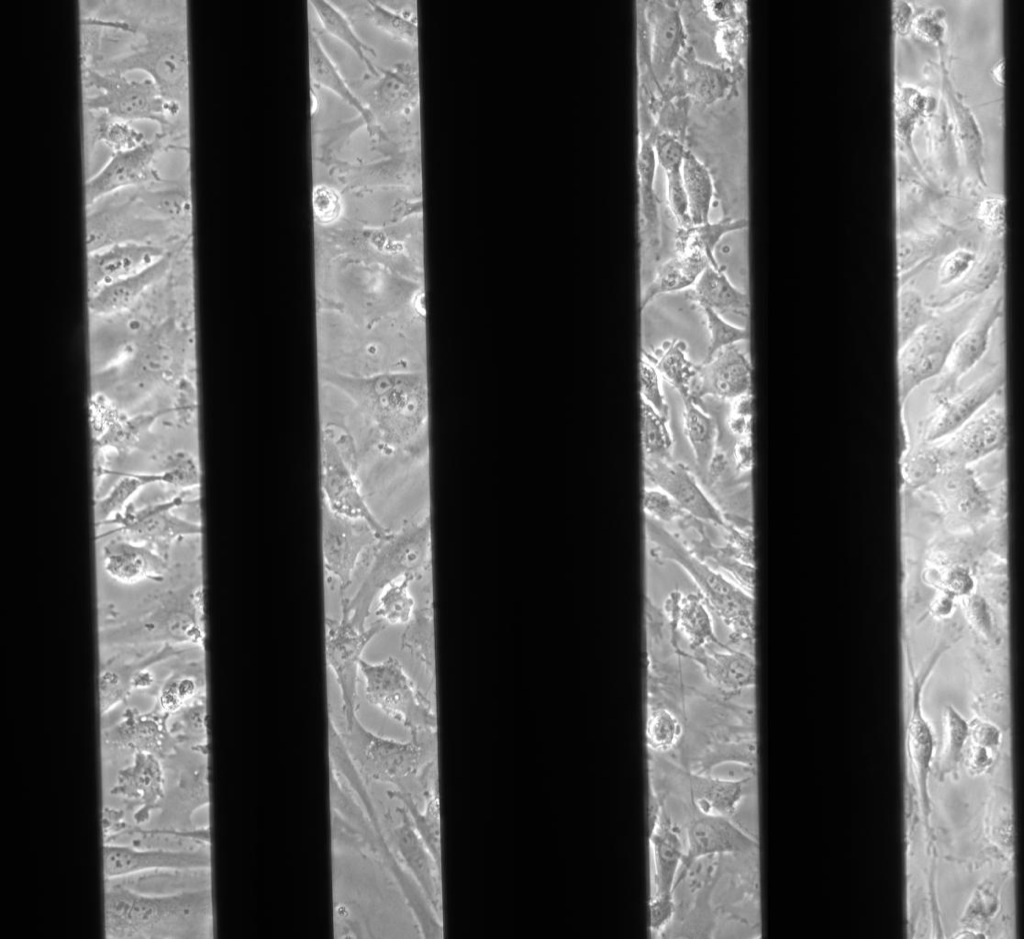
Control (zero-etch) pncSi surfaces
Nitride trenches
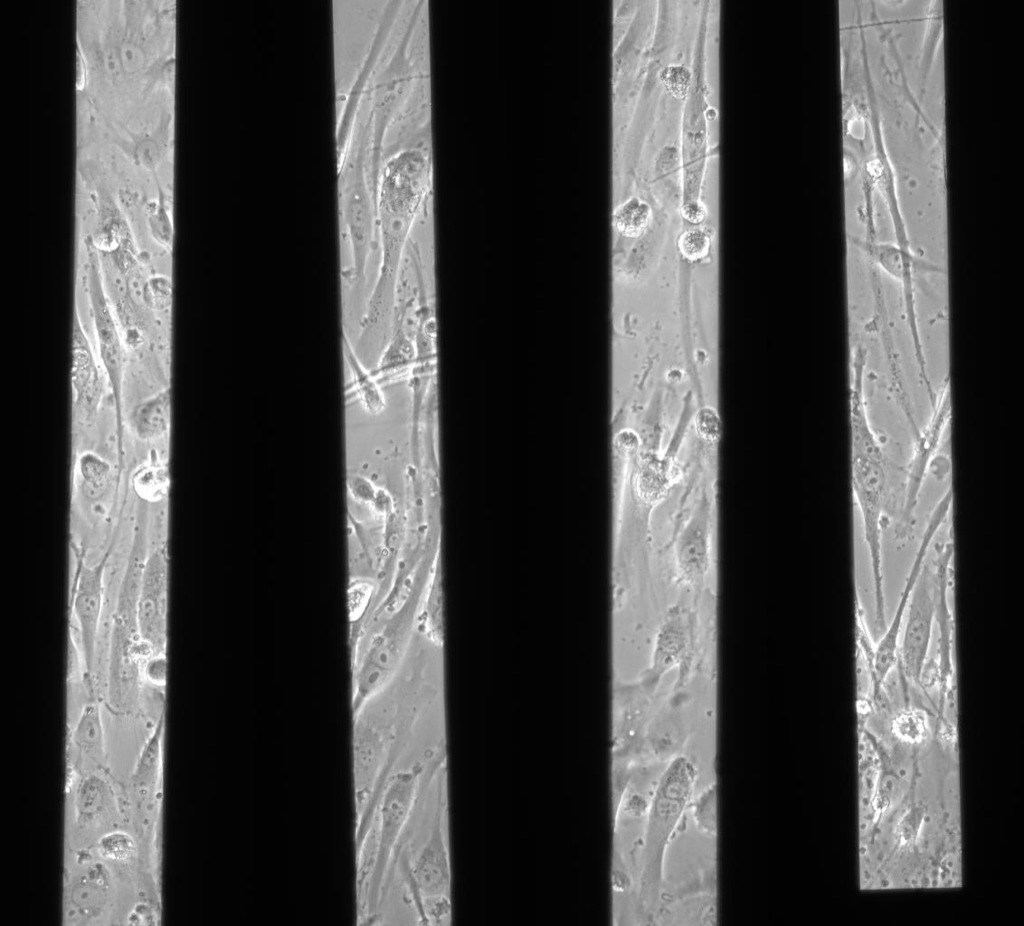
My general observation is: cells are lesser adherent on the nitride surface as compared to pncSi, and loading higher density of cells didn’t exactly help me much, since the cells then just get crowded and consume the media without actually growing. It takes usually 3-4 days before they start growing on the material, unlike T25s where the growth is almost the same day of passage. Also cells look much elongated (sometimes just rounded up!) on nitride, exhibiting a spindly phenotype. May be due to P13, or due to material property.
Next step is to simultaneously grow cells on zero-etch, 20-sec-etch, and nitride, and compare the results.