Devices for Geldbard Group Initial Ideas
I have been thinking about Handy Geldbard’s group and what would enable them to study groups of synapses. Currently, I am in discussion with Jennetta Hammond and Pat Lu trying to understand some of their needs and wants.
First, I considered their use of small microchannels to prevent neuron somas from infiltrating a chamber where potential synaptic connections could form. Another group has already coined the phrase “neurochip”, where they seed cells in parlyene cages, trapping the neurons in specific locations when their dendritic arbor forms. The video below was inspired by Handy’s show and tell to NRG a few weeks ago. It relies on their 3-chamber device idea. ITO electrodes (or any other potential conductor), would facilitate long term potentiation (strengthening) between synaptic connections in the middle chamber by stimulating the soma in the side chambers at a set frequency.
Expanding upon this idea for future work, we could introduce neurotrophic gradients via our shear free chamber (Henry’s device) and attempt to grow specific connections between spatial locations in the chamber.
My next idea was for Jennetta Hammond. She current studies the exocytosis and reuptake of vesicles between neurons. She desires a more effective way to stimulate neurons to produce the vesicle release. Currently, she has an open system with platinum electrodes immersed in media.
https://trace-bmps.org/wp-content/uploads/sites/3/2013/10/Janettas-Idea.mov
Working with the Silhouette cutter, I can create a shadow mask made of backing plastic at these geometries. I used the same technique with Josh Winans’ assistance to produce the interdigitated ITO electrodes for my BBB device. We already know ITO to be very biocompatible, so I would expect our neuron morphologies to compare very similar to a blank slide. I believe the significant factors affecting this project will be the electrode shape/electrode resistance and the localization of the electrodes to the neurons. Jennetta’s current procedure takes 3 weeks to produce neurons with a large arbor for her experiments. I hope to provide these slides to her at the end of the week.
Finally, when I originally wrote my application to grad school, I wrote a lot about trying to make a ‘neural breadboard’ that researchers could study neural networks upon. There would be a standard way to localize neurons, grow and selectively control connections in an appropriate space, and then be able to measure the state of all the connected neurons at once. I believe devices like this are necessary to realize the full desire of Sebastien Seung and others who want to study the ‘human connectome’.
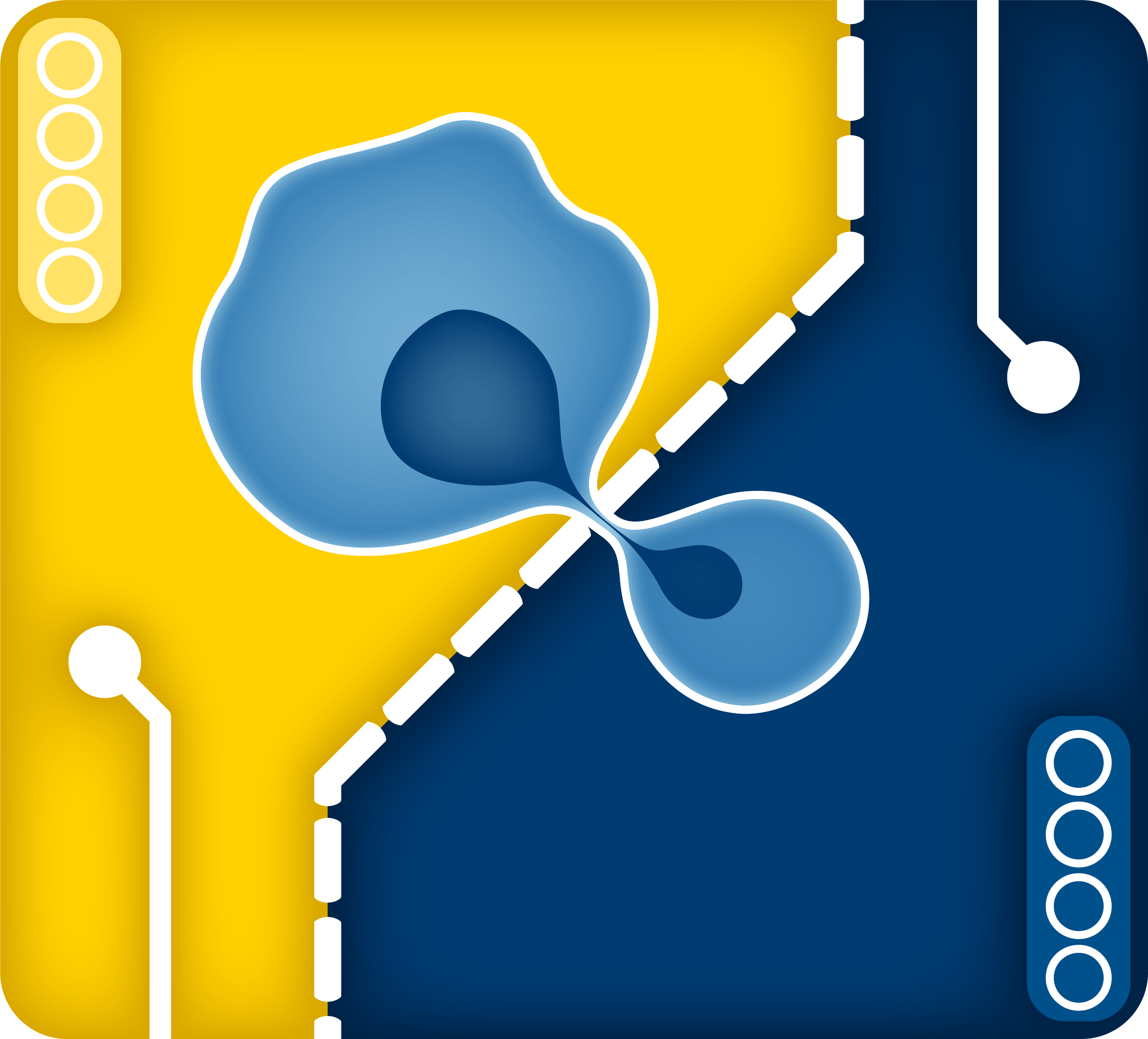
To that end, currently, neuroscientists use Patch Clamping as a gold standard technique for evaluating neurons electrical activity or ion channel behavior. The traditional way to perform patch clamping is to use a finely smoothed micropipette to draw in a part of the neuron’s membrane. This produces a very tight seal that can be used to interface with the cell and not the extracellular environment (gigaohms). There are a number of ways to get measurements out of this setup. Commonly, you can either hold the solution within the pipette at a constant voltage or constant current and get the electrical behavior of the ion channels within the pipette, or perforate the membrane and interface with the intracellular fluid of the soma.
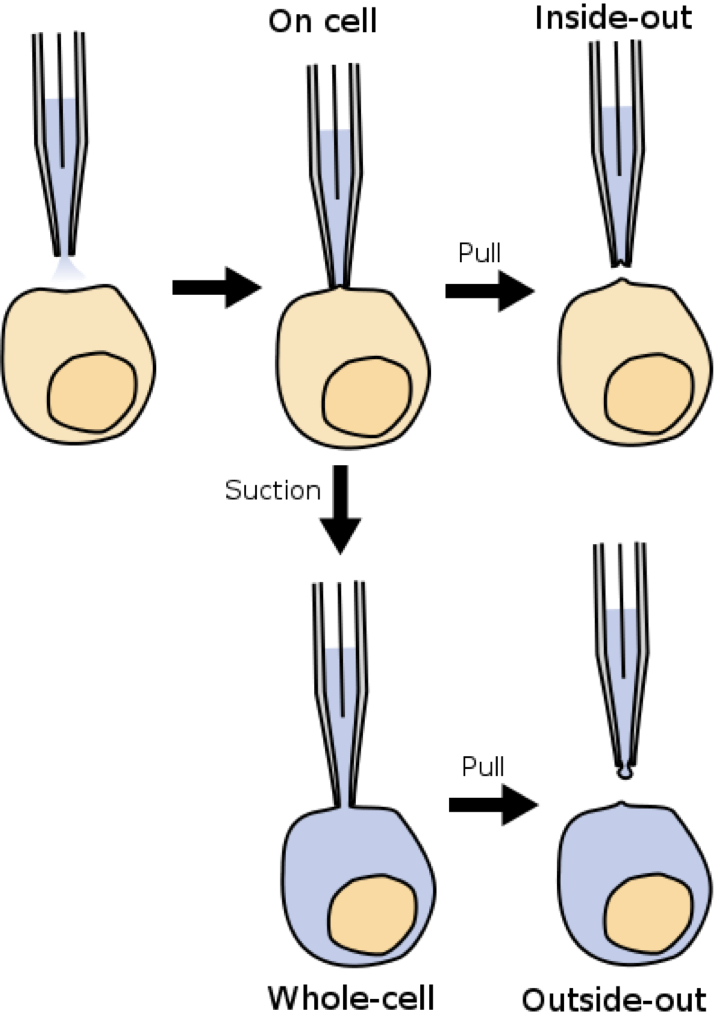
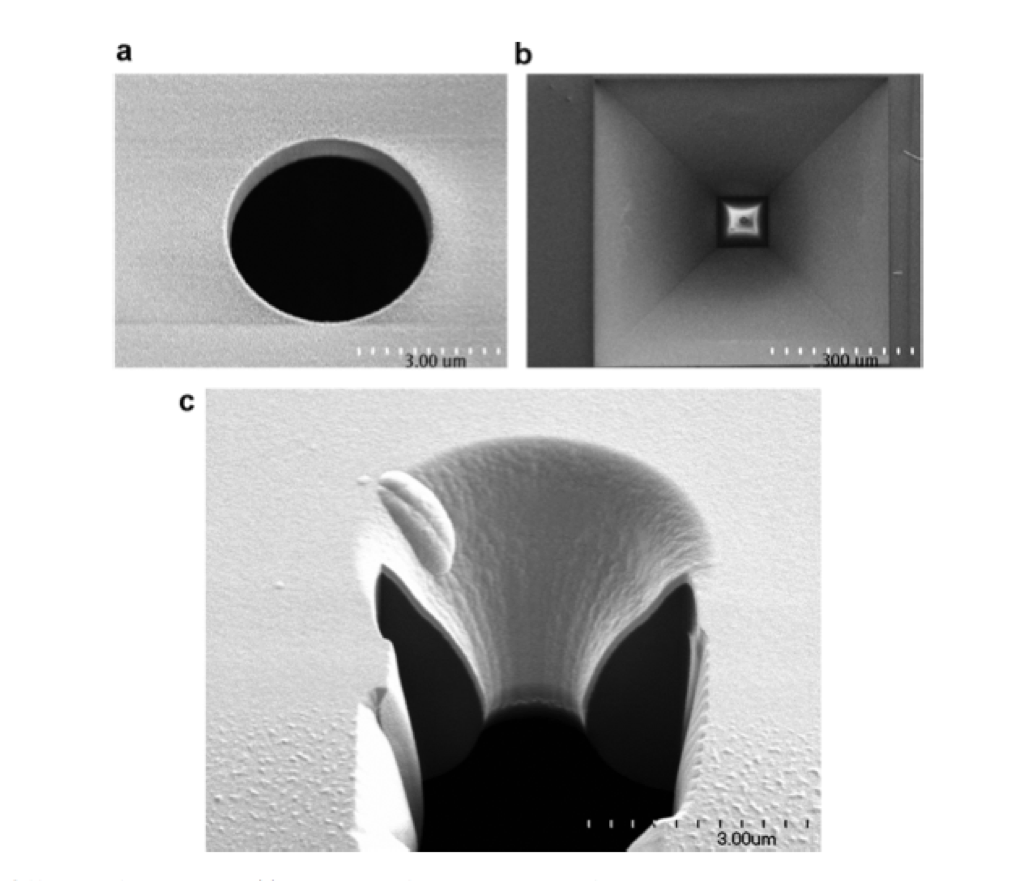
Different groups have tried to parallelize patch clamping for the last decade with a range of different techniques, centered around FIB holes in membranes with PDMS microfluidics. Some have tried to just use PDMS itself. A parallelized patch clamp chip would be really useful for pharmaceutical testing against certain channels, as one example. The hardest problem to overcome has been reproducing the gigaohm seal (ie bad seal = bad measurement).
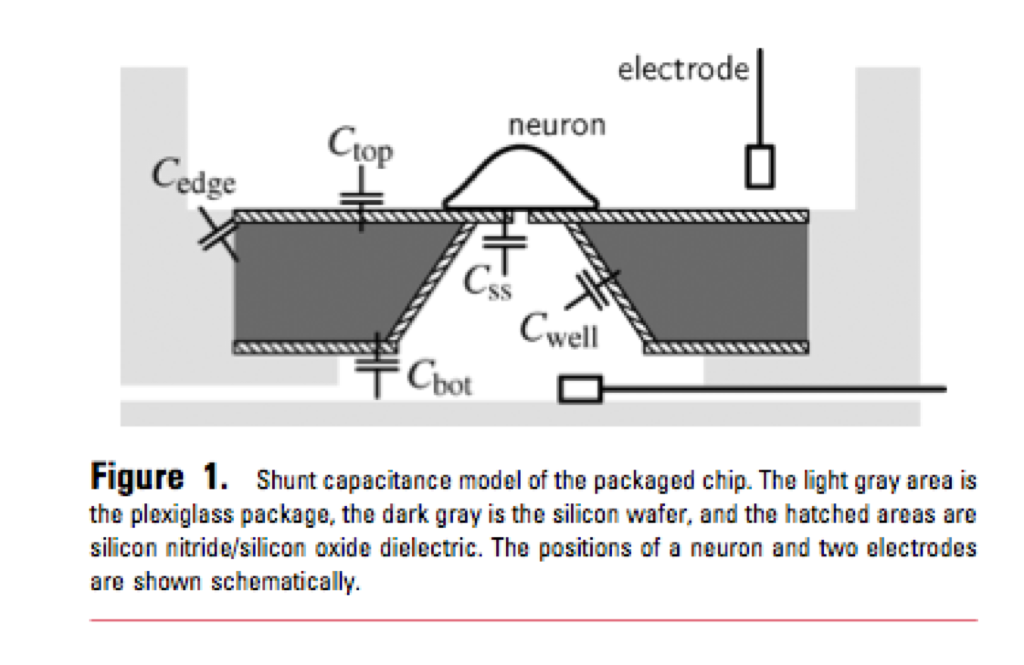
The paper at the beginning of this post suggests a number of different properties that are important to maintaining a good seal. Increasing the hydrophilicity of the bonding surface, making smaller, smoother seals on neurons are essential properties.


I believe our membranes could be suited for this application.
https://trace-bmps.org/wp-content/uploads/sites/3/2013/10/Patch-Clamp-idea.mov
A group in Canada has also done something similar, resulting in seals that were on the order of 20 Mohms.