
MEMs and membranes: a Liver Assist Device
Maria Lynch will review this article by Jeffrey Borenstein and colleagues …
Maria Lynch will review this article by Jeffrey Borenstein and colleagues …
Recently, several studies on Staphylococcus aureus (S. aureus) have been hindered due to poor performance from assays using the µSiM-Canalicular Array (CA). As discussed here, we attempted to improve assay performance by coating our membranes with fibronectin. This did not work well and instead left us in a state of confusion as we did not…
Introduction This post will describe the preliminary work I have completed using size exclusion chromatography (SEC) for EV enrichment. We are ultimately interested in interrogating serum EV biomarkers using CAD-LB, however, the presence of protein and lipoprotein contaminants reduces the capacity for EV capture (~104) on NPN membranes and may hinder the analysis of rare…
Today I performed a coating of n-Dodecyl β-D-Maltoside (“DDM”) on PDMS in an attempt to block protein adsorption (reference). The reference describes two different procedures, one in which the protein being incubated on the PDMS surface is in solution with DDM, and one in which the DDM coating is performed before the sample is washed…
After several months of modeling, experimenting, thinking and rethinking, it’s finally time to talk about the conclusions we can draw about nanomembrane ECMO. These conclusions take into account only blood oxygenation, and not blood decarboxylation, which is a different therapy that I have not modeled. You can find my description of the model here, and…
Residual matrix from different separation techniques impacts exosome biological activity (PDF) Lucia Paolini, Andrea Zendrini, Giuseppe Di Noto, Sara Busatto, Elisabetta Lottini, Annalisa Radeghieri, Alessandra Dossi, Andrea Caneschi, Doris Ricotta & Paolo Bergese. Scientific Reports 6, Article number: 23550 (2016) doi:10.1038/srep23550 Abstract Exosomes are gaining a prominent role in research due to their intriguing biology and several…
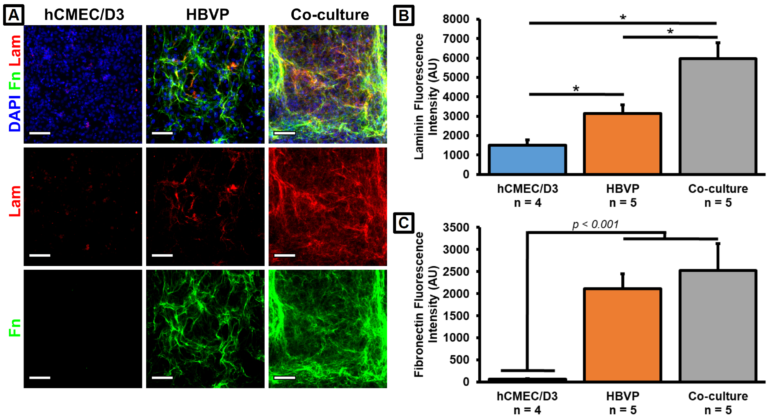
Introduction The blood-brain barrier (BBB) plays an important role in maintaining brain chemistry by restricting the permeability of small molecules and cells. Inflammatory diseases may disrupt the BBB and promote the development of neurological disorders [1]. One potential mechanism of BBB disruption is the degradation of the extracellular matrix proteins that make up the vascular…