
PDMS spiconated on the membrane
As I told at the meeting, I tried spincoating PDMS on the membrane and it worked without breaking membrane.
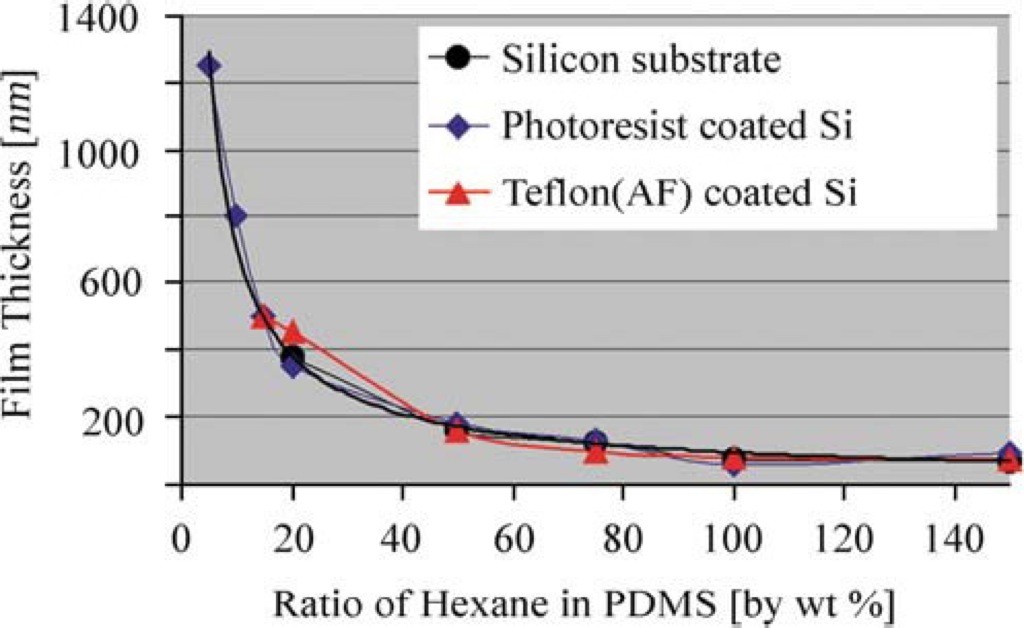
To make an ultrathin polymer film by spincoating the polymer has to be diluted in the particular solvent first. I used PDMS with elastomer to curing agent ratio (10:1) diluted in hexane (and xylene) by weight (20, 80, 100, 120 %)
The membrane samples were attached to a silicon wafer with double-sided tape for spinning (6000rpm, acceleration 2000rpm, and 150s). Samples were then cured on a hotplate at 95C for 1hr for solvent to evaporate.
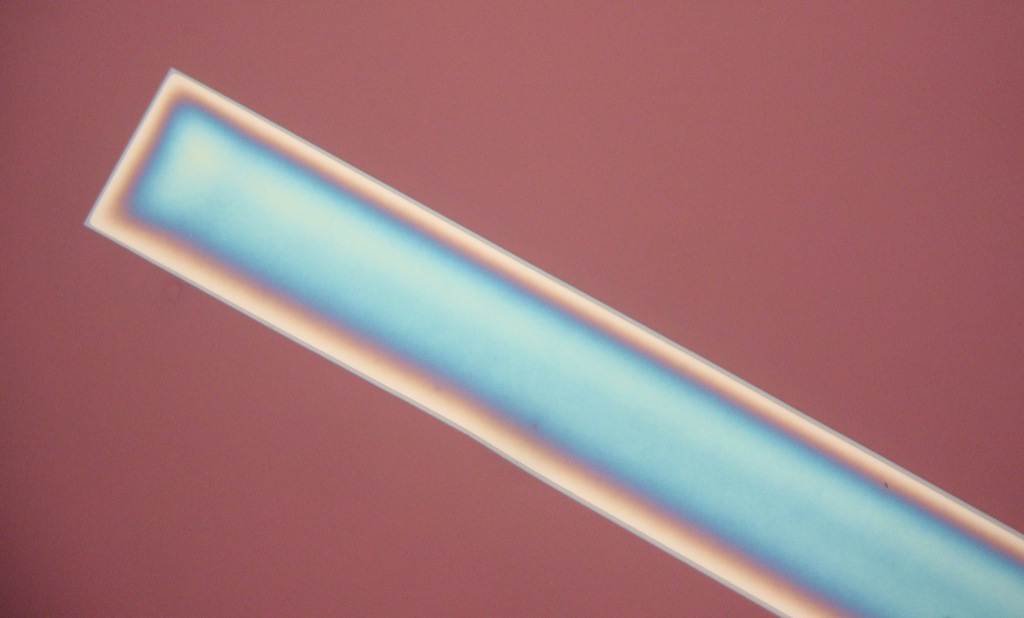
On many of the samples the membrane is not fully covered by polymer layer (see pictures), although there is polymer everywhere around it. Plasma treatment seems to solve that problem. But the one time I tried plasma treatment samples, the PDMS layer had a lot of impurities (probably form PDMS solution) and is very nonuniform especially around pinholes.
There is few pictures of the polymer layer on the membrane.
20:1 (Hexane to PDMS dilution ratio) non-treated sample
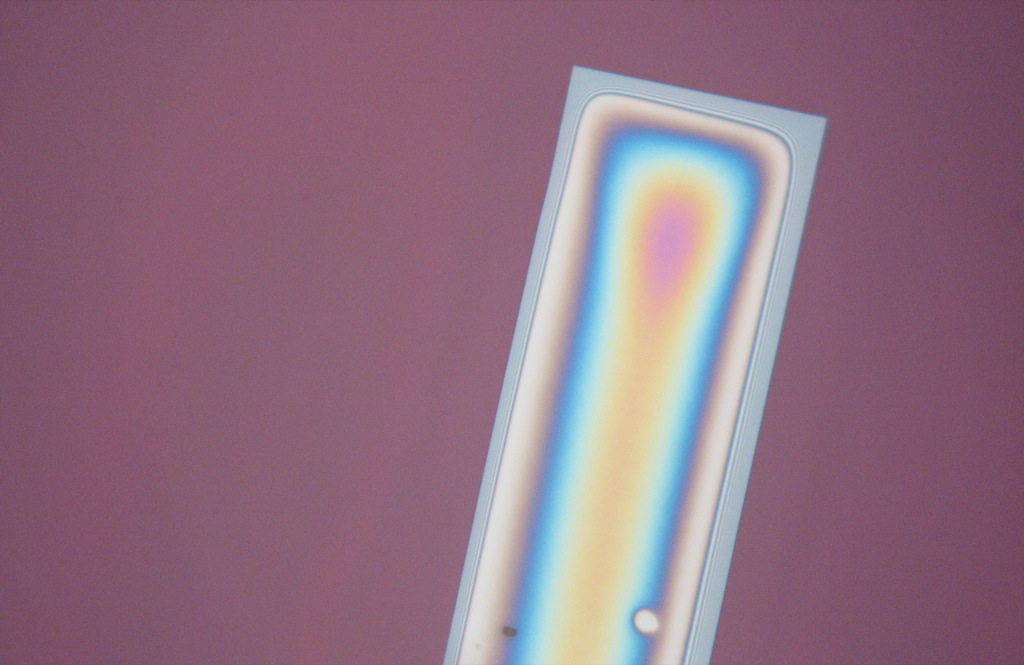
100:1 (Hexane to PDMS) plasma treated samples
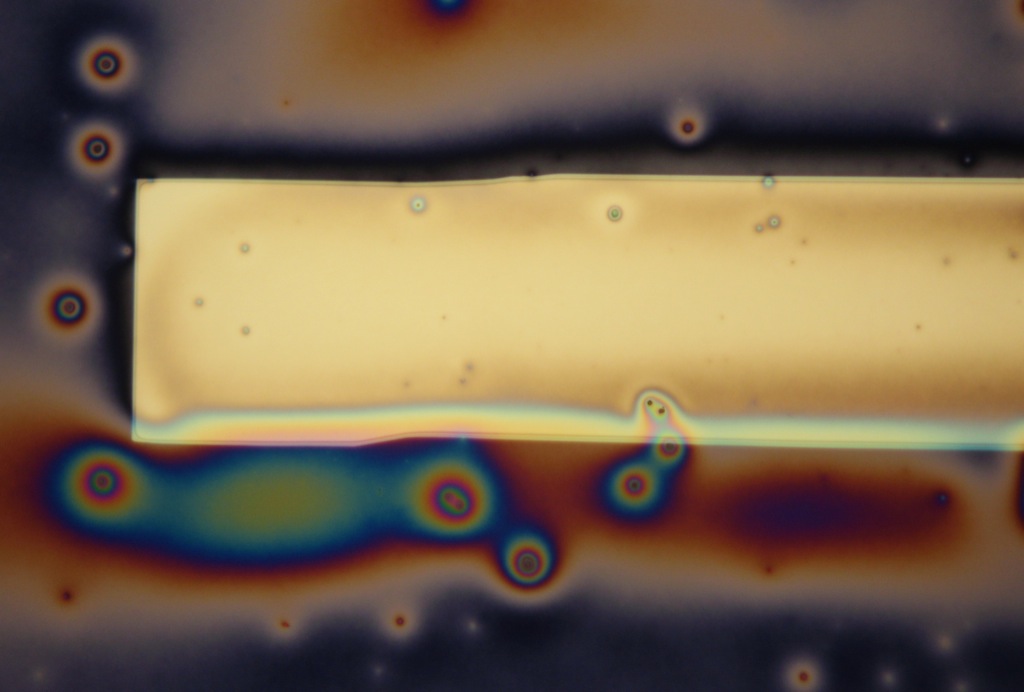
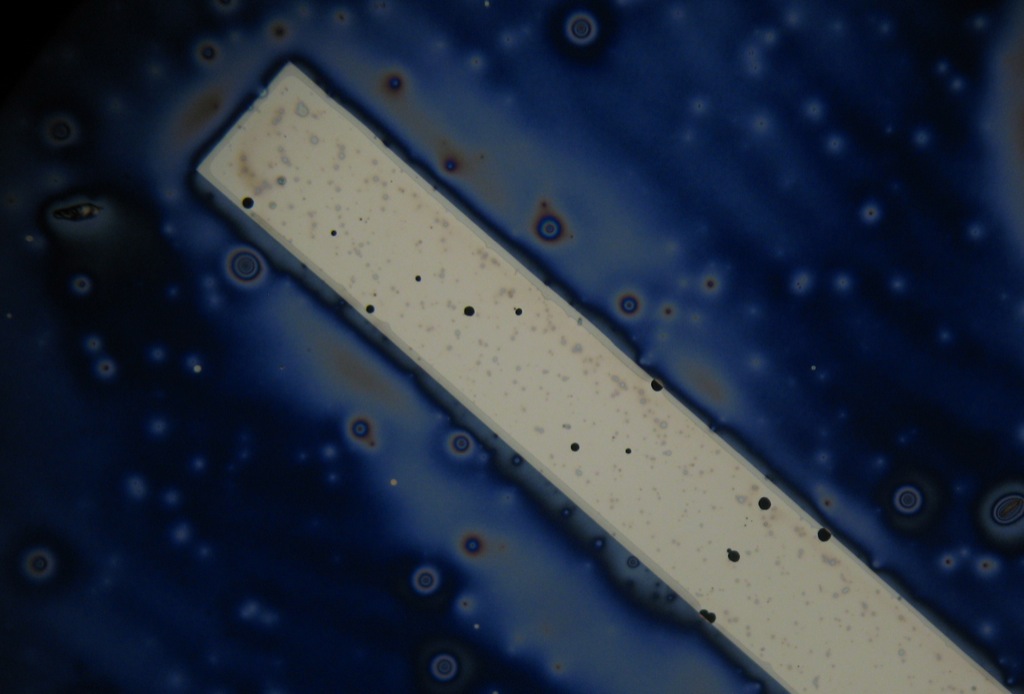
The thicknesses of the films are not measured yet, but based on the dilution ratio can be predicted by the graph below if I am doing everything right. I will measure it by ellipsometer when I have more samples.
I guess I can’t interpret these images very well. What is the evidence that the polymer is not covering the entire membrane? The blue or yellow colors? The color contrast between supported and unsupported spans? How could it happen that the free membrane isn’t coated but the supported membrane is?
I think the colors in these interferometric images eventually wrap around and so we can see the same color for different optical path lengths. And the color contrast that we normally see between supported and unsupported membrane should also remain so long as the layer isn’t microns thick or opaque, right?
On the second picture you can see the edges and sides of the membrane that look like they are not covered. The polymer layer kind of sits in the center. It happens during spinning. Probably the surface is not hydrophilic enough and the solution is too viscous. The edges of the membrane serve as barriers when membrane deflects during spinning. The supported membrane has a uniform surface that is easier to cover.
But may be I am mistaken in calling it non-covered, and it is just a thinner layer, with thicker one in the middle. What do you think?
The contrast between supported and unsupported layer will remain, PDMS is transparent in visible light.