
Discoloration CVC vs. AJA Tool
Based on Barrett’s array set up for discoloration, I set up an array experiment to check the discoloration effects between the new and old system ( 2e-7,AJA vs the older 7e-7 CVC ). The wafers from each had a bit of the wafer with different treatments (900C RTP,1000C RTP and Amorphous). To incorporate the maximum number of variables into the experiment, I set up 2 arrays in 24 well plates as follows: One from the new vacuum system and one from the old vacuum system.
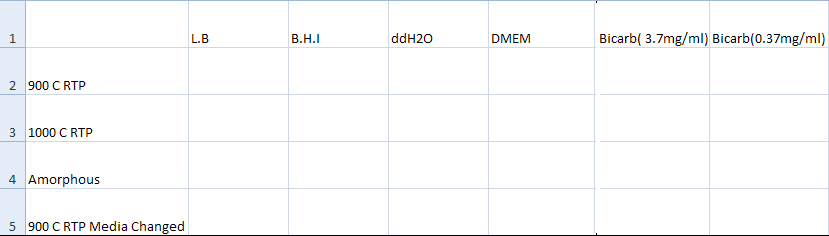
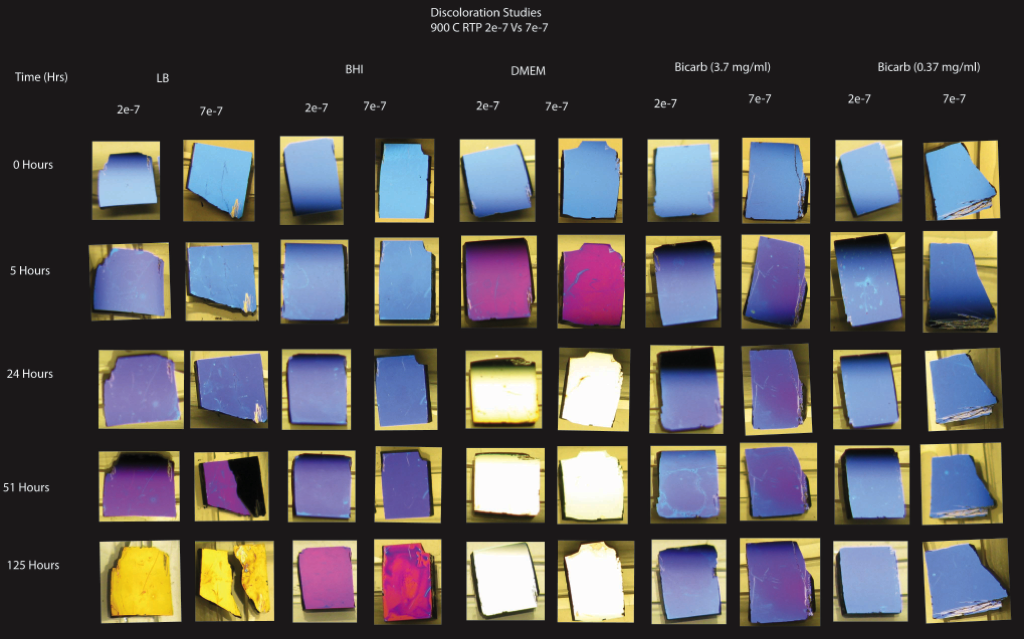
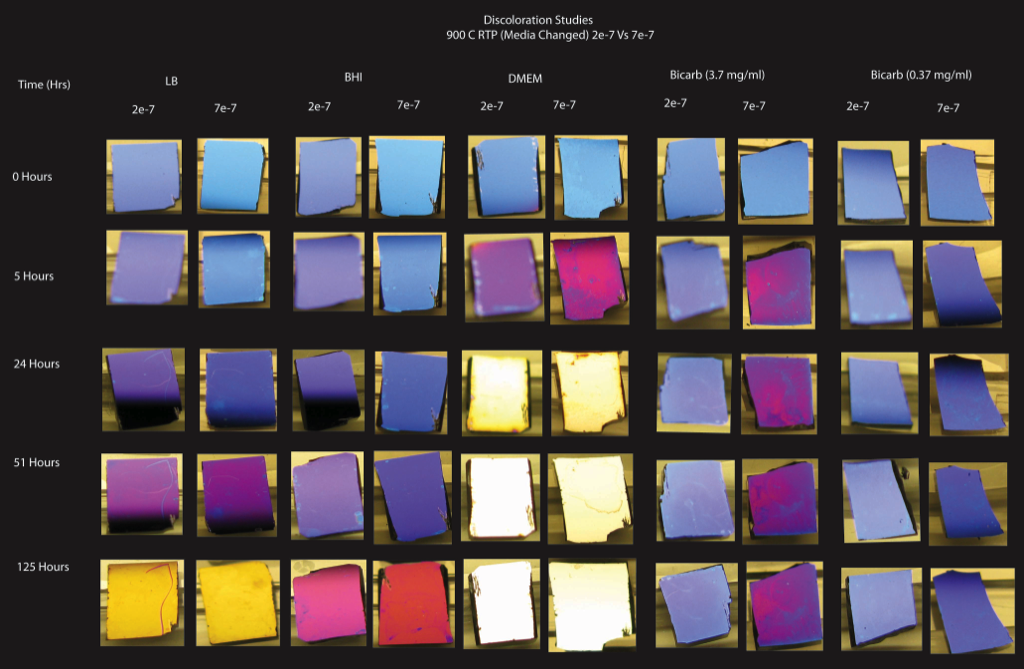
The only deviation from the regular discoloration studies was that in the last row of each array, I used chips of 900C RTP’ed samples but replaced media each time I took a picture. I tried this approach to see if there is any chemical which soluabilizes and stays in the media increasing discoloration, in effect behaving like a catalyst to the whole process. The experiment was carried out under aseptic conditions in the incubator at 37C and 5% CO2.
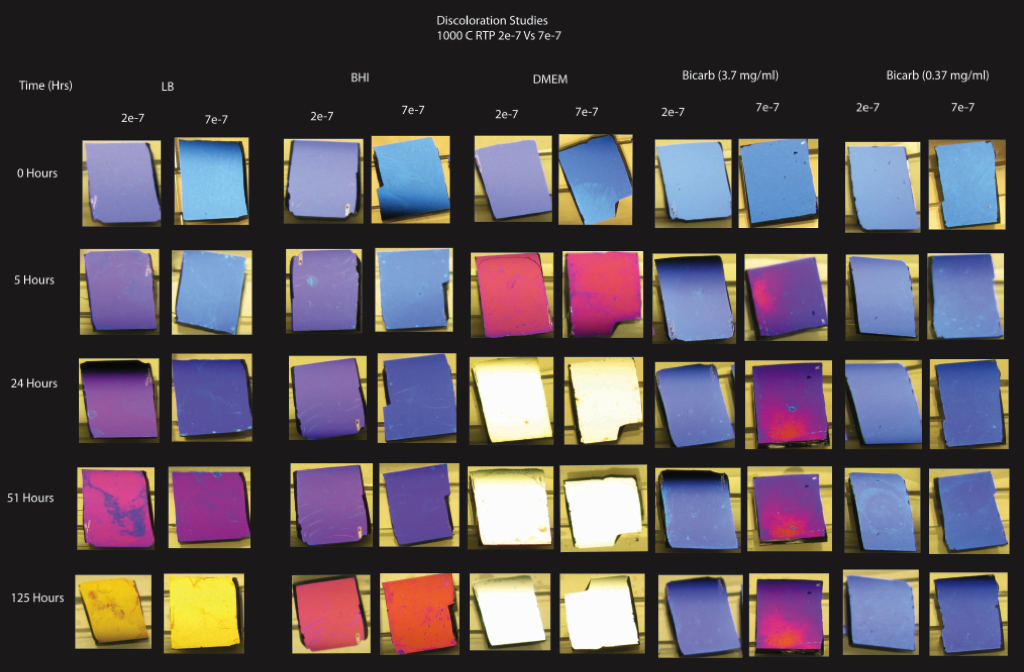
Results: The DMEM samples behaved as the positive control and all samples treated with DMEM showed discoloration very rapidly ( around 5 hours). Negative control consisted of samples placed in ddH2O and as expected none of the samples discolored even upto 125 hours. Overall the newer vacuum system wafers discolor slower than the one from the 7e-7 system. The Bicarb solution (3.7 mg/ml) behaves differently in that signs discoloration set in, in about 5 hours but do not significantly increase over time even upto 125 hours. The behavior of the amorphous samples vs the RTPed treated samples is comparable with them showing discoloration signs around the same time. There was no visible difference in rates of discoloration between the 900 RTP samples which had media being replaced and constant.
900C sample.
900 C with media changed.
1000C Sample
Amorphous Sample

Good work Nakul. Looks like the amorphous MIGHT be discoloring faster. You are getting weird bicarbonate results, too. Those chips “should” have discolored in this timeframe.
Its hard to say about the amorphous because the color is hard to read. The bicarb does behave weird. I used fresh bicarb which i autoclaved in a glass flask and transferred it to a glass bottle for storage. The conc. of bicarbs was made in plastic conical tubes. Also I covered the neck of the flask while autoclaving so there was no water lost in evaporation. If we use the slightly open glass bottles to autoclave, some of the water is lost to evaporation, increasing the concentration of bicarb in solution drastically. This could explain why the chips did not discolor in my experiments.