
W620: Mechanical Testing
The production crew recently delivered W620 to the lab, which was created to mimic W504 (and W612). W620 shows high burst pressure and has air permeability comparable to W504/612.
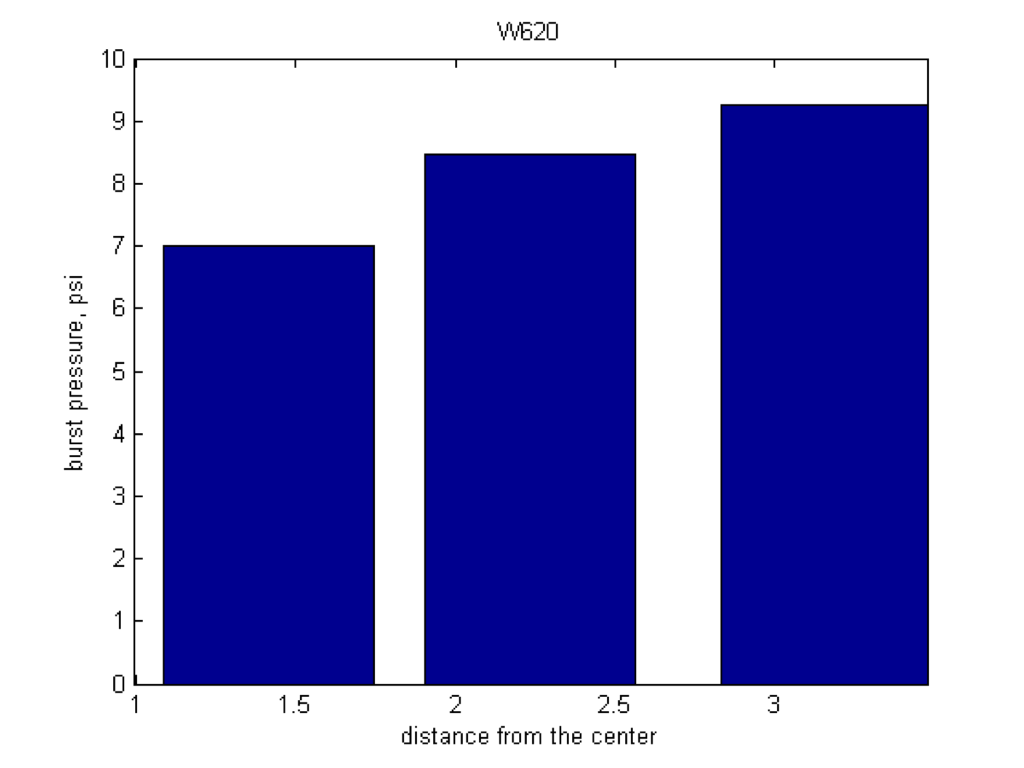
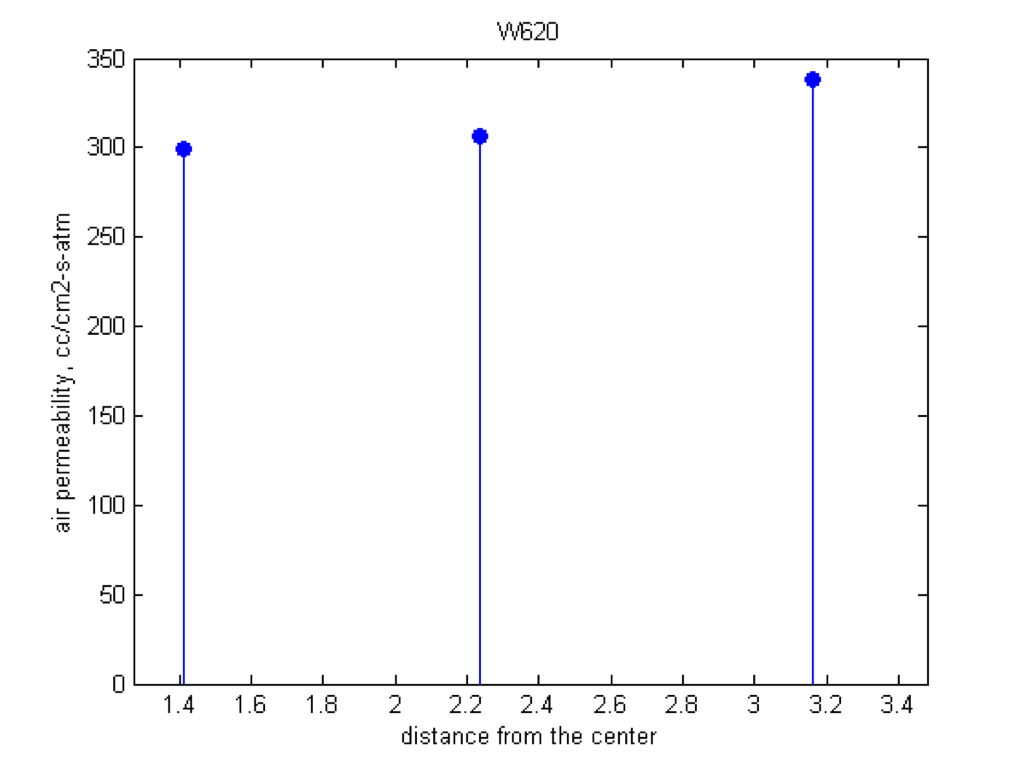
The production crew recently delivered W620 to the lab, which was created to mimic W504 (and W612). W620 shows high burst pressure and has air permeability comparable to W504/612.
The NRG website downtime you’ve suffered in recent weeks is paying dividends. Most of this has been in operation for a while, but in case you haven’t noticed here is the first round of changes we’ve rolled out … Sharing internal NRG News. If you have a note or news item to share with the NRG you…
In the next paper that I’d like to publish, I will compare protein separations for two membranes with different pore distributions to a single membrane at two salt concentrations (basically a redo of this post). My most recent trial with this had less than stellar results. I chose two wafers for movable cutoffs – SC…
In Josh’s forthcoming paper about clogging in forward and reverse configurations using 20 nm and 100 nm sepcons, we thought there was reason to discuss how the data agrees with the already existing models of membrane fouling. In this post, Josh discusses some of his efforts to model the data without accounting for the fact…
Bernhard Group: Discoloration was observed during DNA separation experiments. Further study led to these results: No discoloration observed with low pH buffered NaCl. Discoloration with high pH buffered NaCl. Worried that Cl was the culprit, sodium acetate was tested. Discoloration observed with sodium acetate. In one early experiment, 4 areas were tested on one chip. …
I have uploaded the TEOS process outline: TEOS is tetra-ethyl-ortho-silicate, or equivalently tetra-ethoxy-silane. TEOS slowly hydrolyzes into silicon dioxide and ethanol when in contact with ambient moisture. IMPROVEMENTS: -This process prevents us from having to expose the front-side of the silicon during processing. Concurrently, this eliminates the need for aggressive cleaning of the front surface…
Abstract: In this project, we want to explore the possibility of detecting molecules in nanopores by building waveguides upon a silicon nanomembrane chip. The first experiment is performed by sending 650nm laser light onto our waveguides and detecting the light waveguided by our patterned structure. This is used to prove that light can overcome the…