
Desalting: Broken and Pinholed Membranes
Desalting of 4M NaCl in deionized water was performed using our membranes in the SepCon format. I ran the SepCons in the same as way as the previous study, using a low stir rate and floating the SepCons. Once again, a conductivity probe was used to measure the amount of salt in the dialysate. Transport was normalized based on membrane surface area.
First, I attempted to run 4 SepCon setups with broken membranes. I placed 62.5uL in each SepCon and did not “pre-wet” the external side of the membrane before placing in them the buffer. Large air bubbles formed on the bottom of each SepCon, effectively blocking diffusion. I then ran another trial with broken membranes, this time pre-wetting the bottom of the SepCon. Salt transfer occurred immediately upon wetting and equilibrium was reached in 12 minutes. This test is shown as trial 1 in the graph below. I therefore decided to wet all SepCons with dialysate before proceeding.
I also ran three tests using membranes with pinholes in the SepCon format. Pinhole size and number varied between the samples, so it is hard to correlate between them. The results as shown below as trials 2, 3, and 4.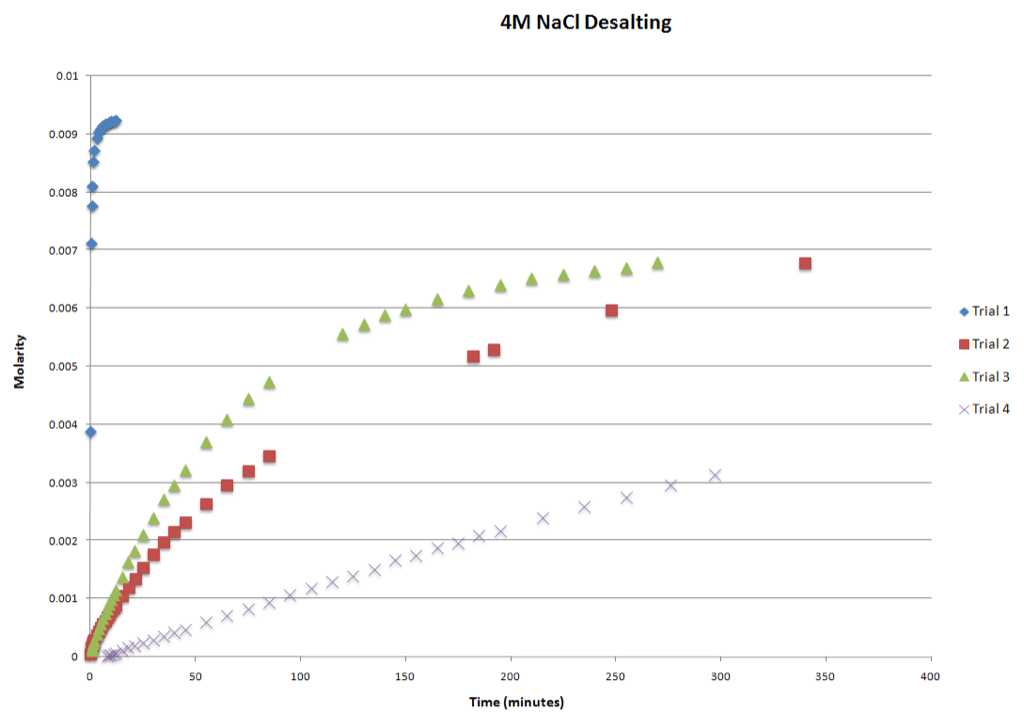
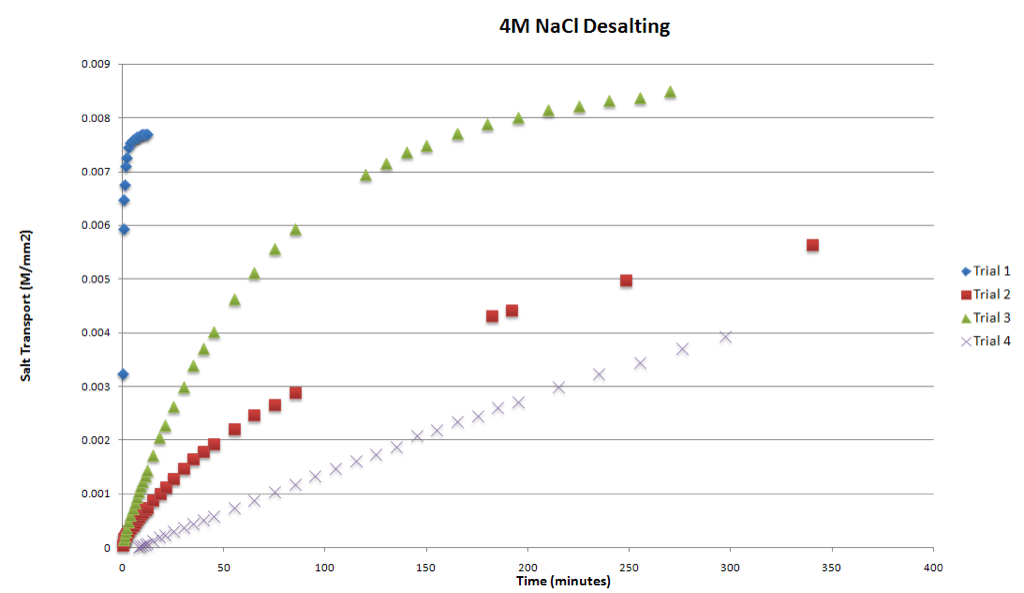
Broken membranes having a very step flux rate, as expected. Pinholed membranes performed similarly to each other; I am unsure of what kind of consistency to expect due to variation in pinhole size and number. I plan on running a few more pinholed membranes at various concentrations, and possibly exploring the use of other samples/dialsyate buffers. I also will run samples with no pores or pinholes as a negative control.
For the duration of the tests, no discoloration occurred. Also, when handled carefully the membranes stayed intact and no bubbles were seen. When I tried to cap the SepCon using the caps from the mini-dialysis units, the differential pressure caused the membrane to burst and the sample to shoot out. This may be avoided with stronger membranes. There has been no consistent result in the final volume of the SepCon sample once equilibrium is reached; it will continue to be monitored.
In one trial all of the sample left the SepCons. I viewed the membranes under the scope and found rod-like structures on it, likely crystallized NaCl.
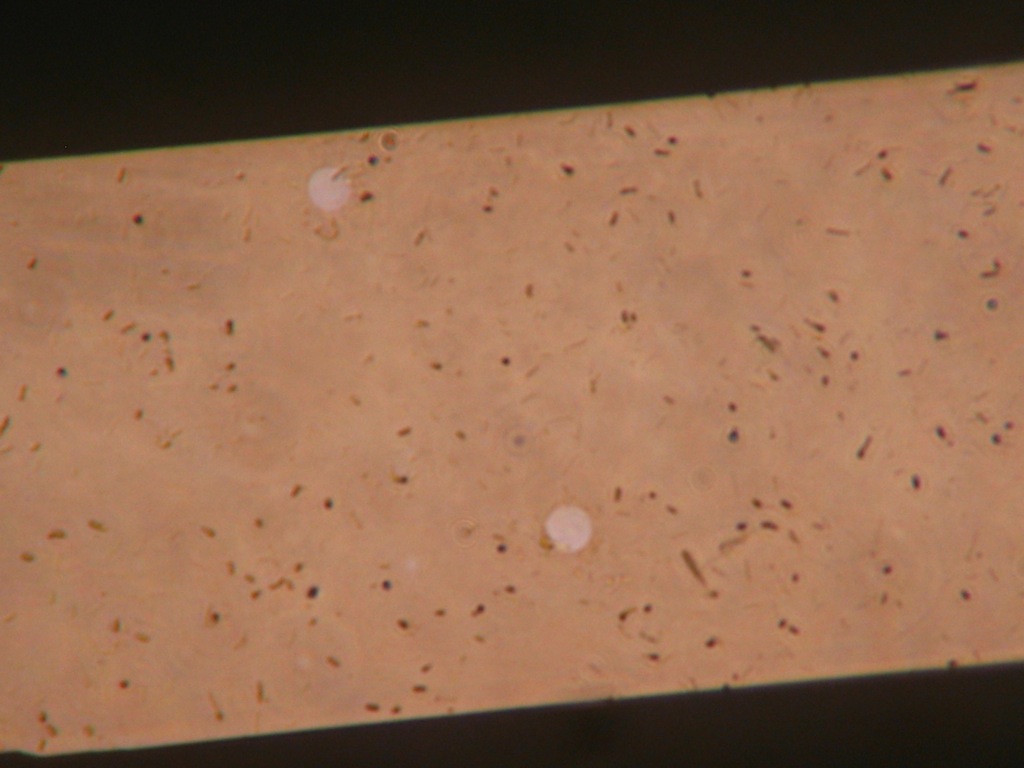
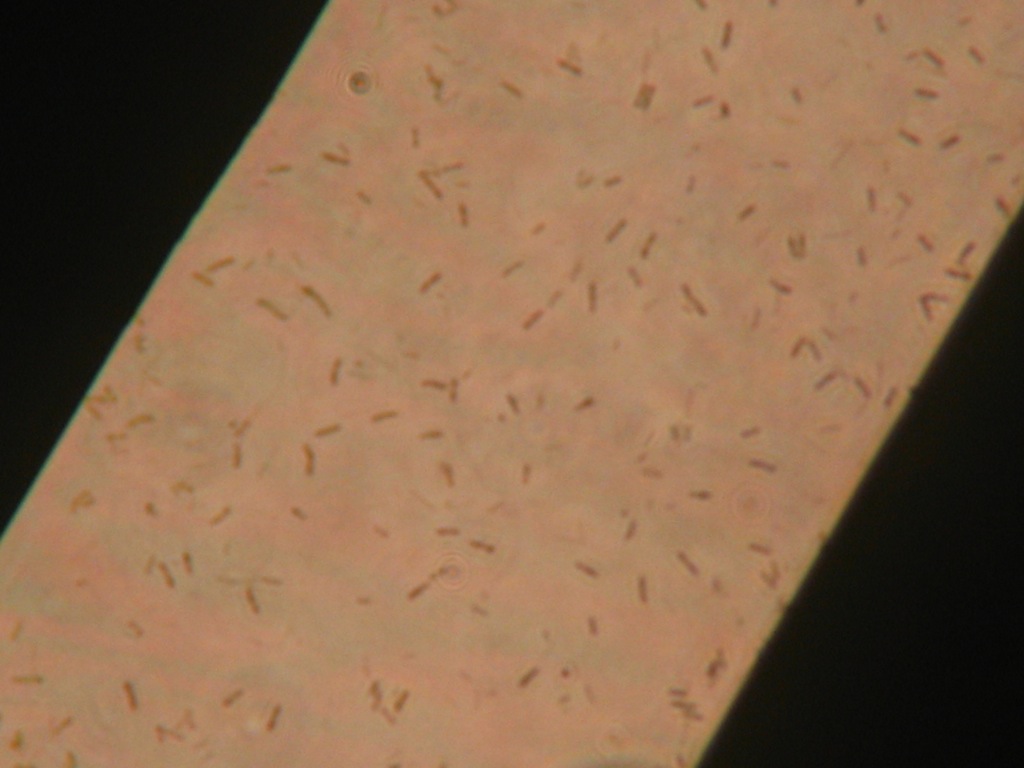
Looks like bacteria
Our water looks ok under the scope.