
Updated Burst Pressures Picture
I only added coordinates on each data point.
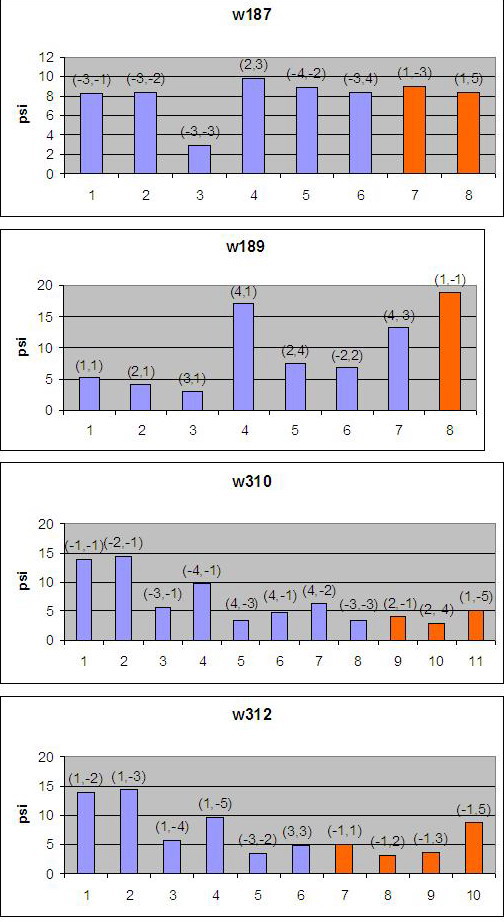
I only added coordinates on each data point.
Introduction As a continuation to my previous post, I am running a triplicate of cell culture adhesion tests to observe cell lose on our membranes following physiological shear stress. Methods HUVECs (P3,4,5) were seed within our mimetic and left to grow to confluent for 24 hours. Shear (4.5 dyn/cm2) was initiated and images were collected…
Background: Similar to the Gaborski lab, the authors of the publication “Microfabrication of high-resolution porous membranes for cell culture” fabricated and characterized ultra-thin polymeric membranes for use as cell culture substrates. Upon reviewing their publication, Tom and I discussed some of the experiments that we’d like to replicate to further characterize the SiO2 membrane for our…
Electron Beam Evaporator Protocol (V_1.0) – Lingyun Here is the first version protocol of the electron beam evaporator at RIT clean room. There is not too much to put down here – the best way to learn this is to attend the training facing the real machine tool. I will try to provide some photos…
As we’re uncovering more bits and pieces of data, we kept being lead to the idea that our membranes may be made out of SiO2 and have a modulus in the gigapascal range, but cells seem to perceive them as soft substrates. After looking at focal adhesions, fibronectin deposition, and cell/cell junction formation, we’re still sticking…
I finally got some MATLAB code working which calculates permeability coefficients (P, in cm/s) from a non-sink, generalized equation. This data is from (n=5) fluorescein (MW~370 Da) transport experiments in the Tecan (time vs. receiver well concentration (Cr) values). In this first set of data, I used polycarbonate and polyester transwells, at room temperature, without…
Today I looked at 3 more wafers: w158 (9/7/07) – some pinholes, overwhelming amount of very fine debris, not cbs as far as I can tellw160 (9/7/07) – some pinholes, debris, no cbsw171 (9/26/07) – many pinholes, lots of debris, no cbs w158 (200x) – small particles Link to updated report.
Can you plot them from left to right with right being increasing distance from the center. Calculate x^2 + y^2 = R^2