
Optimizing IMR90-4 Coculture BBB Model
Introduction
While we have optimized coculture models for commercial brain endothelial cells and pericytes, we needed to do the same for iPSC-derived cocultures. In this post, I show the optimization process using IMR90-4-derived EECM-BMEC-like cells [1] and brain pericyte-like cells (BPLC) [2].
Methods
The top well chip surface was coated with collagen iv (Sigma C5533), bovine fibronectin (Sigma F1141) diluted in water (4:1:5 Col IV/Fn/H2O ratio) for 4 hr, just prior to seeding pericytes. BPLCs were cultured on the top surface of the channel of uncoated chip surfaces at 14,000-25,000 cells/cm2. They were seeded in pericyte medium, E6 + 10% FBS. The following day, EECM-BMEC-like cells were seeded in the top well at 40,000 cells/cm2, and media in both chambers was switched to EC medium, hECSR. Culture time was 7 days for BPLC, 6 days for EECM-BMECs.
Results
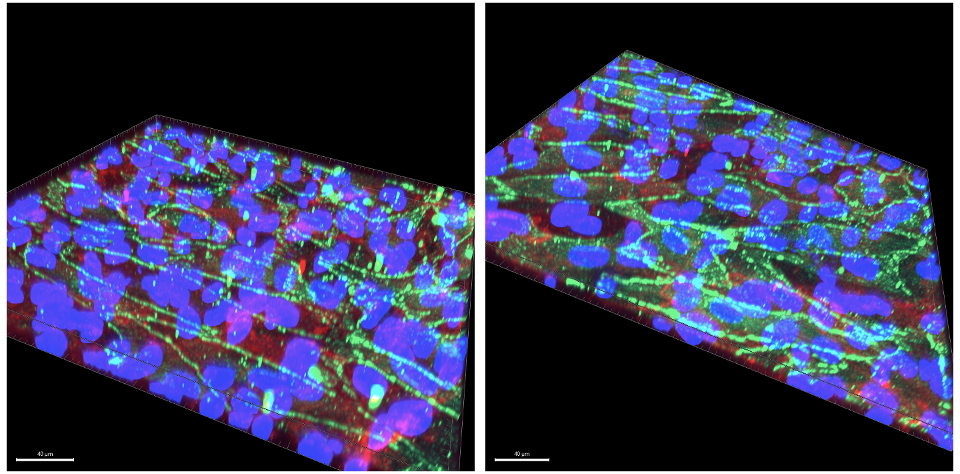
25,000 cells/cm2 is too high seeding density for BPLC. The cells reached confluency too fast and started to retract and peel off the membrane. They do the same in tissue culture plates. 14,000 cells/cm2 worked better. In some instances, they started to clump and retract at the edges still.
IMPORTANT NOTE: Pipetting into the channel with pericytes must be done SLOW. Pericytes could respond to the shear stress and start to fall off. I saw this in the first 14,000 cells/cm2 experiment, where the cells clumped and fell off before reaching confluency. In the following two experiment, I pipetted slower and the pericytes did well.


References
[1] Nishihara, H., Gastfriend, B.D., Kasap, P., Palecek, S.P., Shusta, E.V., and Engelhardt, B. (2021). Differentiation of human pluripotent stem cells to brain microvascular endothelial cell-like cells suitable to study immune cell interactions. STAR Protoc 2(2), 100563. doi: 10.1016/j.xpro.2021.100563.
[2] Stebbins, M.J., Gastfriend, B.D., Canfield, S.G., Lee, M.S., Richards, D., Faubion, M.G., et al. (2019). Human pluripotent stem cell-derived brain pericyte-like cells induce blood-brain barrier properties. Sci Adv 5(3), eaau7375. doi: 10.1126/sciadv.aau7375.