Lift-off Capture Update
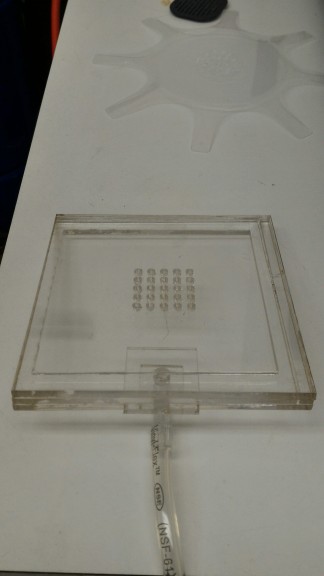
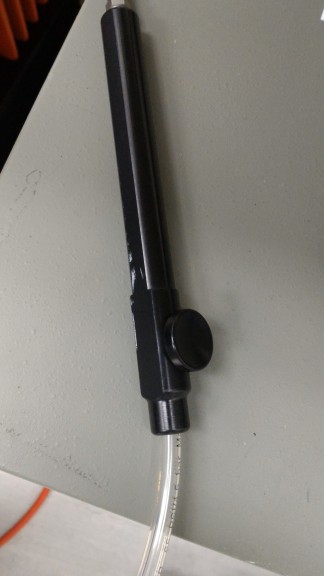
Since the new year there have been difficulties with charging the glass plate and the charge not being enough to capture the membrane. Synthetic silk was tested to see if the glass charged better but no difference was seen between the silk and a crew wipe. When materials were first being tested to use during the lift-off procedure, acrylic was one of the materials other than glass that showed promise. To test the hypothesis of using a plastic, a wafer spring was used. The membranes were easily attracted to the charged plastic. The same method was used as with the glass plate where the sample was placed into the XeF2 etch with a mesh over the top and double-sided sticky tape on the mesh. Although the membranes were easily lifted up without any curling, there was still air gaps between the membrane and mesh that when placed onto the capture device would cause wrinkling. Transfer was also a time sensitive thing seeing the charge on the plastic did not last long. To deal with this issues, holes were drilled in a one inch square and a vacuum was applied to the back. Once the static charge picked up the membrane, a vacuum could then be pulled causing the membrane to be flush against the mesh and reducing wrinkling even further. Josh then designed a device that was made out of three four-inch acrylic squares. the bottom one having the holes to pull the vacuum on the membrane, the middle one as a spacer and the top one to seal the device. The same method was used with the new device and membranes were able to be lifted off. It was also found that membranes can be saved. Sometimes membrane wouldn’t come up as nicely and some curling would occur. With manipulation of the vacuum and carefully moving the membrane with tweezers, the membrane can be flattened out once again.
Membranes have also been able to be fixed by sealing the holes in the membrane with sylgard. No flow tests have been done yet but looks promising.