
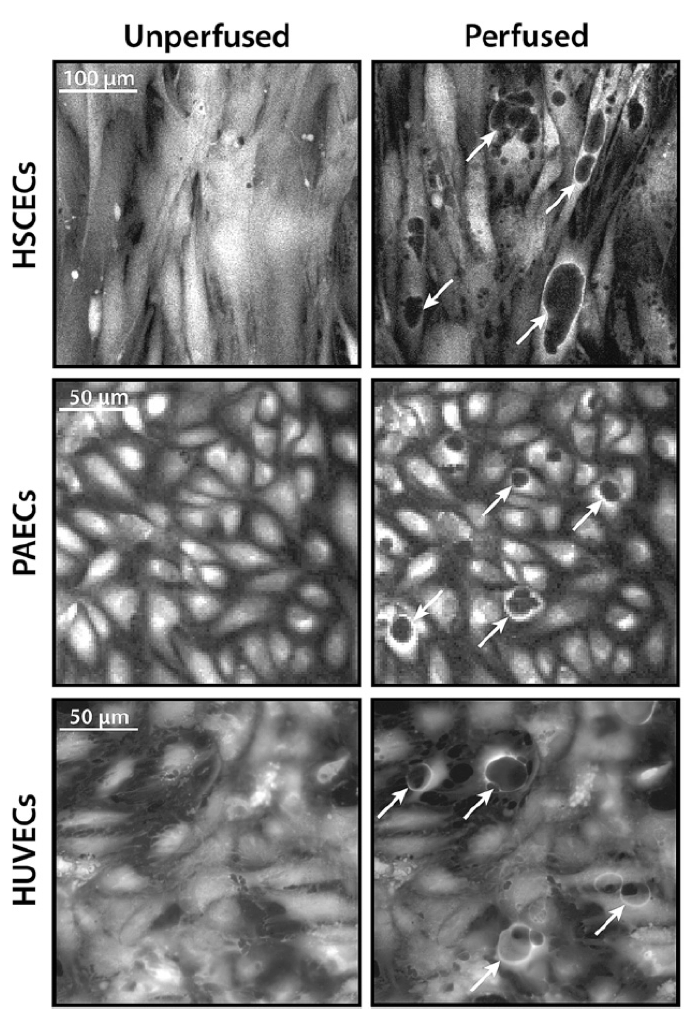
Endothelial Vacuoles Induced by Flow
In working on a long over due paper by Barrett on endothelial response to high permeability material …
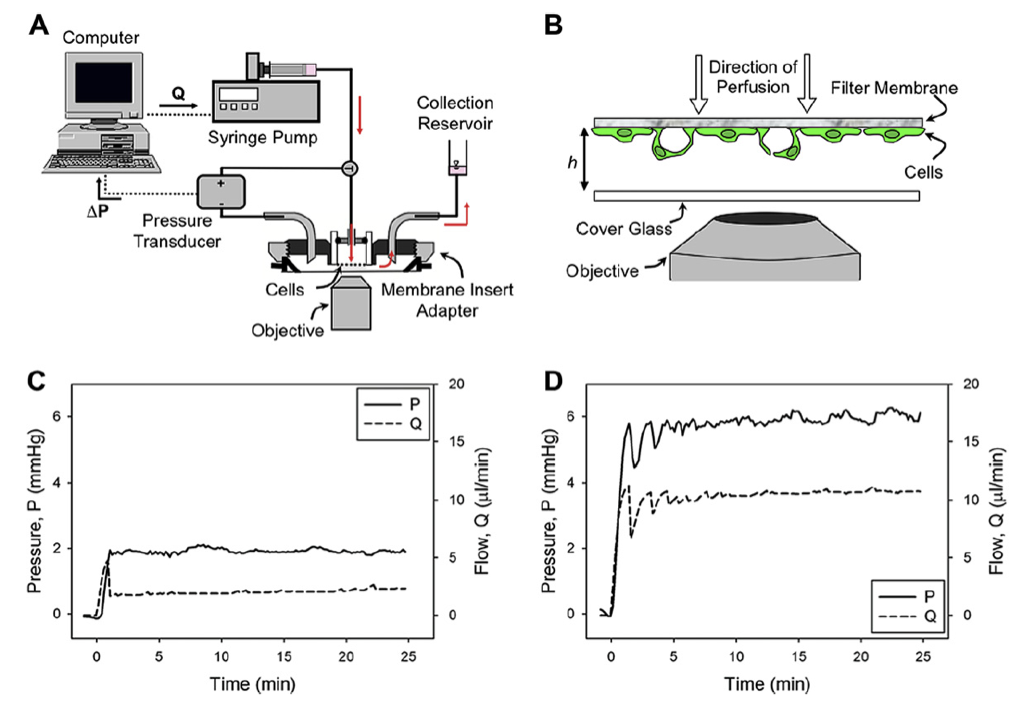
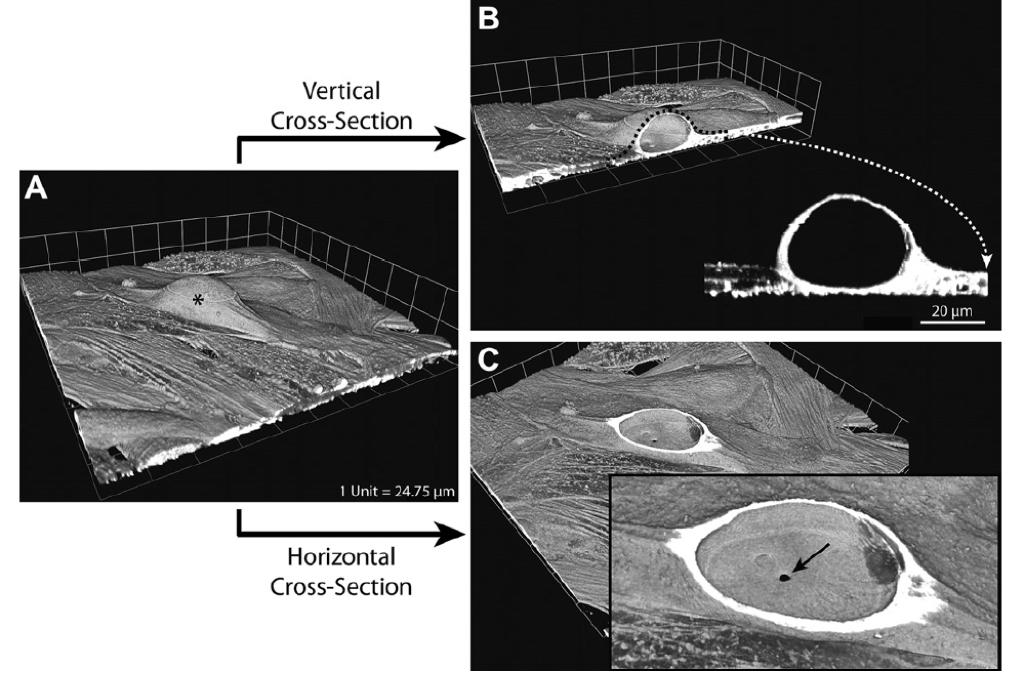
Key figs …
And one post from Nakul.
I came across this highly relevant paper


Kilean and I are working on submitting a paper to Membranes on some of our electron tomography work. Here’s some of the work that we’ve done so far: Tomography Paper V2_KL
This device was built similar to the device featured in the Burns(Zydney) 2000 J. Mem. Sci. paper. Our device seals in a SepCon formatted pnc-Si chip and allows 2 electrodes to be positioned by the chip. A feed line pressurizes the chip with saline, and the generated potential can be measured using the electrodes. The…
When Aslan and I went to the Beckham lab last week, they gave us a copy of their ultracentrifugation protocol for isolating exosomes. I attached it here so that we can have it as a reference. The major thing to note is that they typically use 13-15 mL volumes of media to begin their centrifugation…
Given the low burst pressures of recently produced wafers Chris requested I burst pressure test some samples in two different orientations: well side facing away from the positive pressure source and well side facing towards the pressure source. The standard protocol I follow is to test the samples with the well side facing the pressure…
Last week Sarah and I made several standard nanofluidic transistor (NFT) stacks (3 nm Ti, 12 nm Ag over a 3-slot SiN membrane – wafer # 1024) in the cleanroom. I then measured the zetapotential of these devices at pH 7.43, and we thought that because the outer layer of the chip was Al2O3 that the…
Over the past month, I’ve posted some results of a colorimetric assay for silicic acid. Previous posts are here and here. These results showed that the assay detected silicic acid after pnc-Si and PSi degraded. However, bare silicon wafers also yielded silicic acid, according to this assay. Since pnc-Si samples have the Si well-side surface,…