
Membrane dimensions
Below is an optical image that shows the amount of area loss caused by the preferential EDP etch.
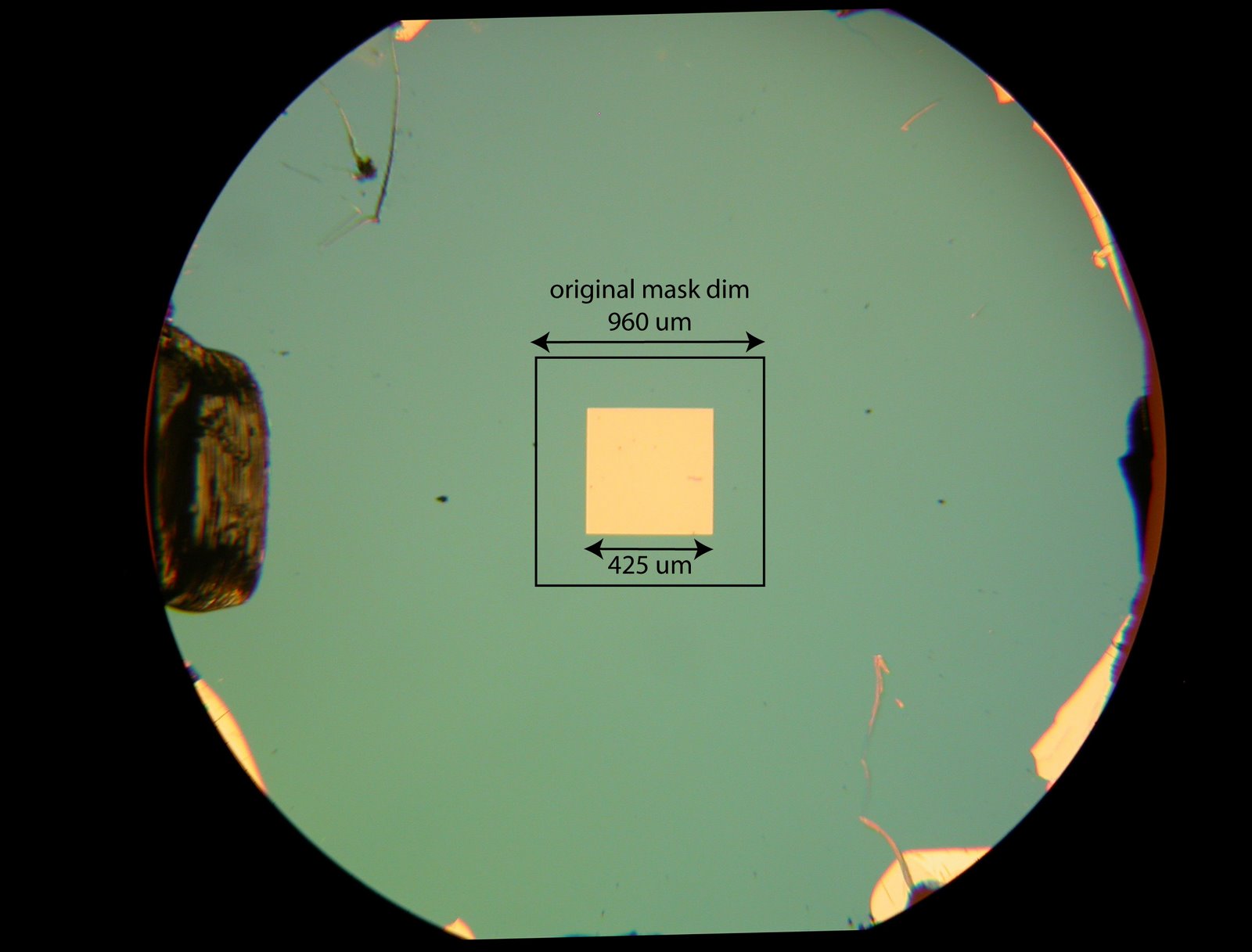
Based on these numbers, our most recent membrane slits measure 115 um x 2014 um.
Below is an optical image that shows the amount of area loss caused by the preferential EDP etch.
Based on these numbers, our most recent membrane slits measure 115 um x 2014 um.
Alec and Elysia’s study on the migration of infectious bugs through microporous silicon nitride has been useful, however, the size range of the pores is not sufficient to halt the migration. To create smaller pore sizes, I infilled the chips from Wafer 4695 (600 nm pores) with SiO2 depositions. Deposition Settings 350 C Aluminum Holder…
On our quest to improve the performance of bacterial assays that use the µSiM-CA by modifying our standardized protocol, our most recent modification has caused controversy. Described here, we recently decided to add a step to our protocol where we pull fluorescently tagged Staphylococcus aureus onto the membrane by withdrawing a bacteria filled solution which we load…
Introduction Sepsis is a maladaptive response to infection with a 25-50% mortality rate and a high incidence of cognitive decline among sepsis survivors.1-6 Because infection originates outside the brain, the factors responsible for cognitive decline in sepsis must get to the brain through the circulation and breach/act on the blood-brain barrier (BBB) to cause injury.7-9…
Working on the development of PEG microarrays for cell heterogeneity applications. Current work has been accomplished on TPM coated glass coverslips. Transfer to membranes are in progress. Three different x-linker concentrations were tested in a 1:1 mixture of PEG and DI or PBS. We are testing for what will make the most optimal cell culture…
A few weeks ago, Henry and I ran a migration/wound healing experiment using two cancer cell types: T24 (bladder cancer) and MDA-MB-231 (breast cancer). MDA cells are highly migratory, while T24 cells are less so. We wanted to test if the exosomes from MDA cells would cause T24 cells to become more migratory. This was…
Summary Surface roughness is believed to impact the SERS effect. Rougher surfaces tend to produce more SERS activity. We can manipulate the npMgF2 surface by changing the deposition temperature, in the form of changing the grain nucleation, shifting the overall grain size and roughness. I performed TEM tomography and segmentation to pull out distributions of…