
An interesting action shot of membrane transfer
I wish I had read Tucker’s lat post before trying this, but since I just got the steam jig from the machine shop I wanted to try it out. My mistake in the two transfers I attempted was that I applied the steam evenly as opposed to the suggested 45 degree angle, but the results were somewhat interesting all the same.
I have noticed that when steam is applied to the membrane sandwich, it does not immediately press the two membranes together as I might have guessed from the weak pressure differential. Rather, water actually gets under the NPN and noticeably swells it up and away from the substrate, and transfer and adhesion only occurs after this intermediate layer is allowed to evaporate naturally.
I captured a few action shots of the process. In the first, the membrane has been (uniformly) steamed, resulting in significant swelling of the NPN away from the substrate.
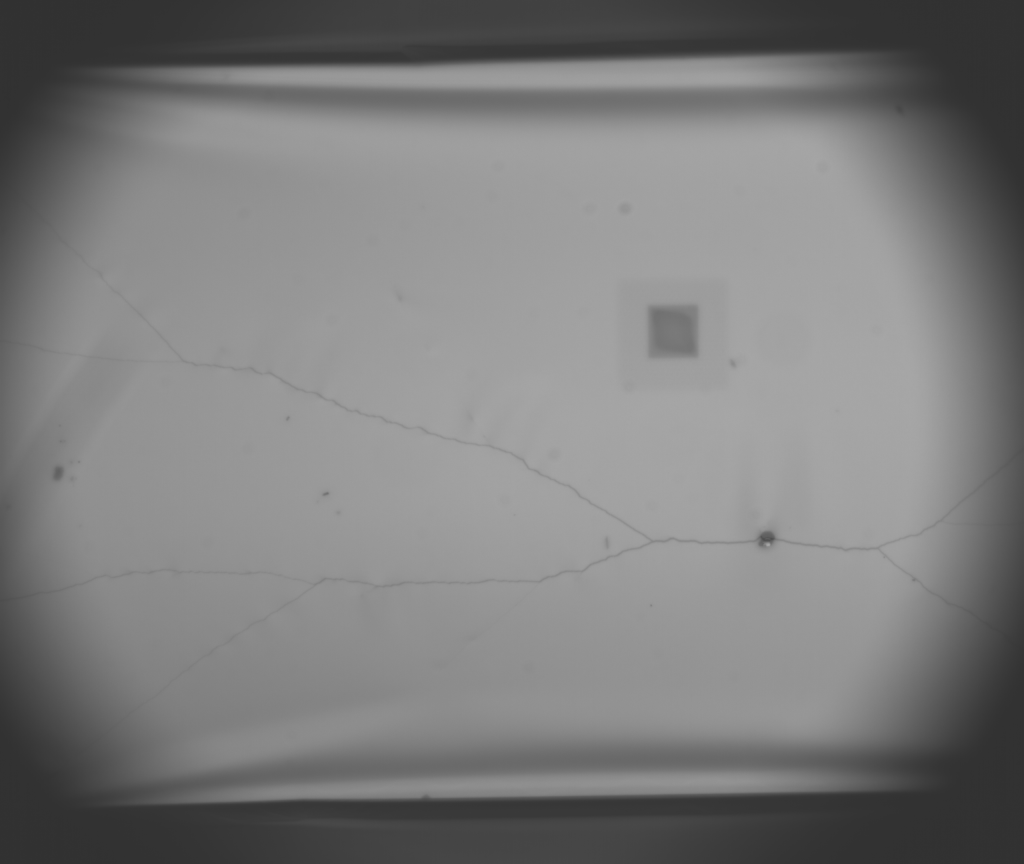
You can already see that it has cracked under the pressure after about 30 seconds of steam. Have you observed this yet?
After about 10 minutes the intermediate layer of water evaporates from between the membranes and contact is made. The next series of images take place over about 30 seconds left to right top to bottom.
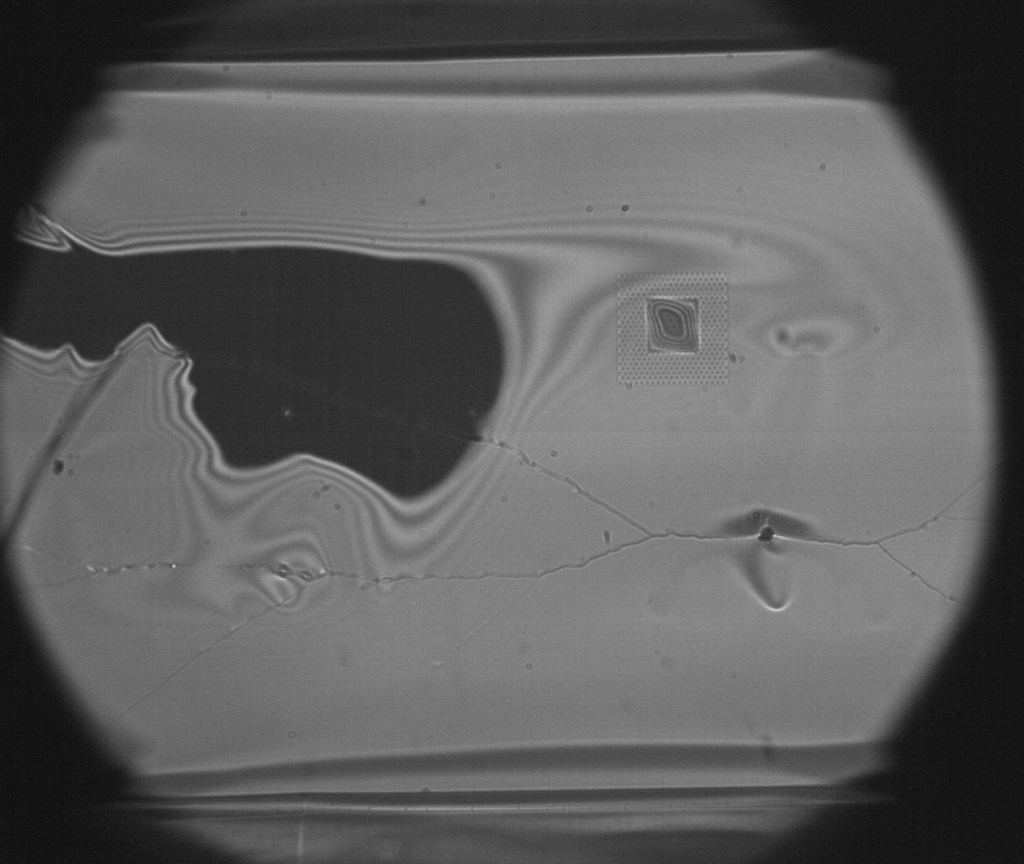
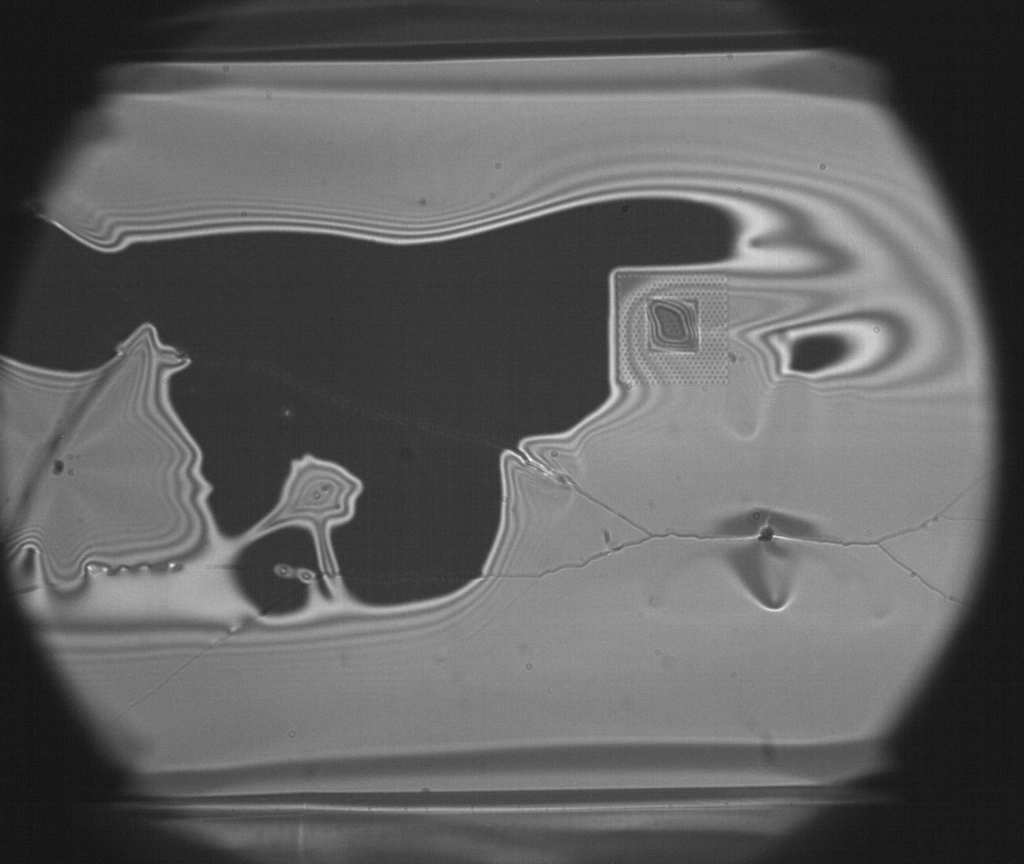
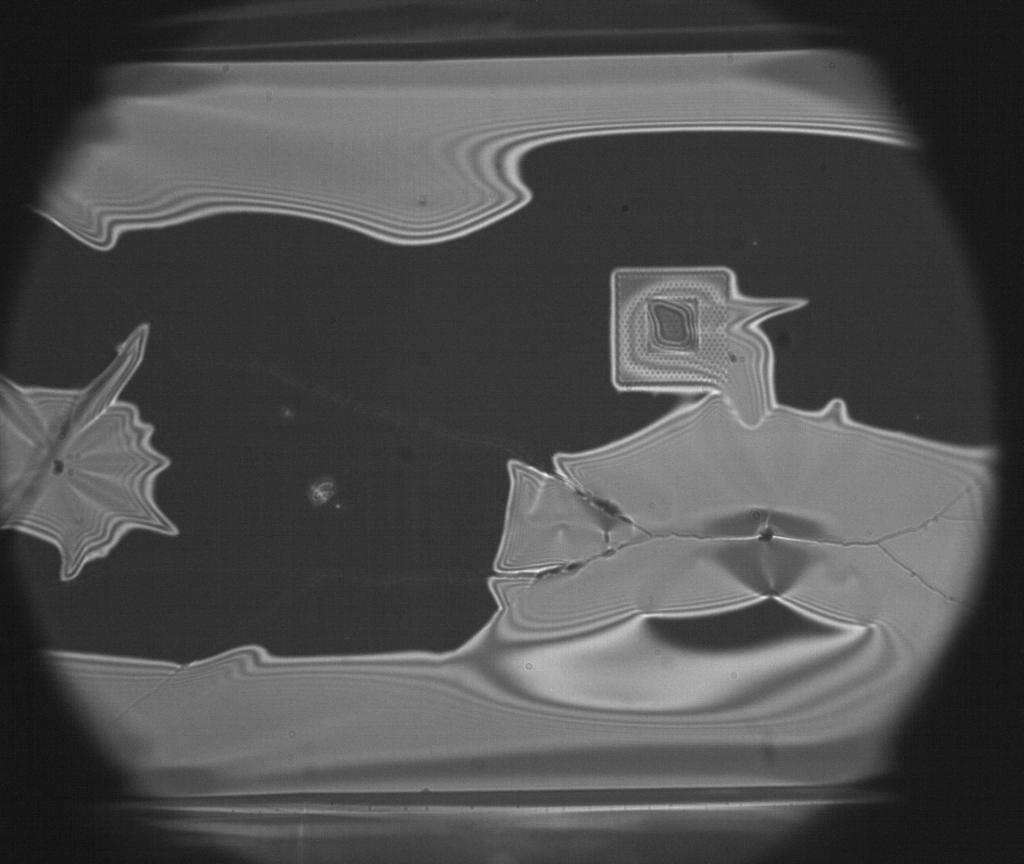

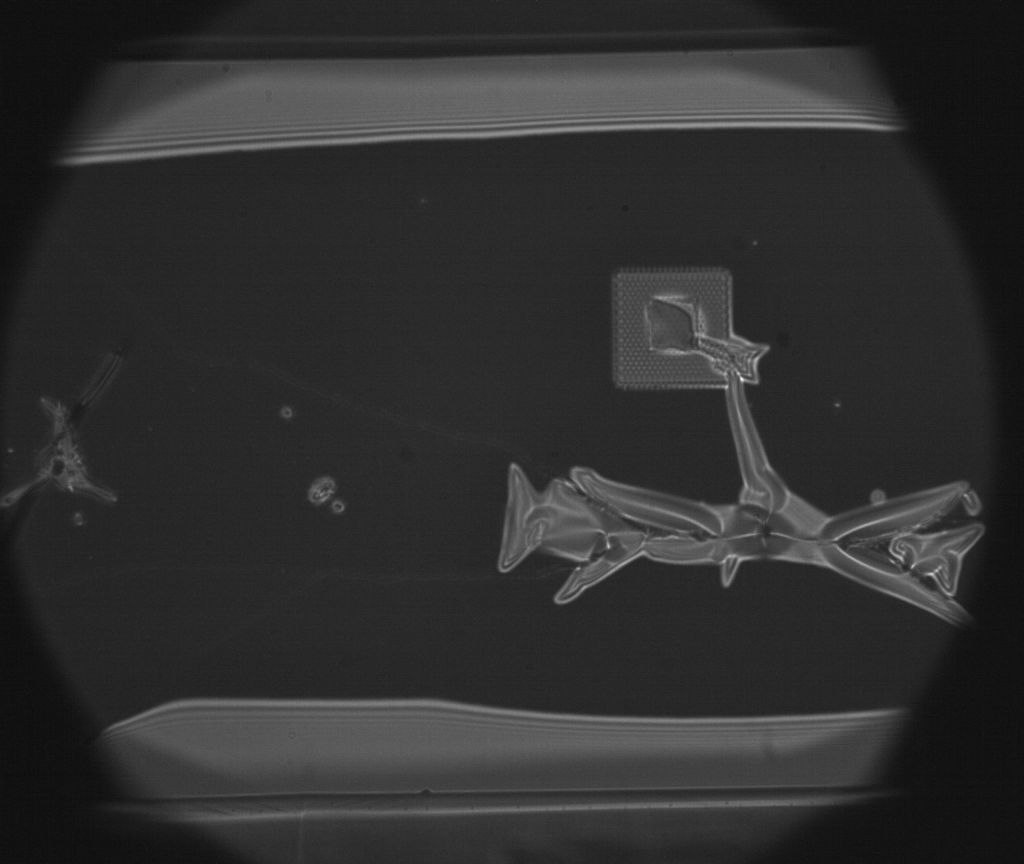
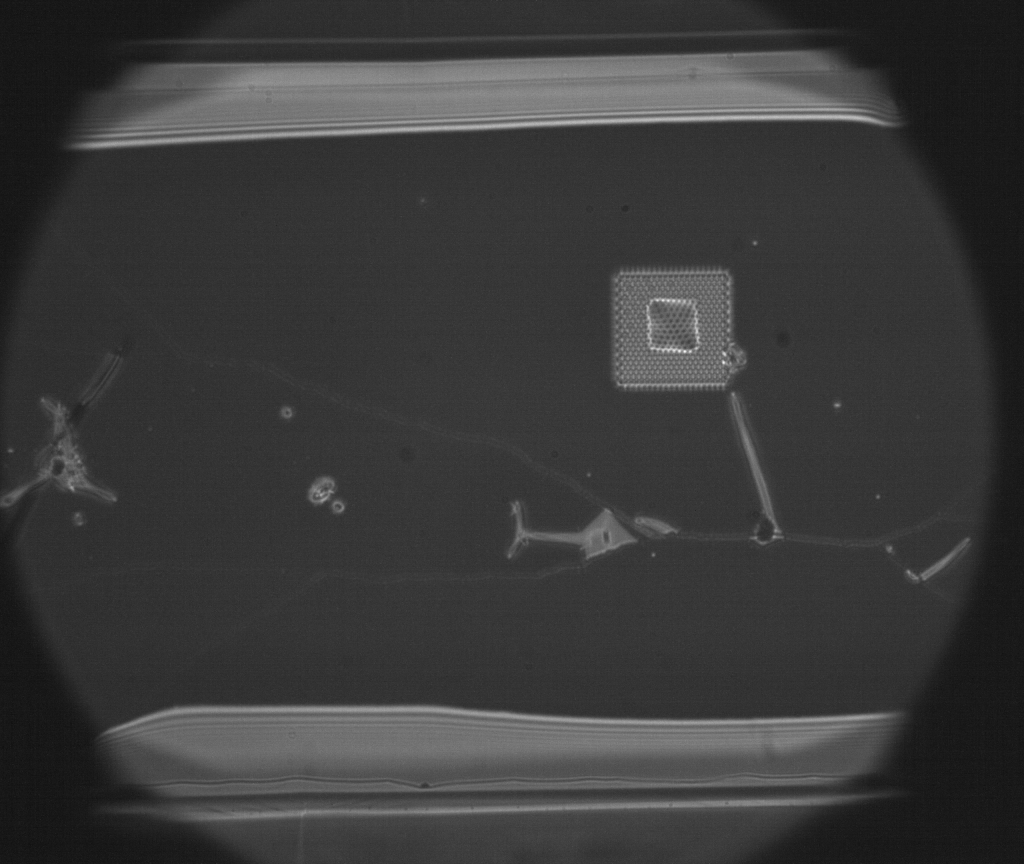
The cracks and capillaries correspond to the visible cracks in the swollen membrane while water is under there.
The membrane did not survive removal of the top chip very well.
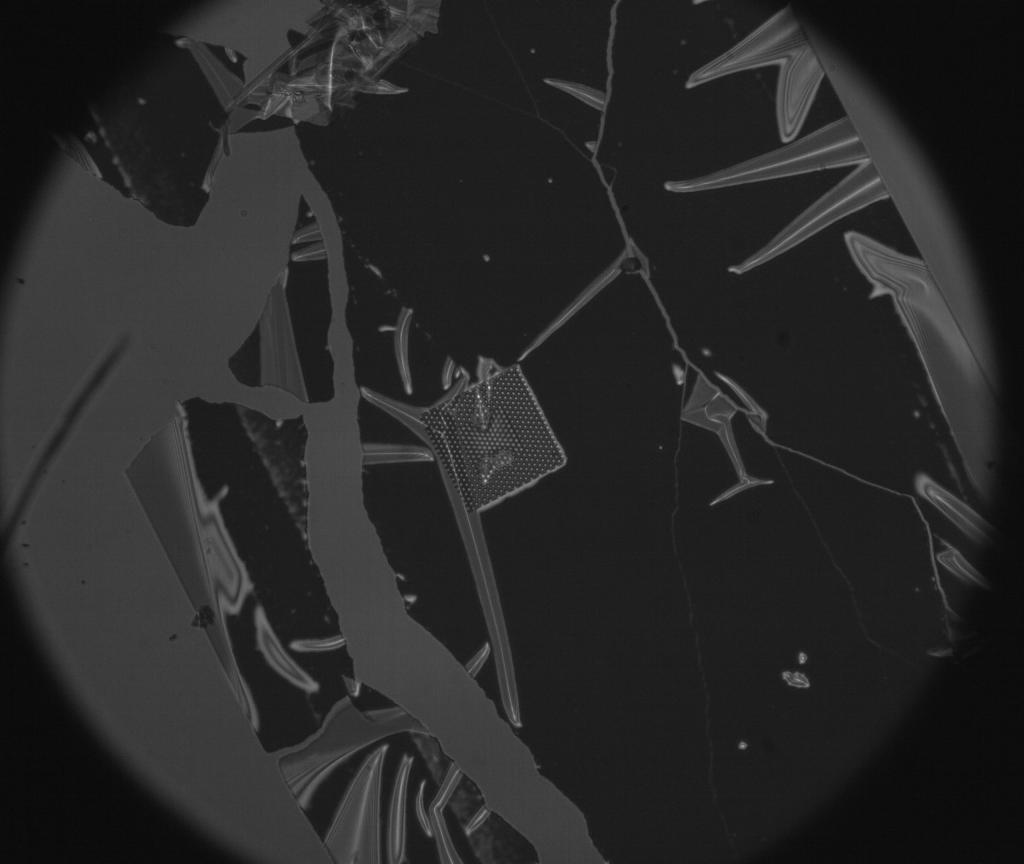
Do you let it sit for a while or treat it at all before separating them?
Regardless, this all supports the picture so far of adhesion using an intermediate water layer. Nothing particularly new, I just thought the image sequence was worth noting, since I haven’t yet heard you mention swelling of the membrane prior to adhesion when using steam.
My final try used the 45 degree-angled steam application suggested, and everything looked really good while it was still in the jig:
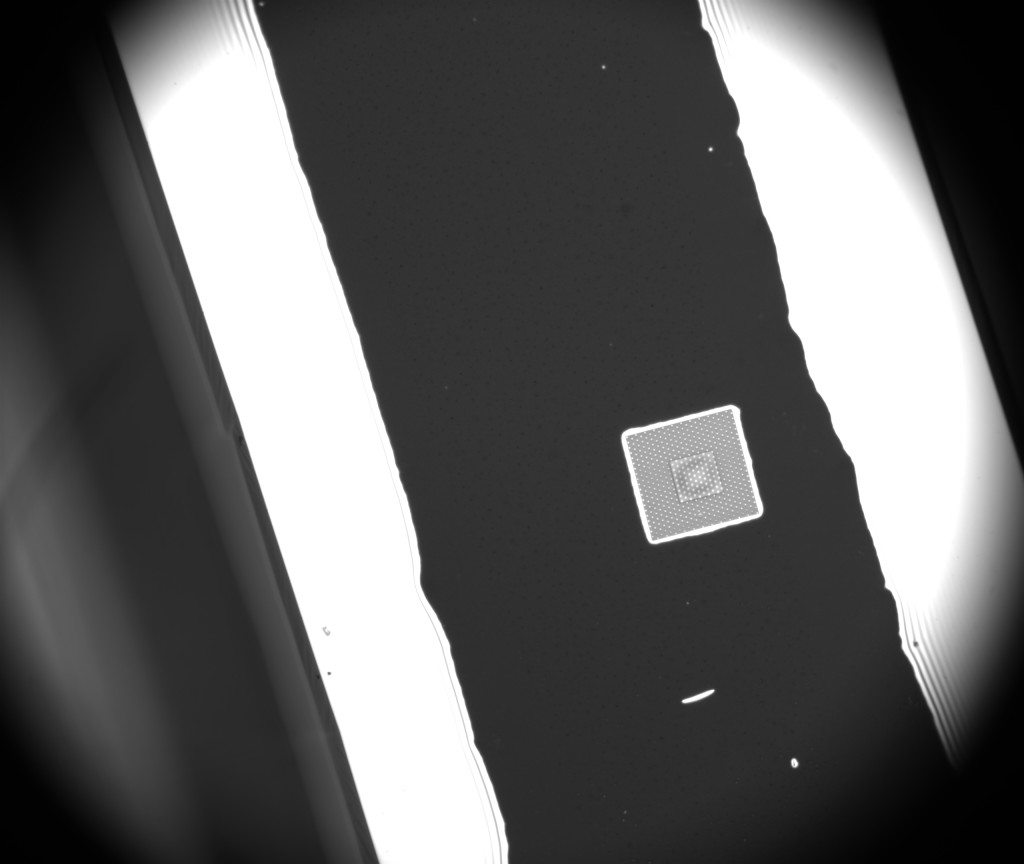
However, as soon as I loosened the set-screws, the membrane wrinkled horribly. The next image is still in the jig, just with some of the pressure from the screws removed.

and it looks pretty similar once I actually took it out.
So, what are you doing differently to achieve wrinkle-free transfers? Do you use a gasket or o-ring in the jig itself in order to even out the pressure applied by the set screws? Do you let them sit for a long time in the jig after apparent adhesion before removing it? Do you wait until adhesion is visible before you stop steaming, or do you steam for only a few seconds and then wait for adhesion to happen? Let me know your thoughts as to why these wrinkles keep appearing.
We do have an O-ring in our jig, it’s what the substrate chip rests on. I wouldn’t have thought it was particularly important to the transfer, that’s very interesting. Definitely try adding an O-ring and let us know if it helps.
I’m also shocked that it’s taking 10 minutes for the bulk of the water between the membrane and substrate to evaporate, usually that happens for us on the order of seconds. Can you give us a general grasp of how much steam you’re applying? How long do you expose the chips to it, how much of a boil do you bring the water to, etc.
the 10 minute one was exceptional, I left it under steam for several minutes. The others were much faster. For the final one I held it under the steam at 45 degrees for about 30 seconds, and it wetted the third time I did that. I didn’t see as much swelling on that one either. The hot plate I usually set to 200C degrees or so, simply to boil faster. The actual steam should be below 100C regardless, but it was at a lively boil.
I think I realized what my issue was: I didn’t poke out the corners before releasing the jig. Please confirm that you are still using a micropipette to liberate the membrane while is is steamed together in the jig. I will try that next, though my tools are a little more crude than micropipettes at the moment.
Kyle,
I’m not sure why I only just now saw this message. On the off chance it’s still relevant to answer: no, we do not manually break out the membrane any more. The problem may be that your steam is not fine enough — we’ve had a lot more success using our actual breath.
Of course, breathing on what will end up being a DNA sequencing device may be a bad idea. Let me know if you’re still having trouble with this point and Greg and I will see if we can’t come up with a “clean” alternative.