Ingestion of polyethylene terephthalate microplastic water contaminants by Xenopus laevis tadpoles negatively affects their resistance to ranavirus infection and antiviral immunity
Hello Microplastics group!
We are excited to announce our first publication in the Microplastic Center. This is our first blog post for the new LOC MPHH center for Dr. Jacques Robert new paper titled Ingestion of polyethylene terephthalate microplastic water contaminants by Xenopus laevis tadpoles negatively affects their resistance to ranavirus infection and antiviral immunity. These kinds of posts will allow us to keep an archive of publications by the center and make for an easy resource for anyone involved to see what is going on.
Everyone has an account to the Microplastics group and will be able to see these blog posts. There is a link to download the full paper below along with a link to the MPs publications page where we plan to cut a citation of all new papers posted by the center.
ABSTRACT
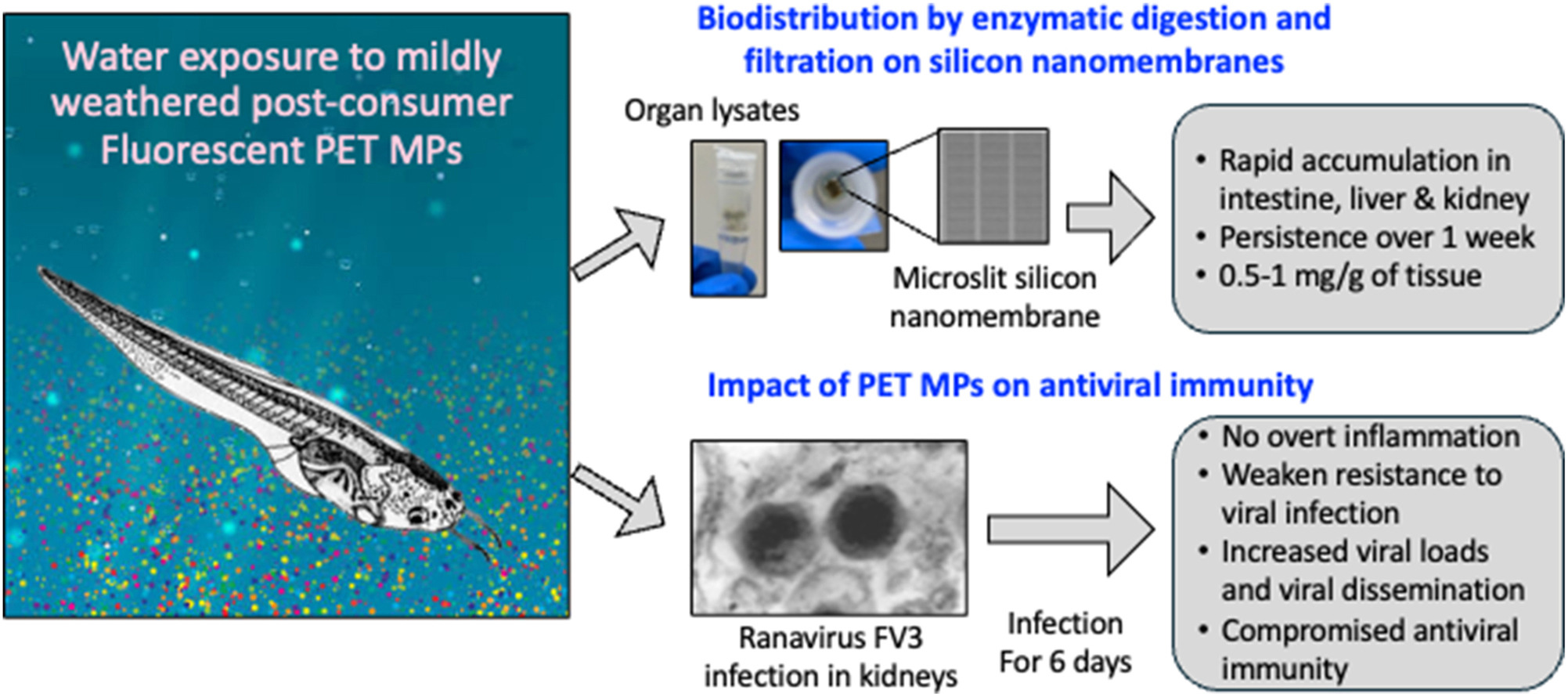
Small plastic debris (0.1 μm–5 mm) or microplastics (MPs) have become major pollutants of aquatic ecosystems worldwide and studies suggest that MPs exposure can pose serious threats to human and wildlife health. However, to date the potential biological impacts of MPs accumulating in low amount in tissues during early life remains unclear. Here, for a more realistic assessment, we have used environmentally representative, mildly weathered, polyethylene terephthalate microplastics (PET MPs), cryomilled (1–100 μm) and fluorescently labelled. We leveraged the amphibian Xenopus laevis tadpoles as an animal model to define the biodistribution of PET MPs and determine whether exposure to PET MPs induce perturbations of antiviral immunity. Exposure to PET MPs for 1–14 days resulted in detectable PET MPs biodistribution in intestine, gills, liver, and kidney as determined by fluorescence microscopy on whole mount tissues. PET MPs accumulation rate in tissues was further evaluated via a novel in situ enzymatic digestion and subsequent filtration using silicon nanomembranes, which shows that PET MPs rapidly accumulate in tadpole intestine, liver and kidneys and persist over a week. Longer exposure (1 month) of tadpoles to relatively low concentration of PET MPs (25 μg/ml) significantly increased susceptibility to viral infection and altered innate antiviral immunity without inducing overt inflammation. This study provides evidence that exposure to MPs negatively impact immune defenses of aquatic vertebrates.
Link to Microplastics Publication: Microplastics Publications