
Assessing the surface modification of NPN chip using XPS
Xunzhi from the Shestopalov lab gave us a brief presentation on how XPS is used to assess surface modification of the nanoporous nitiride silicon (NPN) membrane chip.
Power Point Presentation:
Xunzhi from the Shestopalov lab gave us a brief presentation on how XPS is used to assess surface modification of the nanoporous nitiride silicon (NPN) membrane chip.
Power Point Presentation:
One question we recently had was what does it look like when we perform a separation experiment when a membrane has a pinhole. I selected two membranes off 621 that appeared to have pinholes on both slits. I applied 1:2 standards to the top and allowed to diffuse for 24 hours. I collected the retentate…
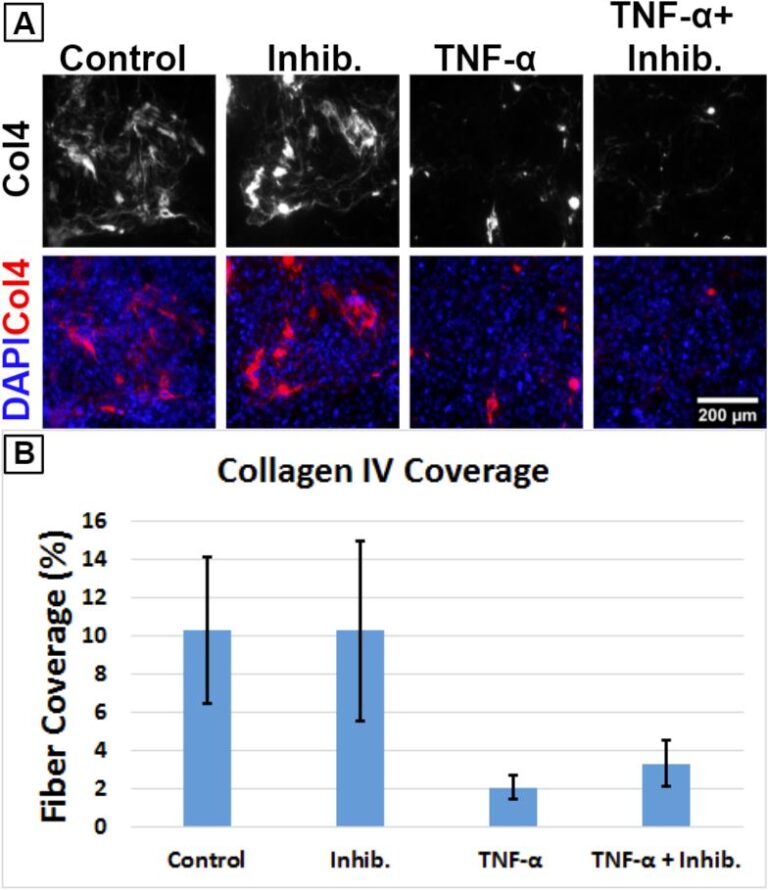
Note: a postscript regarding an assay to determine the activity of our MMP-2/MMP-9 inhibitor was added to this post on June 14, 2021. Introduction The blood-brain barrier (BBB) plays an important role in maintaining brain chemistry by restricting the permeability of small molecules and cells. Inflammatory diseases may disrupt the BBB and promote the development…
I got some wafers from Chris last week(?) that had undergone different Megasonics cleaning treatments by the manufacturer. We’re trying to figure out if these treatments are actually cleaning the wafers. I’ve been having trouble getting the AFM to stay in the “right” mode for imaging with these wafers. However, I have gotten some images….
Here is the analysis of the wafers used in the pressurized gold separations: SC 199 Stat Result Mean Equiv Diameter 17.84 nm Median Diameter 18.30 nm Porosity 2.2% Weighted Mean Diameter 20.81 nm 90% Diameter 26.64 nm Roundness .782 Separates 10 nm from 15 nm w225 Stat Result Mean Equiv Diameter 18.33 nm…
Introduction: Over the past few weeks I’ve begun working on a project that deals specifically with characterizing tangential flow filtration with our labs ultra-thin membranes. Essentially, I’m working on understanding the advantages our membranes have over conventional/thicker ones by looking at characteristics such as transmembrane pressure, fouling, and flux. Our working hypothesis is that our…
We are trying to reproduce the very small pores Joe created with 30/100/30 OSO and large pores created with 30/100/30 NSN using a SEPCON pattern. (Joe’s previous post.) We had a problem with several chips releasing from the center of the wafer prior to completely clearing all the features. In the future we will use…