Nanoporous Wallpaper
In my recent tenting posts, the membrane has shown that it can deform and wrap around edges. I wanted to follow up on this phenomenon and see if we could get a contiguous sheet of membrane around a PDMS edge (not completely sharp). If we can get some membranes around a ~90 sidewall, we could have interesting membrane compartment shapes. Particularly, we could compare to flexible electrospun membranes at much thinner membrane thicknesses.
I aligned and pressed a NPN membrane orthogonally to a 50 um high PDMS microchannel, and then delaminated the membrane with tweezers by poking the freestanding portion in the middle. I hoped that the membrane would unravel from the center towards the edges of the microchannel and stick on the sidewalls. For SEM work, I coated the surfaces with 5-10 nm of platinum (100 sec in Pt sputterer in SEM prep room, 100 mTorr, 15-20 mA sputter current).
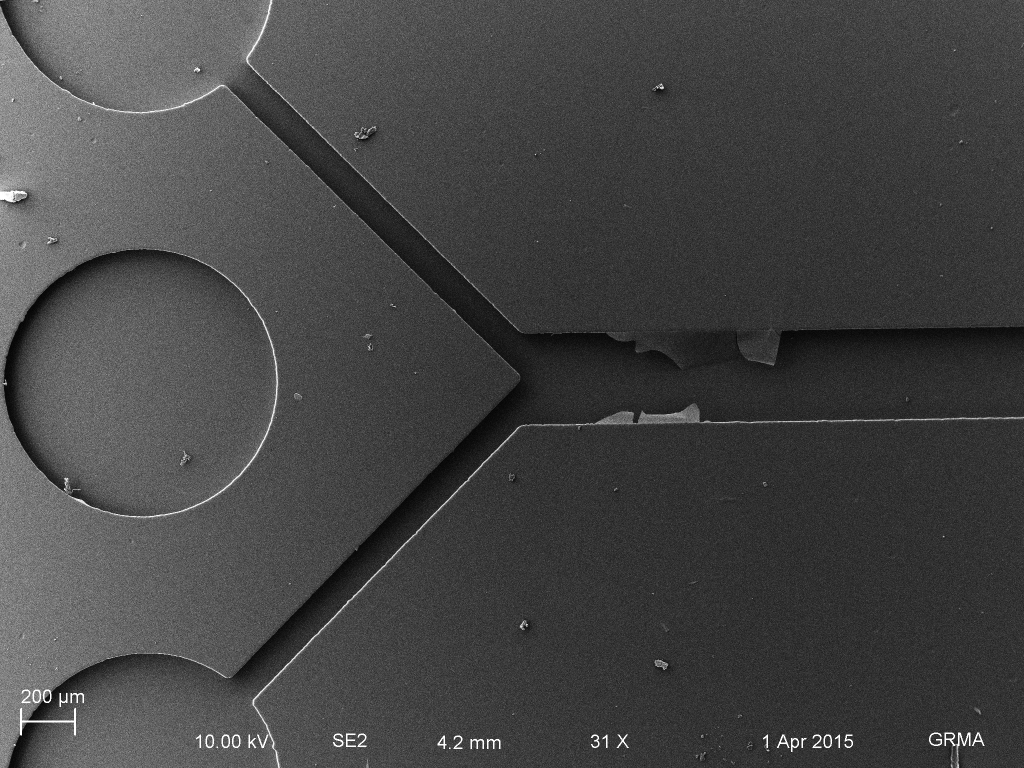
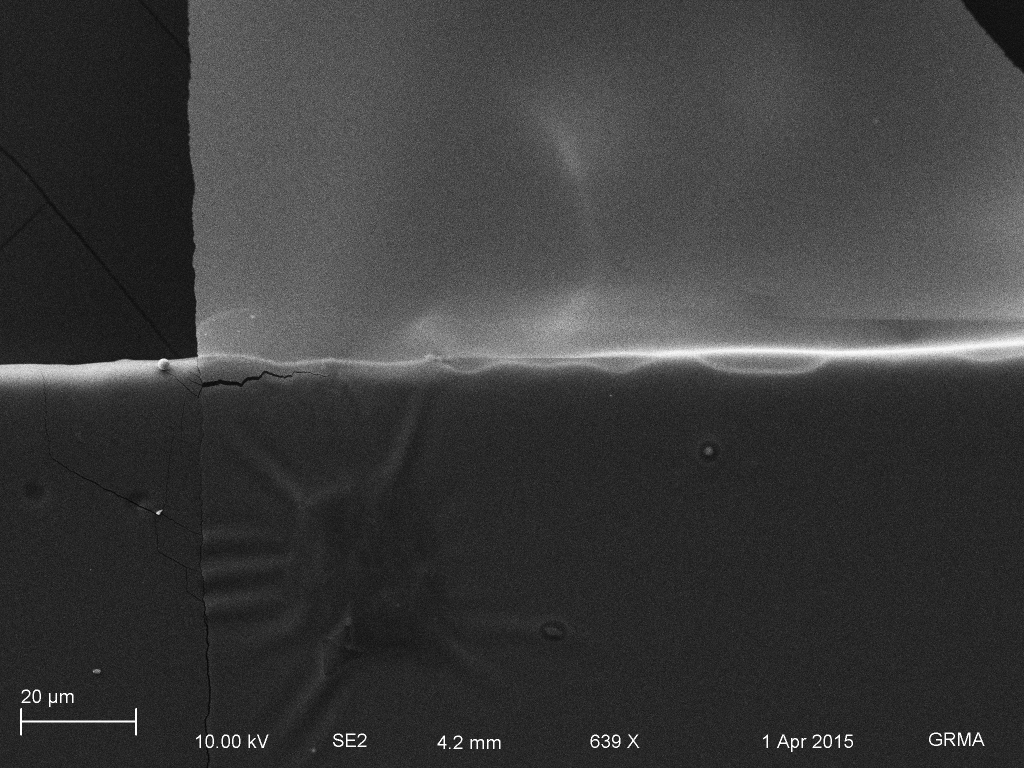


I think the easiest way to get the nanoporous membrane to transfer into devices is actually to control the delamination process. If we can use a better method of rupturing the membrane (laser), I believe we will get larger areas of contiguous membrane. It seems that we will be able to get the wall papering effect around rough, non 90-degree edges in PDMS systems, but it is possible that the membrane will fracture against a smooth, sharp edge.