
BBB Device V2-8 with Copper Bus Demonstrates Dynamic TEER Reading
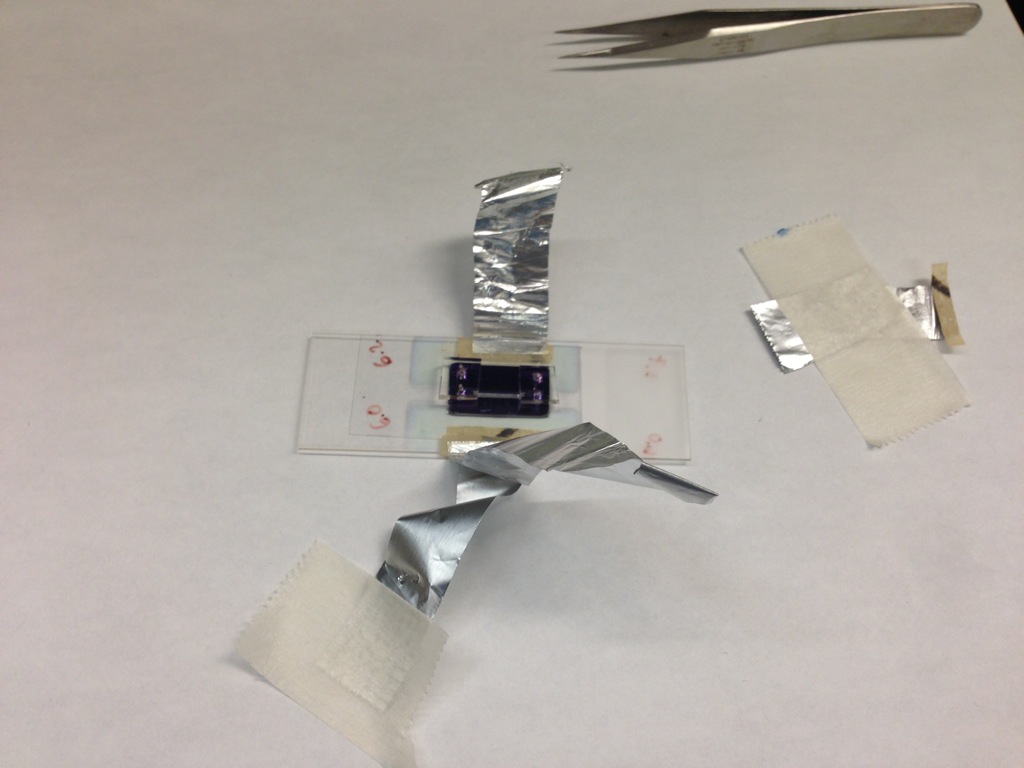
I took some copper tape and made a bus bar for BBB device V2-8. I used tweezers to smooth down the surface of the tape on each planar surface, routing the copper to the back side of each face, then collecting the lines to one side of the device. I verified that the connections were active to the ITO with a multimeter. The resistance of the copper was in the single ohm regime for each line.
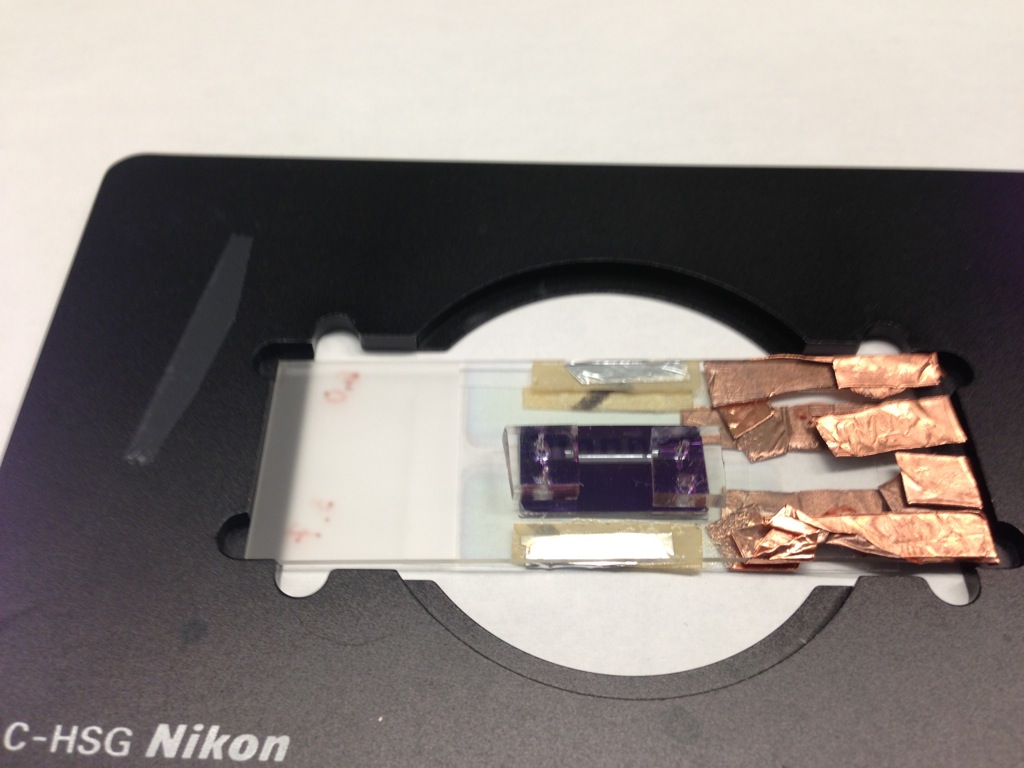
I have applied this tape after the device had been autoclaved. Ideally, I would autoclave the device with the bus already affixed, to ensure sterility, but I am not totally confident the tape will remain affixed during the process. Originally, I had attempted to do the same with aluminum foil and autoclave tape, but the tape did not always hold to the ITO surface after autoclave. Copper is well known to be poisonous to cells. The film appears stable, but I don’t know if it can be autoclaved as I don’t wish to contaminate anything.
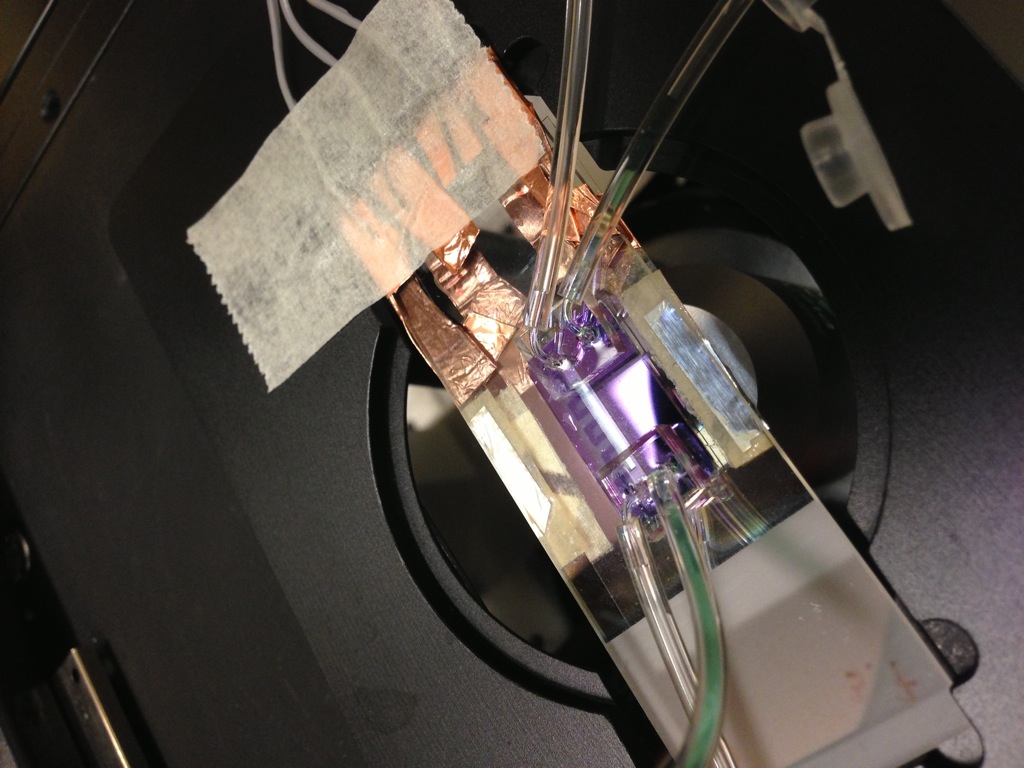
I found a small punch-out hexagon in the membrane of this device. Filling each chamber up at 30-40 uL/min didn’t cause more blow outs throughout the system.
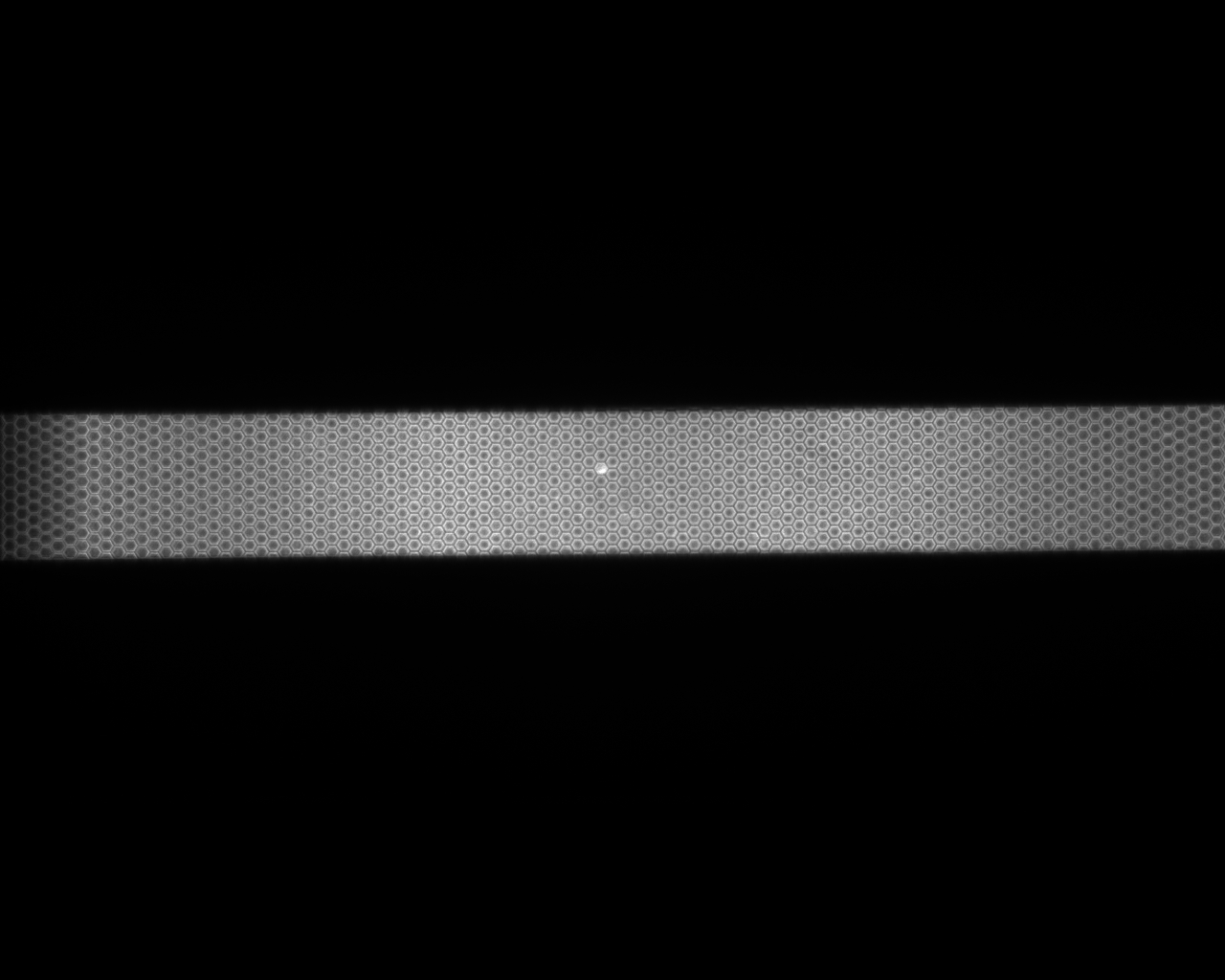
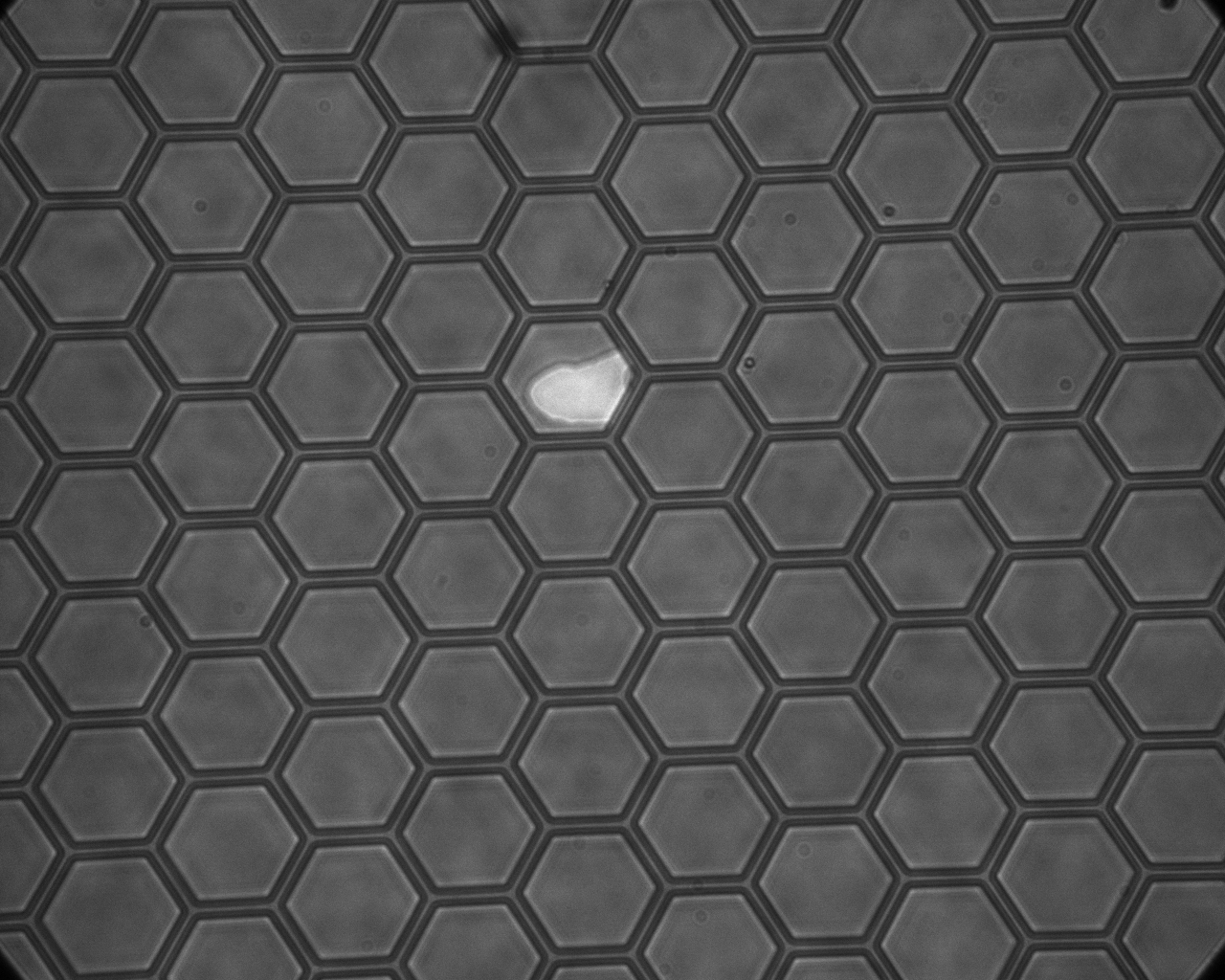
Fluid Filling Bottom Chamber 30 uL/min, ~4 frames per second
Fluid Filling Top Chamber 30 uL/min, ~4 frames per second
To demonstrate control and measurement of reading TEER with the EVOM2 box. I filled the bottom channel with tap water, then the top channel with tap water, then the bottom channel with DI water, then the bottom channel again with tap water. I recorded a TEER measurement with each step. I would predict the results to be open circuit (no electrical contact), the background resistance of the device (short circuit), open circuit (high resistivity DI), and the background resistance of the device (short circuit again).
| Stage | TEER [ohm-cm^2] |
| Bottom Channel Tap Water Only | 12400 |
| Top and Bottom Channel Tap water | 1520 |
| Top channel Tap water, Bottom channel DI water | 13600 |
| Top and Bottom Channel Tap Water return | 1750-1800 |
Adding DI water to Tap Water
Adding Tap water to DI water
The resistances above 10K on the EVOM2 box are effectively open circuits for what we are demonstrating (the manual says that the reading is not accurate in this regime).
Given the resistance estimates I made for each device (6, 4, 6, 3 kohms pad-finger measurements) and the number of fingers in contact with the fluid (4 per side, 2 sides), I would predict based on the simple parallel resistance model that the background resistance of the device would be at least 1.5 kohms, and maximally 3 kohms + filter resistance. With the current resistance of the electrodes, using the EVOM2 module, the maximum TEER reading would be (10k-1.5k)*.05 cm^2 = 425 ohm-cm^2.