
Pore formation process
We have suspected that those non-open pores in the TEM image of pnc-Si are pits in the silicon membrane for a long time. Last week, I SEMed a sample, oxide (30nm)/Si(25nm)/oxide(30nm) annealed at 800C for 1min, to verify the pits features.
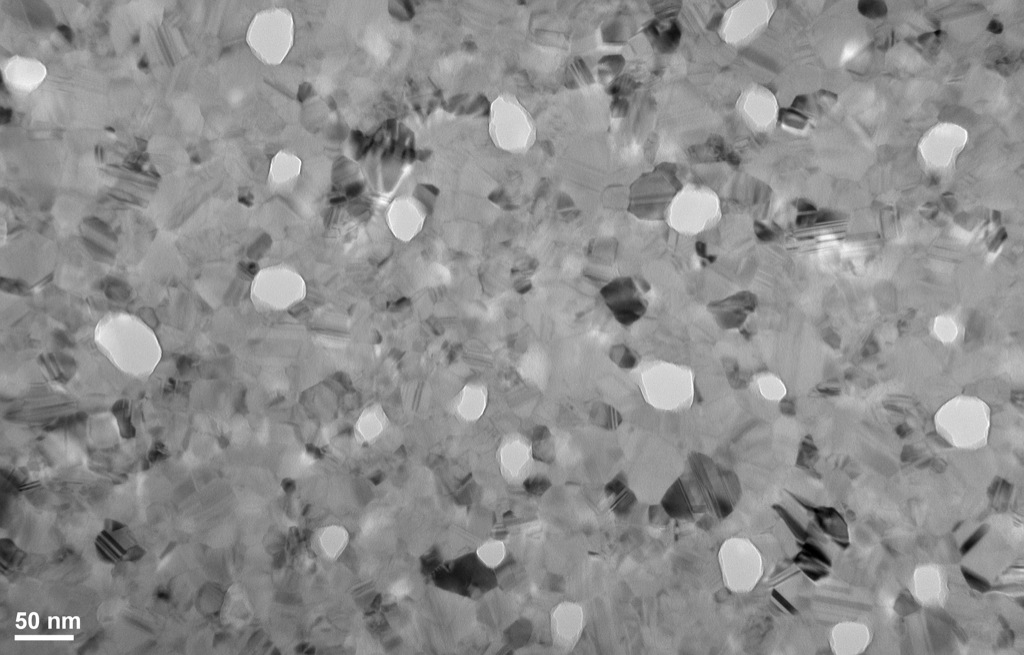
The first figure is a TEM image which the majority feature looks like non-open pores. Very a few open pores are observed from the TEM image.
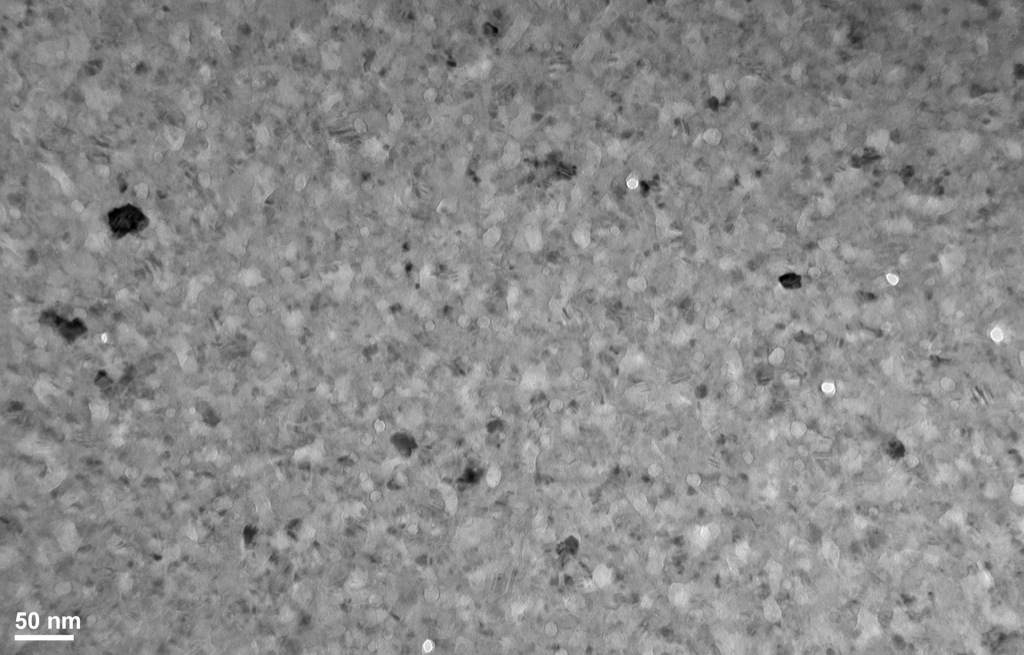
Then this sample was observed under the SEM. The following images are the SEM images of this sample.
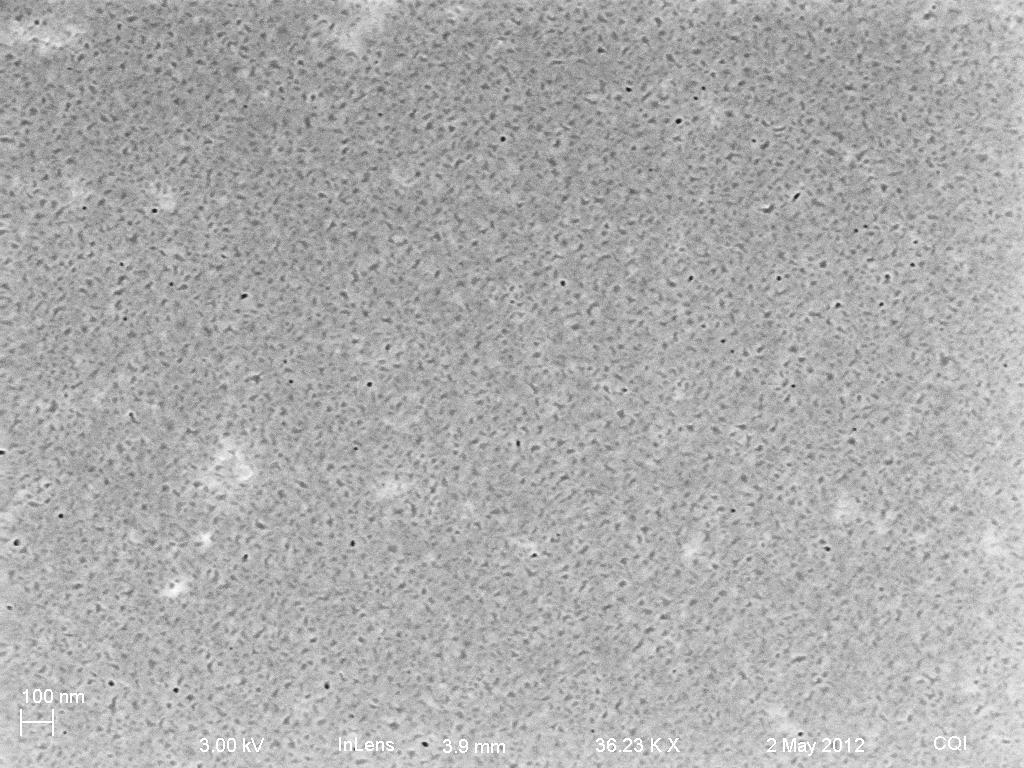
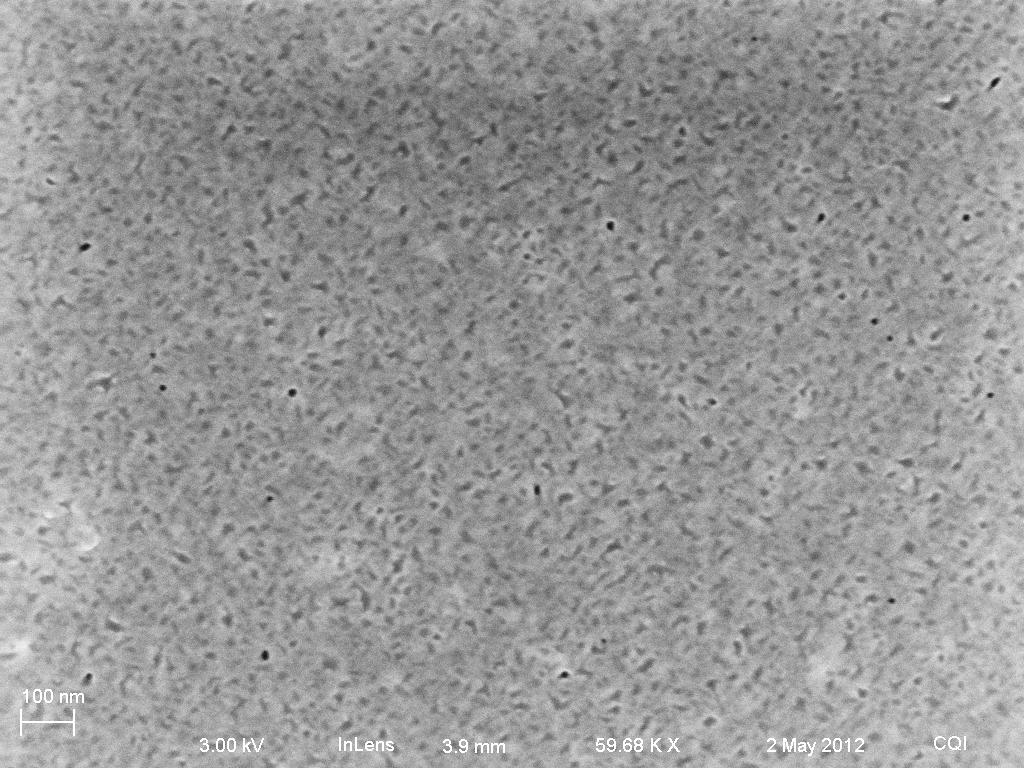
From the SEM images, it can be seen that those less darkish features are non-open pores or pits indeed. This quick test helps to reveal the pore formation process as following. During annealing of silicon film, silicon crystal seeds form first in the early stage. During the nucleation of the those crystal seeds, small pits are formed as companion. With the heating going, those crystal seeds start to grow bigger and bigger. At the same time, pits are growing both horizontally and vertically as well due the migrating of silicon atoms. As a result, open pores are formed eventually when the pits are growing bigger enough in vertical direction to penetrate the silicon film. The following sketch shows this process.
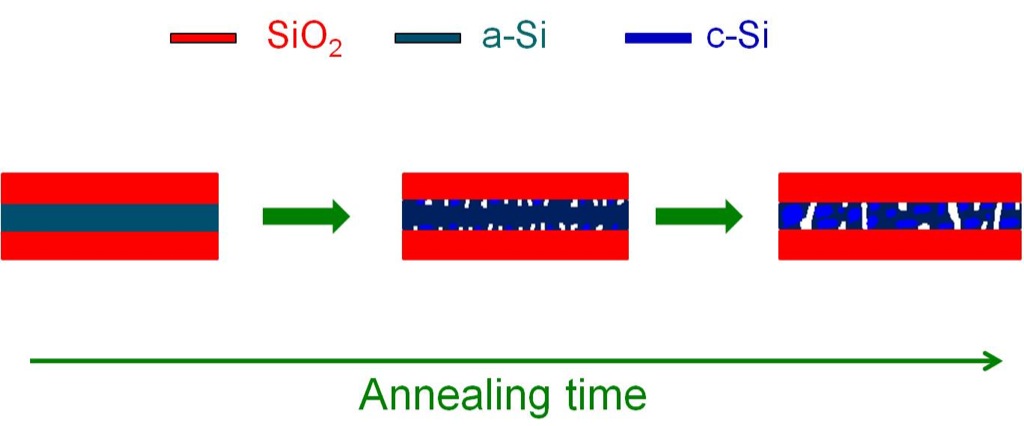
Now let’s keep this process in mind that pores are formed because the silicon atoms are migrating to the ‘energy preferred spots’ to form crystals. We can imagine that it is less possible that those silicon atoms can to migrate very far distance. In reality, it is more likely that the silicon atoms migrate to the nearby silicon crystal seeds to maintain the growth of silicon crystals and leave with open pores which are just adjacent to the silicon crystals. This tells us that during the coalescence of pores during annealing, the adjacent silicon crystals should be growing as a result of the migration of silicon atoms. With this idea in mind, we can review the video of pore movement from the in-situ TEM annealing experiment.
From the video it can be clear seen that the silicon crystals adjacent to pores are indeed growing when the pores are coalescing. The TEM image can also prove that whenever there exists an open pore, there should be a silicon crystal adjacent to this pore.
At this point, it looks that the pore formation process is quite clear and I believe it is very helpful to uncover the final pore formation mechanism behind this phenomenon.